
By Sandor Slomovits
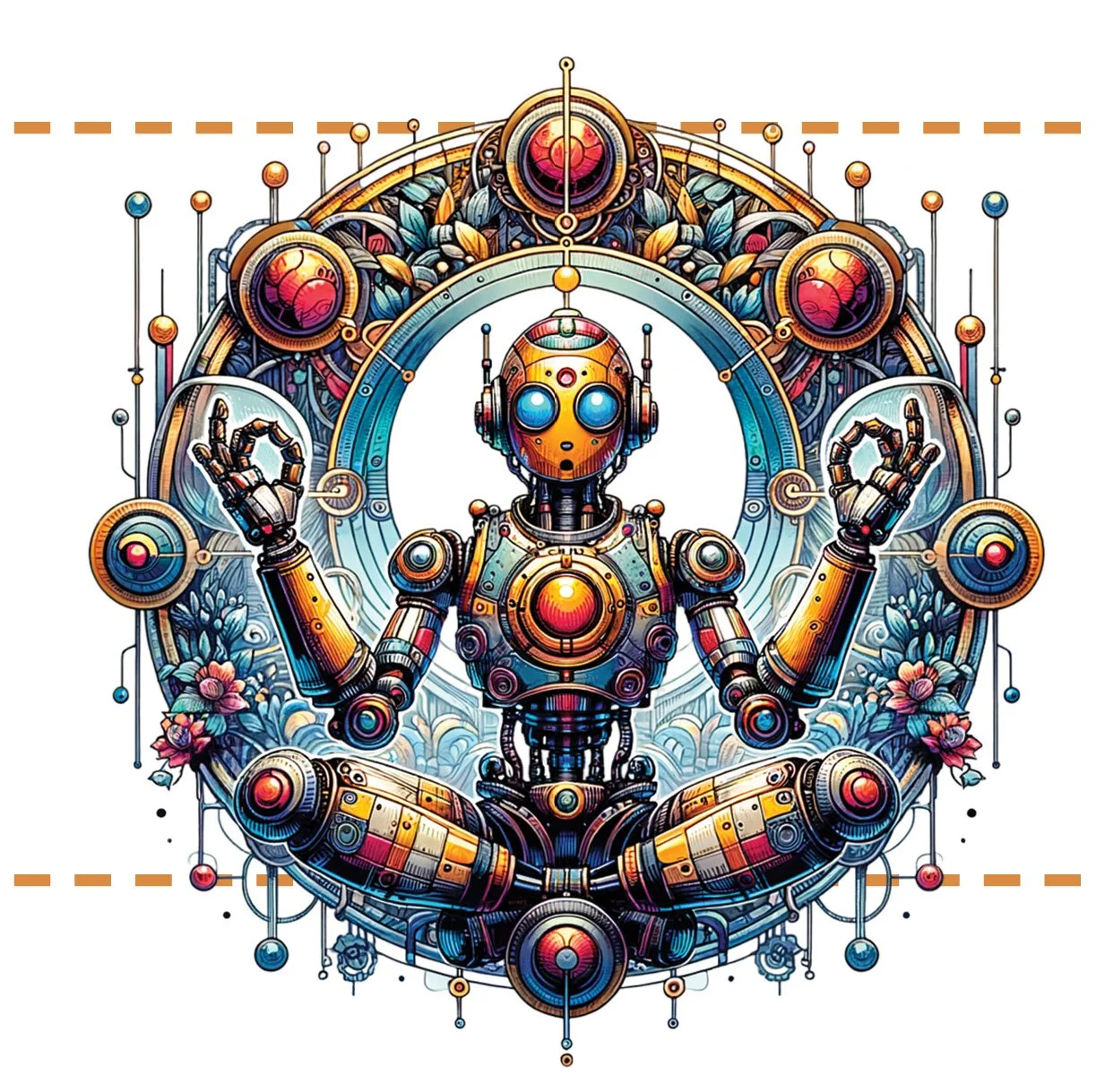
I am not afraid that AI may end up destroying humankind. I am concerned that it may destroy our humanity.
More about this later. First, my bona fides.
My audacity regarding the possibility of AI becoming an existential threat to our species does not spring from my extremely limited understanding of its current capabilities, nor from any reassuring foreknowledge of its future evolution. Neither does it arise from a profoundly misanthropic, I-couldn’t-care-less view vis a vis my fellow human beings. While I will admit to a blood red No Vacancy sign eternally lit in the bottom of my heart for some members of our species, (I know you know who you are, and I know you don’t care a whit about how I feel about you) but “good riddance” regarding my fellow human beings in toto? Absolutely not.
Rather, my sanguine stance regarding the possibility of AI destroying our species grows out of my fledgling understanding—rising occasionally to melancholic acceptance—that much that happens in life is literally out of my hands.
Nevertheless, besides the existential one, I do have some grave misgivings about AI.
Like many people, I fear our increasing use of AI will put unprecedented burdens on our already beleaguered environment, water supply, and power grids. I worry it may cause massive, rapid unemployment and exacerbate an already corrosive inequality between haves and have nots. I shudder at its limitless potential to wage war even more destructively and impersonally than we already can. Then there are the mistakes it makes, the data set on which it is trained, the thievery and fundamental dishonesty underlying some of its modus operandi and history… and, perhaps most concerningly, that even the people constructing AI seem to not fully understand it.
On the other hand, I am astonished at, and grateful for AI’s role in the dramatic advances in medicine, disability aids, scientific research in physics, chemistry and astronomy, not to mention in the safety features of my 2025 Ford Escape. I marvel at this magical technology with seemingly unlimited potential to improve human lives and the planet’s well-being—including the possibility that it may be able to solve some of the above problems which it is now creating.
Besides, I fully accept that when it comes to AI, as the old proverb says, the camel’s nose is already under the tent flap. Or, to paraphrase another old saw, the horse is well out of the barn and is, in fact, way the hell down the road. If the history of our species is any guide regarding the adoption of new technologies—from fire and the wheel to printing press and the computer—we will continue to increasingly harness AI, and it will reshape our entire world.
That does not, I believe, mean that we must welcome it into every corner of our proverbial tent, become AI jockeys, and race to employ it in every aspect of our lives.
After the United States dropped nuclear bombs on Hiroshima and Nagasaki, it became clear that human beings needed to limit the use of those unprecedentedly destructive weapons—ones that, for the first time in history, had the potential to destroy our species, and perhaps all living beings on the planet. The resulting safeguards that nations placed on nuclear weapons, though incomplete and fragile, have managed—so far—to prevent their use. Now, at the very least, we need similar bans on the use of AI in war, specifically to forbid nations to put AI in sole control of nuclear weapons. (Thank you for your service, Anthropic!) Additionally, as we’ve learned from sad experience with the endless nuclear arms race, we’ll need to develop technology—AI detectors, AI whack-a-mole-in-real-time-machines—to monitor the illegal creation and use of AI weapons, as well as the programs that will undoubtedly be created to camouflage AI content.
Creating and enforcing those safeguards is the work of nations and their leaders. But we, individual human beings, also have responsibilities and decisions to make. Will our future be increasingly digital? Will the trend lines continue to accelerate in that direction? Will we talk with each other or with our AI companions? Will we dance or only tap screens and keyboards with our fingertips? Will we make music or will we listen to computer generated sounds? Will we rely more on AI not merely for directions to get us where we’ve decided to go, but on directions telling us where we should be headed in the first place?
We humans have, as all living beings do, an exquisite feedback loop, an interweaving of our consciousness and the physical containers of that consciousness, our physical bodies. The ways we sense and perceive the animate and inanimate world around us shapes us and vice versa. It is one definition of what it means to be alive. It is what enables us to feel, and indeed be, connected to every other living being. It is what makes it possible for us to change and be changed by all that we encounter. It is what makes every instance of our existence a creative act.
It is what AI can already, and will increasingly get better at, mimicking. And it is, I believe, something AI can never replace.
We need to protect, nurture and preserve our humanity by engaging with the living natural world and each other, rather than focusing our interactions primarily on the digital world.
I am not afraid that AI may end up destroying humankind. I am concerned that it may destroy our humanity.
I hope that in learning to live with it we will instead come closer to recognizing, cherishing, and protecting our humanity.
Sandor Slomovits, along with his twin brother, Laszlo, founded the folk music duo Gemini in 1973. The brothers also, with Sandor’s daughter Emily, comprise the trio, Gemily. The duo, and the trio, play at schools, coffeehouses, concert venues, and festivals throughout Michigan and the Midwest. For more info, please see GeminiChildrensMusic.com. In addition to the Crazy Wisdom Community Journal, Sandor’s work can also be found in the Ann Arbor Observer, as well as on his website, SandorSlomovits.com.
Read Related Articles:
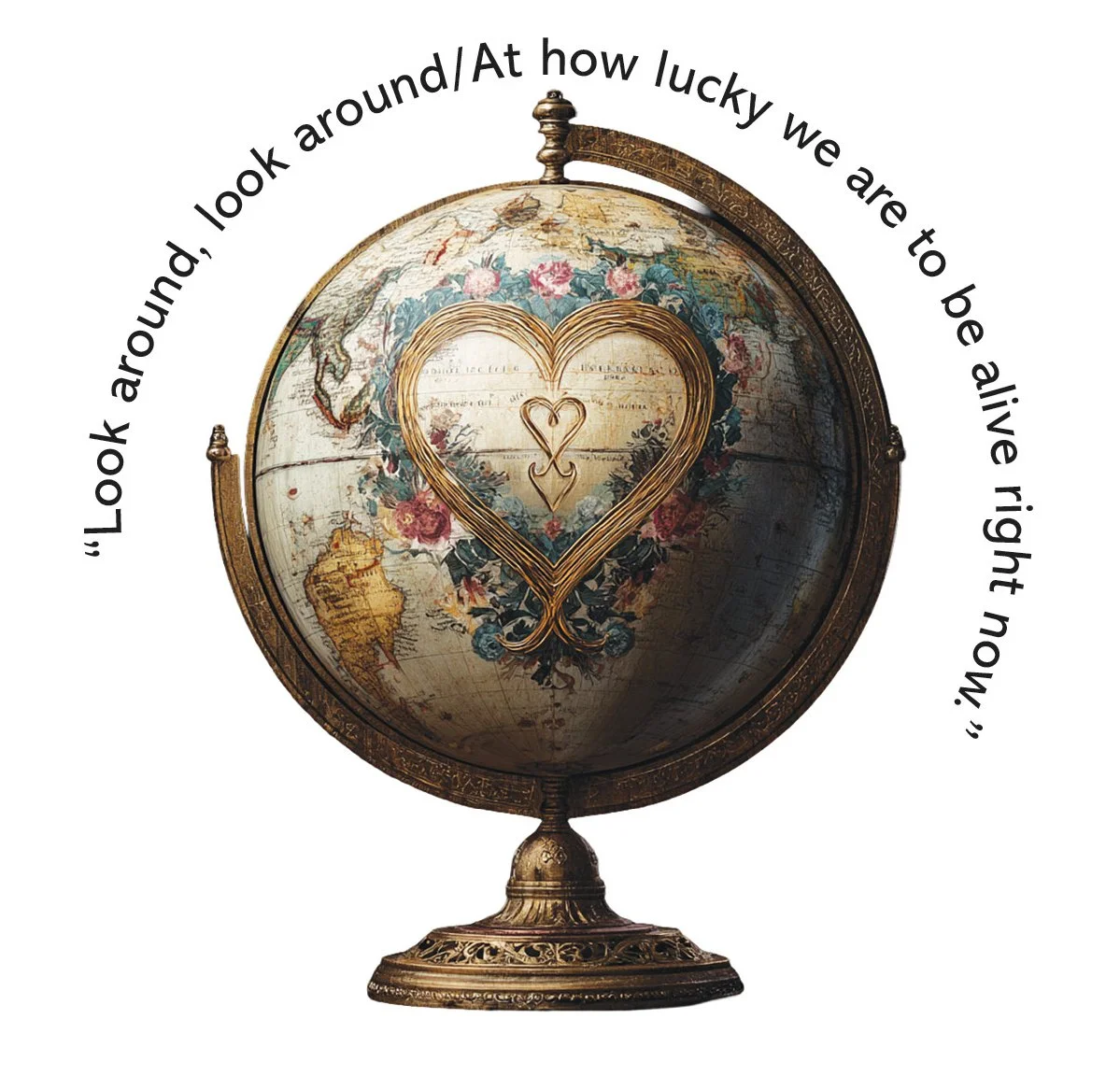



























































Over our lives, when we are shut out from things we want—getting into a school program, scheduling a date with a lovely person, not getting the job in your chosen field—we can tend to dampen our heart’s desire and diminish our joy in the world. We then tend to think of the world as a place to be tolerated. When we follow our open loving heart, we touch into that reservoir of delight and joy which we all have, and then we fully inhabit our precious life. When I get stuck on a project or something I want to do, I often think of this delightful energy we all have, and I reminisce about when I was small, and in my innocence, would not take no for an answer.