
The Power of Teachers Who Touch the Heart: A Personal Story of Mentorship
By Katherine Munter
“An understanding heart is everything in a teacher, and cannot be esteemed highly enough. One looks back with appreciation to the brilliant teachers, but with gratitude to those who touched our human feeling. The curriculum is so much necessary raw material, but warmth is the vital element for the growing plant and for the soul of the child.” —Carl Jung
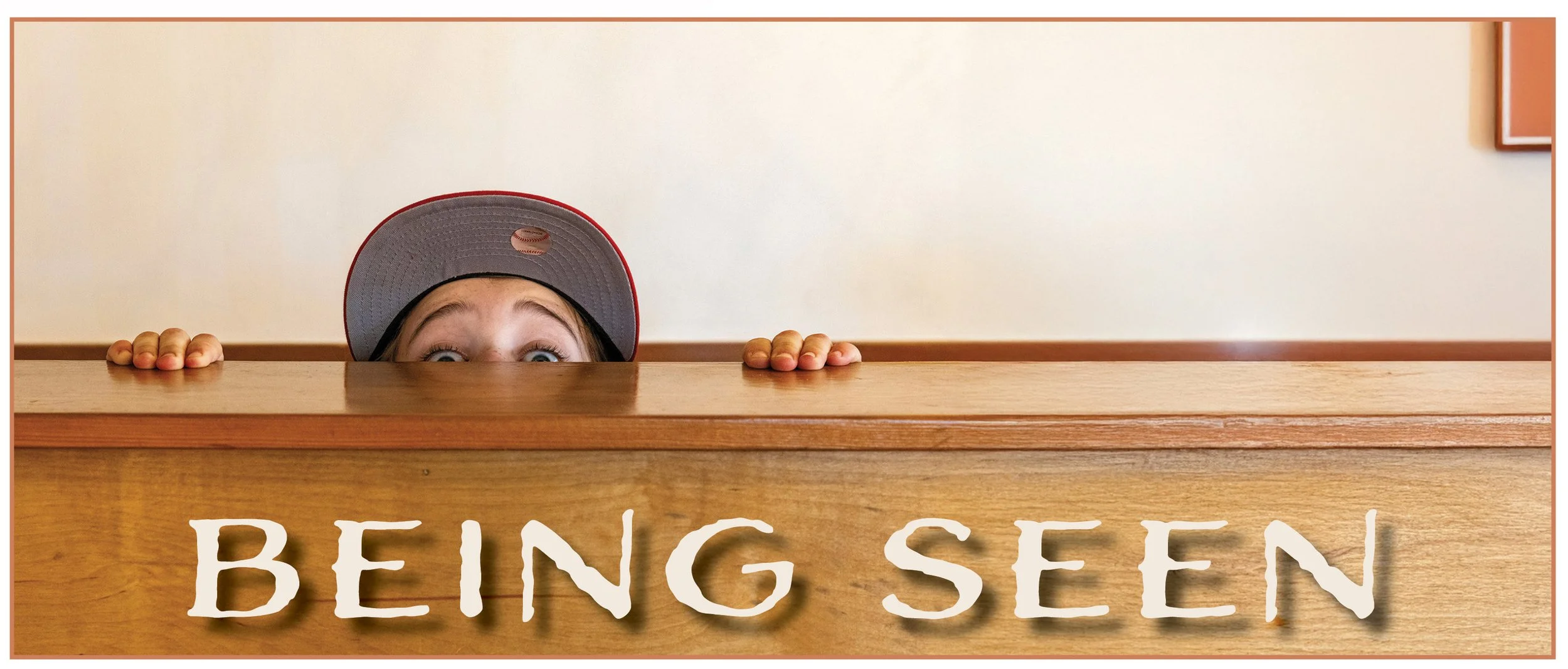
I was recently invited to a new friend’s house for a small gathering. Over appetizers, I was included in a conversation that reached right into my chest, caught my breath, and pulled my heart. A man told us of his former high school teacher—how much she’d shaped his life path. Once a shy and awkward adolescent who was having difficulty finding his way, he felt seen by her in a way he hadn’t experienced before. Tears welled in his eyes as he recalled a specific moment when he was seated in her literature class. She’d told him that he was often quiet, but when he spoke, it was with wisdom and clarity. Those words helped him to grow in confidence and stuck with him through the decades. Mentors can have a powerful impact. That moment of sharing felt like receiving a gift, and I began to contemplate those who inspired and helped to shape me into the person I am today.
My mind drifted to one of my own literature teachers. Over thirty years ago, I met Christine Stearns as her student. I was awed at the energy she brought to every class, how she taught with her heart wide open. She made me feel cherished at a time in my life when I had difficulty seeing my own value. Through the lens of writers such as Hemingway, we learned powerful lessons about life. Hemingway was nearly killed on the battlefield. While healing, he came to realize that we will all experience trauma during our lives. Some of these wounds will be so deep, they will change us to the core, and we’ll never be the same again. Rather than trying to run or hide from our pain, we can allow ourselves to feel. Once we’ve processed the pain and evaluated our lives, we get to choose how we move forward.

One afternoon after class, Mrs. Stearns called me to her desk. I had recently lost the grandmother who had helped to raise me. I tried to be present in class, but I had trouble focusing, and my grades were suffering. When I approached her desk, I was terrified that she realized I was struggling. Rather than challenge or reprimand me, she looked at me with her gentle blue eyes and told me that her mother once told her she had the heart and mind of a writer. In me, she similarly saw a writer who was waiting to bloom. At the time, I wasn’t ready to see it, yet her kind words stuck with me.
During my years in school, I also experienced relationships that diminished me. In first grade, I was taught by a nun who used fear and intimidation to maintain control of the classroom. She hung a paddle next to her blackboard, and she carried a ruler in her clenched fist. If we used our fingers to count during arithmetic, she’d swat our hands. She wore a long rosary at her waist, and the beads rattled when she walked. The sound of those tapping beads instantly brought a room of giggly, playful children to silence.
One day, I was putting away my crayons, and the bottom of the box opened, spilling the contents. I watched the colorful crayons roll across the white linoleum, and I cried out in frustration. My teacher thought I used profanity, and despite my adamant and honest denial, she grabbed the back of my uniform and had me sit on a stool in the front of the classroom. My heart pounded out of my chest as she instructed me to clench a bar of soap in my teeth. The task didn’t seem terrible at first, but then I started to salivate, and bitter soap bubbles slowly made their way around the sides of my mouth and under my tongue. I tried desperately not to gag, swallow, or drool as 25 students sat at their desks, pretending to work while nervously glancing up at me.
Soap isn’t the only thing that can silence a voice. Shame can also leave a bitter taste in one’s mouth, strangling your confidence. Relationships are often nuanced, and I found that I could learn powerful lessons even from those who treated me harshly. Sometimes their words bubble up and weaken my courage. Over time, I’ve learned to separate my own voice from the judgment of others. When someone raises their voice at me, I can give myself space to wonder what role I play and what is simply an expression of their own suffering. Those harsh word bubbles can help me to navigate tough situations, reminding me of my strength when I’m struggling.
Time can quietly preserve relationships, as though locked away in a capsule, waiting to be reopened. Though I carried Mrs. Stearns’ life lessons in my heart, I didn’t have contact with her for many years. During the space where we traveled different roads, we both began to write. Finding our voices helped us to understand our experiences. Eventually, those same words found their way back to one another. I found that my respect and admiration for her hadn’t dissipated over time. We fell easily into a relationship, talking about life and love, dreams and wounds. All that which makes us human.

During my high school years, I once gave Mrs. Stearns a drawing of the characters of Twelfth Night. I recently learned that she used that drawing in classes for over 20 years. When it came time for her to retire, she wanted to gift something meaningful to the incoming Shakespeare teacher. Thus, she gave her my drawing. When I learned that story, I was deeply touched. I got out my pencils and began to draw her a new one.
When the University of Michigan Medical School asked me to teach a course, I decided that I would only do it if I could give it my entire heart. I wanted to be able to be fully present to the students and support them as individuals on their paths. The first day of my second year teaching the course, ten of my students from the first year stopped by and made heart hands through the window. In that moment, I realized with tears welling in my eyes that I’m doing what I set out to do, and I’m able to do so because of the warmth, acceptance, and encouragement that was given to me.
Who were the powerful mentors in your own life who saw your light and inspired you to shine?
Katherine Munter, clinical psychologist, art therapist, and founder of Creative Life Therapy, an Ann Arbor practice of art therapy and integrative wellbeing. Learn more at CreativeLifeTherapy.com.
Read Related Articles:
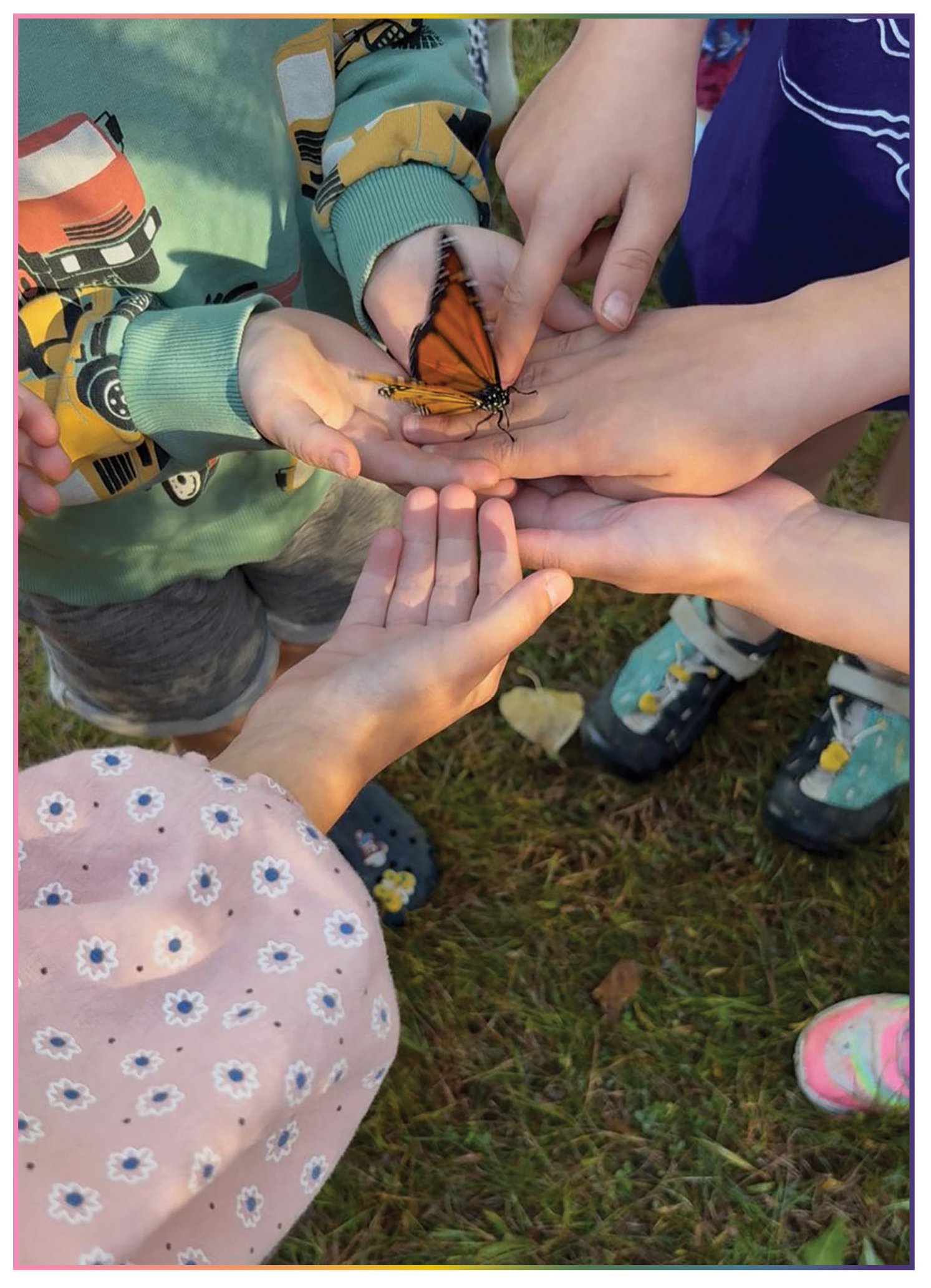
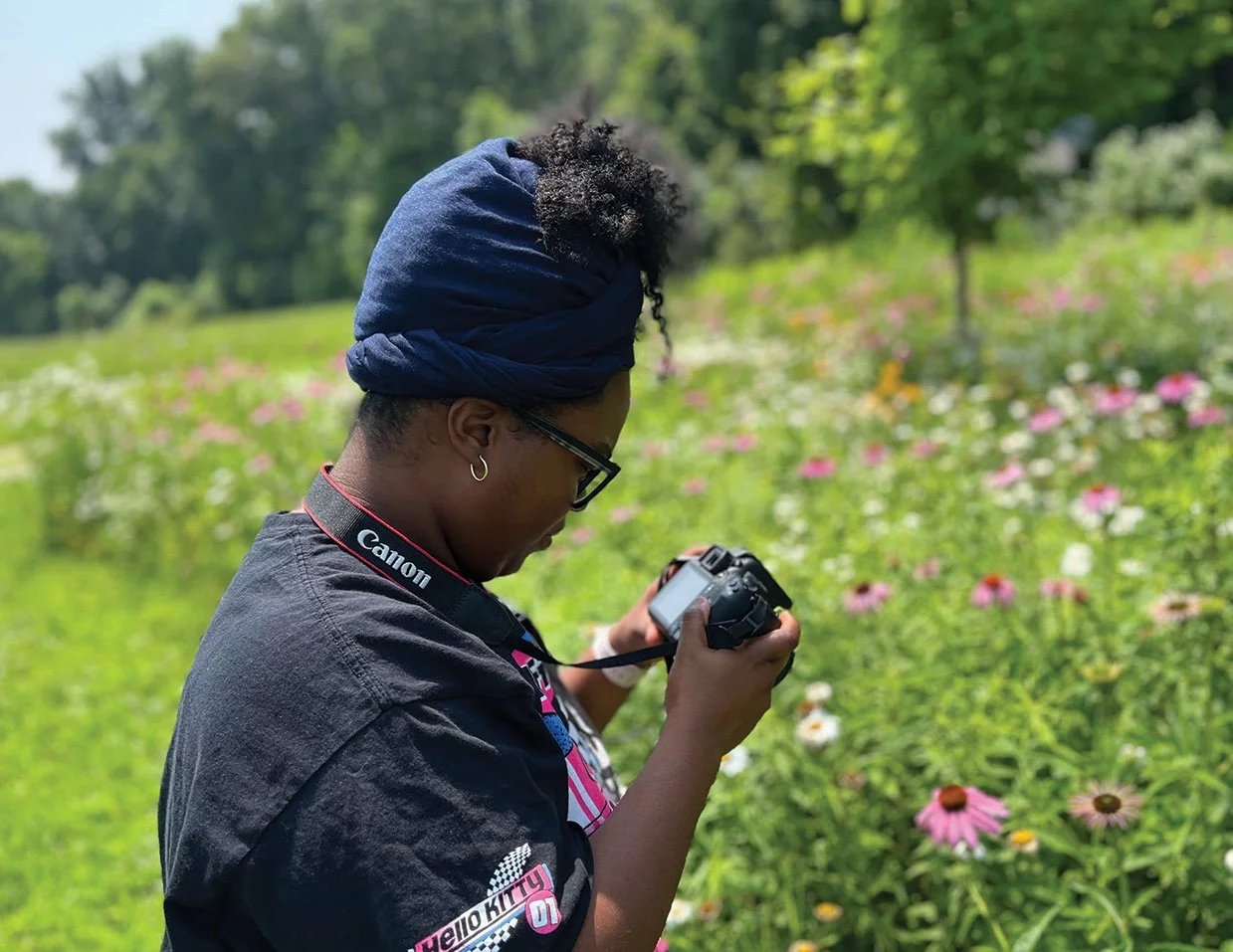





















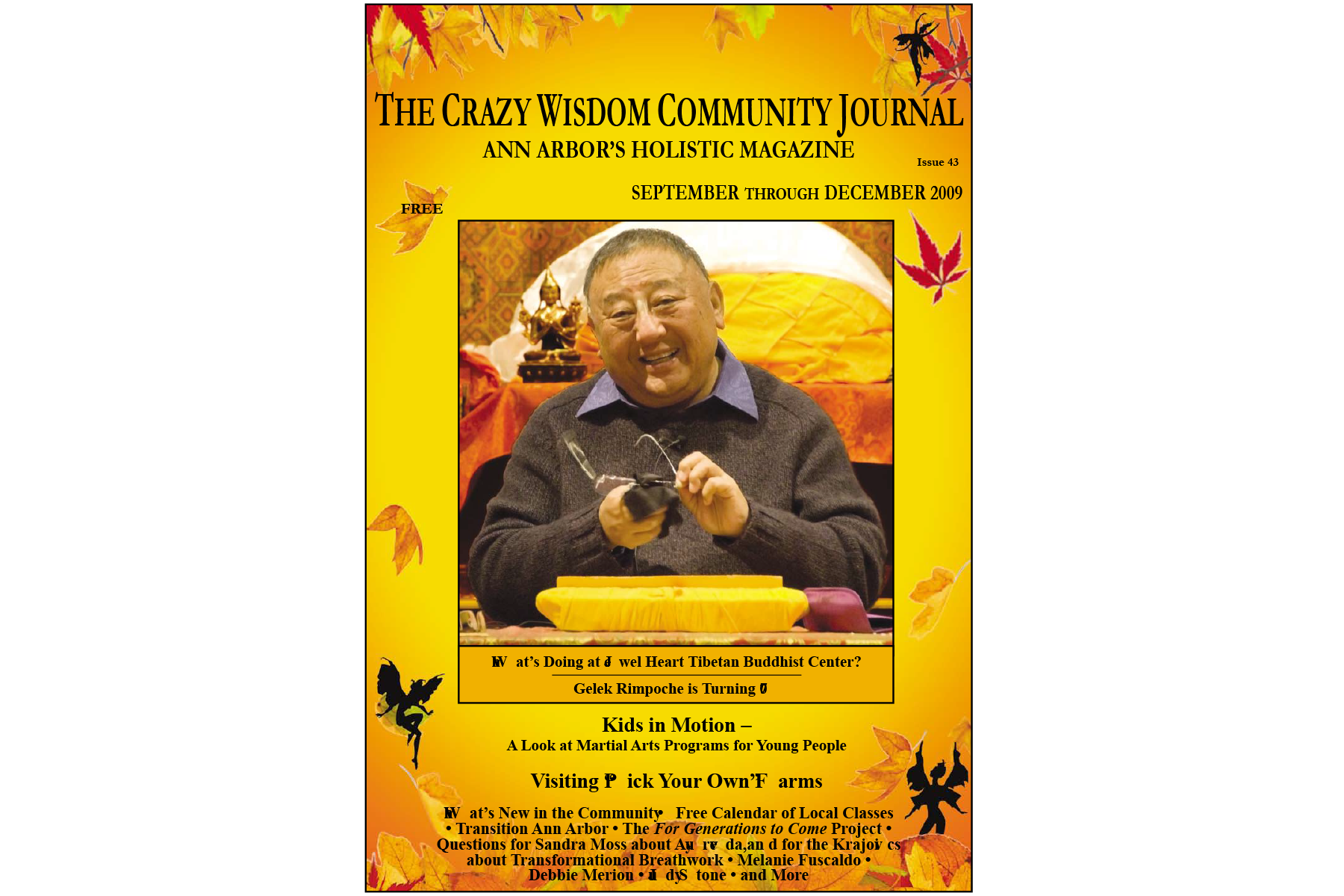



Most Ann Arborites know the Leslie Science & Nature Center (LSNC) off Traver Road is free and open to the public. When was the last time you visited? Maybe you played around on the lawn, in the woods, or in the unique, tunneled playground on a school field trip. Or maybe you showed up for the Annual Earth Day Event or October’s Animal Haunts. The property is still there, better than ever, with a friendly crew to help you when you desire it. Some day you might just want to wander around, or let your mind relax on the Black Pond Woods nature trail.