
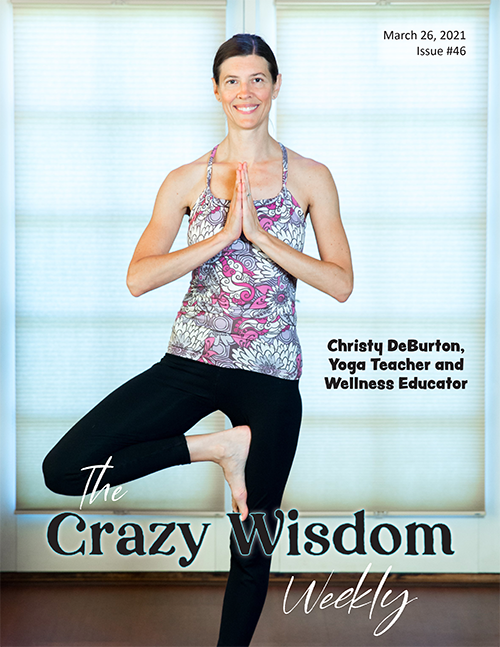
By Christy DeBurton
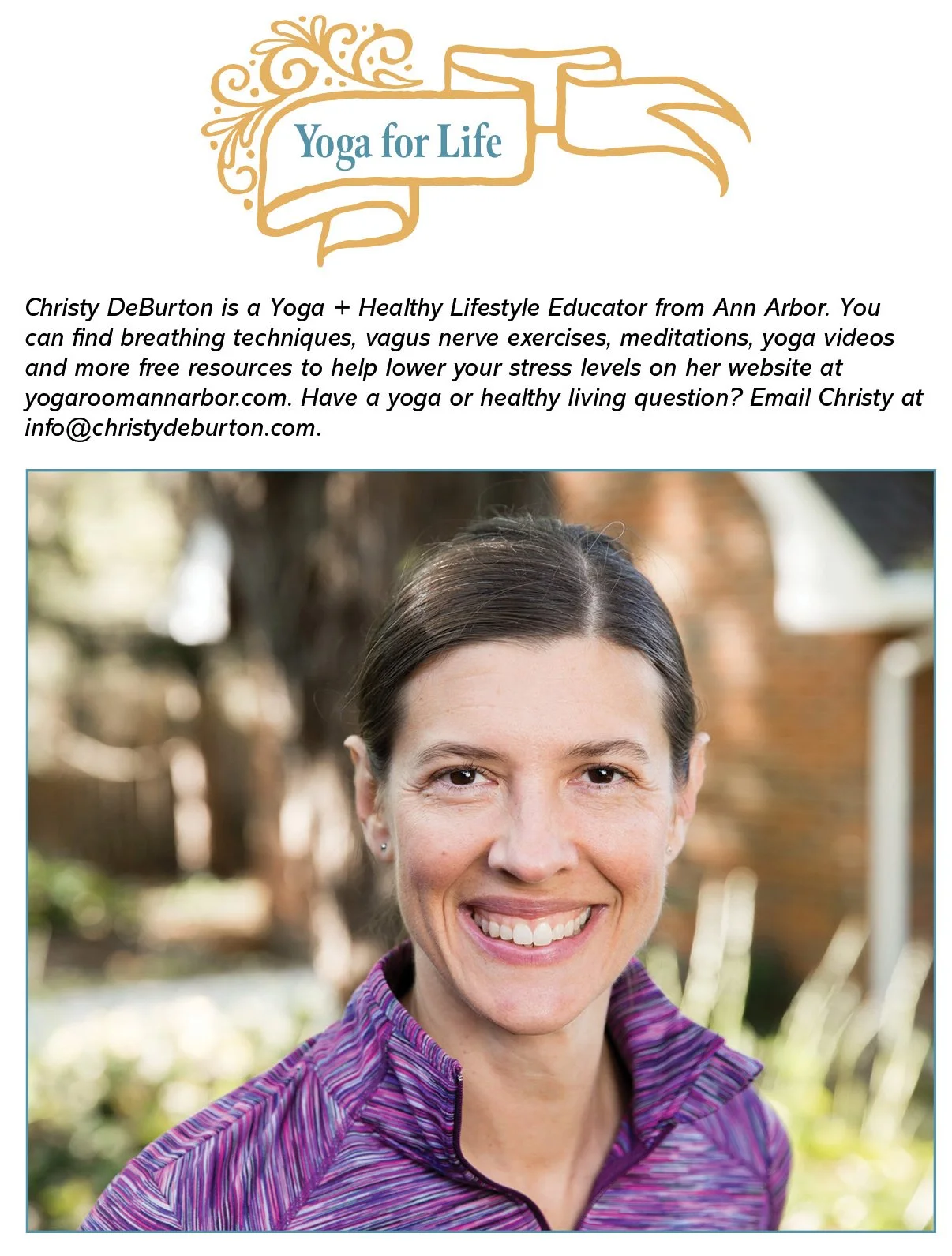
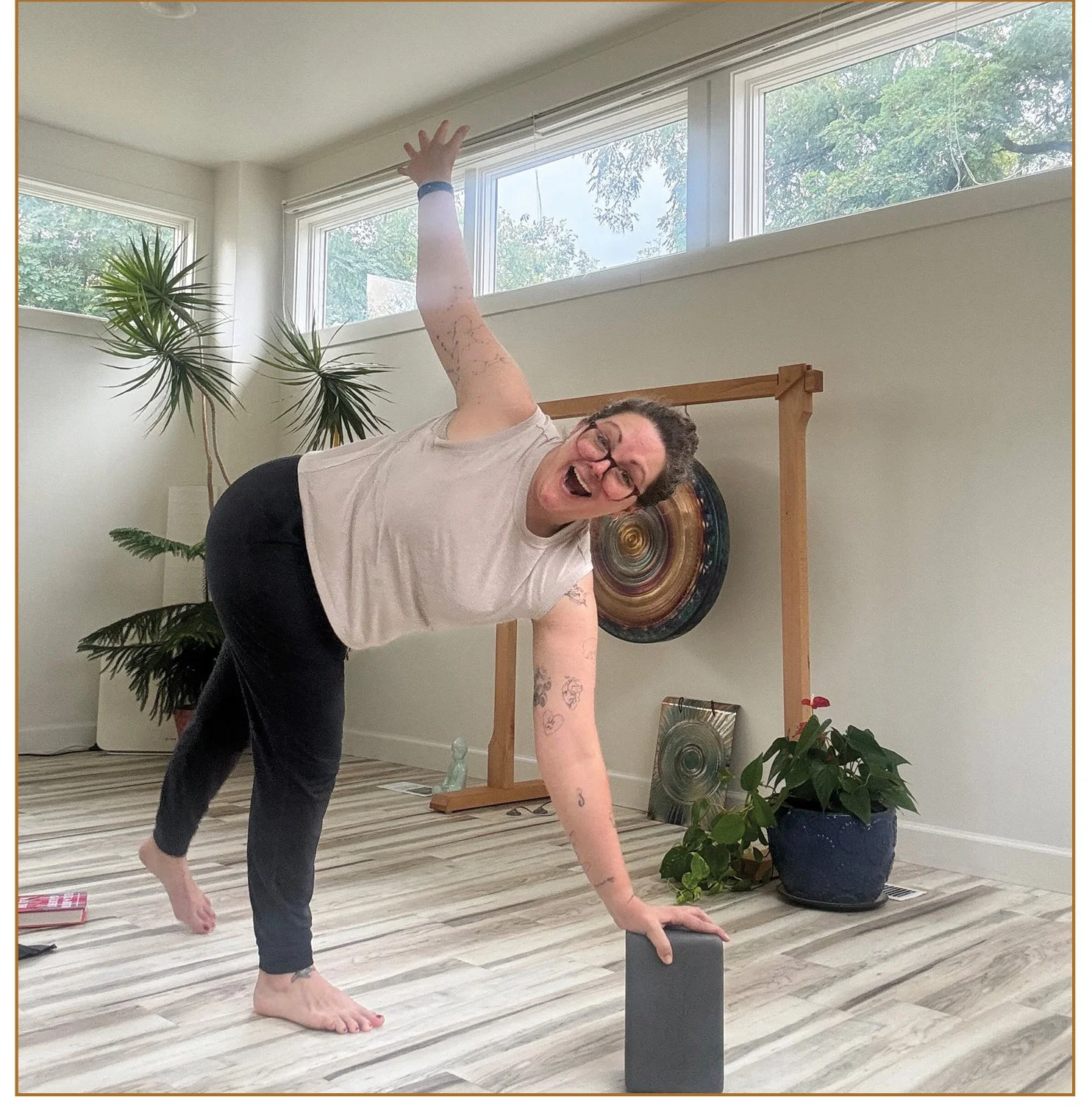
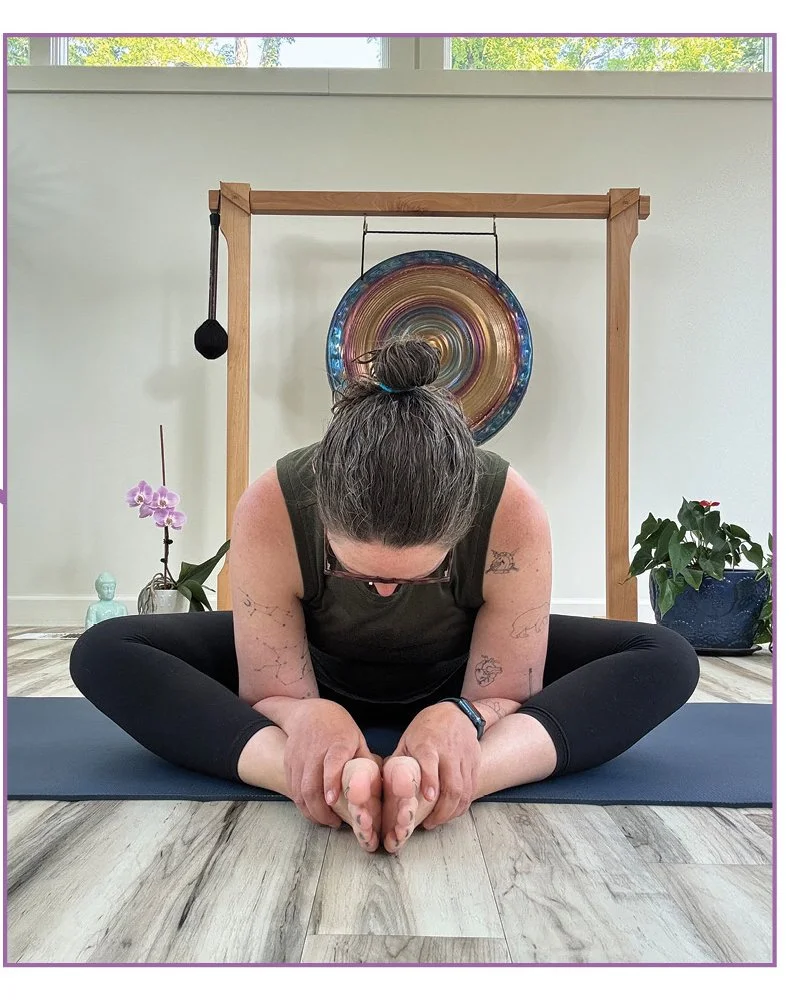
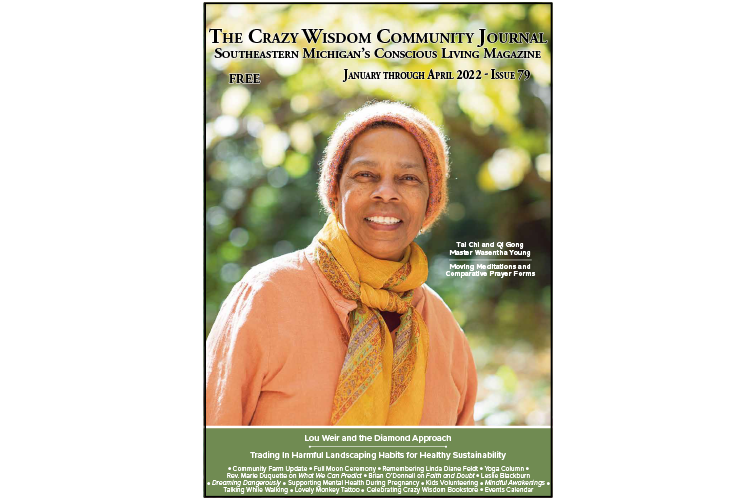
Hello, I’m Christy DeBurton, and I’m a Yoga + Healthy Lifestyle Educator from Ann Arbor. I began in this profession almost 30 years ago teaching wellness-themed group yoga classes. Since then, my practice has evolved and deepened to include working with clients privately in my Ann Arbor studio, as well as creating online yoga, self-care, and (peri)menopause content. In addition, I love writing informative articles for my Wellness Blog, so I am honored and delighted to be taking over the Yoga Column here in The Crazy Wisdom Community Journal to share yoga and healthy lifestyle resources with even more people!
I do want to start out with a confession: when the editor of this publication suggested the name, ‘Yoga for Life’ for my new column, I thought it sounded kind of, well, boring. I wanted something more enticing, and contemplated writing back, “How about ‘Yoga for Healthy Living?’” But the more I thought about it, the more I realized that ‘Yoga for Life’ really was a more appropriate title. You see, as much as I’m sure anyone reading this column wants to live a healthy life, at times that is easier said than done. We’ve probably all gone through periods when we haven’t felt our healthiest: seasons of illness, burnout, grief, upheavals…in other words, “Life.” These things are all part of the human experience. That is why I decided that “Yoga for Life” really was a more fitting name for this column. It’s just more realistic. I look forward to sharing practical yogic tools that help me, my yoga students, and clients navigate life with more ease.
I want to address a subject that is so pervasive in our world nowadays: stress. While a little bit of stress is actually good for you, too much has the opposite effect. How do you know if your stress is out of control? Take a moment to answer these questions:
Do you often find yourself complaining that you’re overwhelmed?
Do you wake up already feeling anxious about the day ahead?
Do you feel like there is never enough time to get everything done so you’re always hurrying?
Do you overreact to minor inconveniences?
Do you feel both tired and wired when you’re trying to fall asleep?
Do you get sick easily?
Are you constantly worried about your (or a loved one’s) health?
Do you feel in a persistent state of dread about the state of our world?

If you answered “yes” to more than a couple of these questions, chances are good that you are activating your stress response system more often than you think which causes havoc with your cortisol and other hormone levels. This can lead to insomnia, high blood pressure, anxiety, digestive issues, and a weakened immune system. Unfortunately, being stressed out is considered normal in our society today, and many people wear their stress as a badge of honor. However, we are not meant to live this way—nor should we be resigned to it. So, what are some things we can do to get our stress under control?
Unless we spend time exploring the underlying causes of our stress, ultimately nothing will change. A yoga practice can help us do just that. One of the gifts of yoga is that it helps us cultivate greater self-awareness. By getting on your yoga mat, you are taking time to slow down, be mindful, and see what you can learn about your body. With ongoing practice, you are better able to listen to your body and give it what it needs on a daily basis.
Have a go-to breathing technique
Breathing techniques are excellent for soothing a dysregulated nervous system and lowering stress levels. My online yoga students and private clients love the various breathing techniques I teach them, and I even have my own favorite (4-7-8 Breath) that I use on a regular basis.
Use a Mantra
Repeating some kind of positive mantra to yourself will crowd out stressful, negative thoughts and put you in a better frame of mind. If you’re a yogi, you might like to use a Sanskrit word or phrase like “Om” or “Sat Nam.” Or you could use an affirmation like “All is well” or “I’m Okay.”
Vagus Nerve Exercises
Your vagus nerve plays a big part in regulating your parasympathetic nervous system and affects your heart rate, breathing, immunity, and digestion. Vagus nerve stimulation also decreases the sympathetic nervous system and the stress response. I find vagus nerve exercises very helpful and often share them with clients.
Movement
If the idea of finding time to go to an hour-long yoga class stresses you out even more, do something shorter, like a 15-minute yoga video, or take a walk around your neighborhood. The physical movement will help release stress and tension in your body—and help you feel better emotionally, too.
Five Senses Meditation
This meditation quickly brings you into the present moment, especially if you do it out in nature. I love leading clients through it at the end of an Aqua Yoga session in my pool!
Visualize (or distract yourself!)
Visualization is a technique you can do on your yoga mat, or when you’re lying in bed at night with stressful thoughts racing through your mind. Think of an event from your favorite relaxing vacation or a scene from your favorite (non-action) movie. You could even bring into your mind that cute pet video from social media that makes you feel warm and fuzzy. It may take practice to stay focused on the visualization but keep at it. It will become easier in time and will be a nice distraction for your ruminating mind.
For best results, try out one of these suggestions every day for a couple weeks. Continuity is the key. Meditating once isn’t going to help you long-term, but you’ll start to notice a change if you meditate every day. Doing vagus nerve exercises once isn’t going to make much of a difference, but you’ll start to feel a shift if you do them every day. These techniques may seem overly-simplistic when you’re dealing with a lot of stress–that’s what I thought at first–but, trust me, they will help you navigate life with more ease if they become part of your daily routine. And what’s great is that they will only take a few minutes of your time.
Read Related Articles:

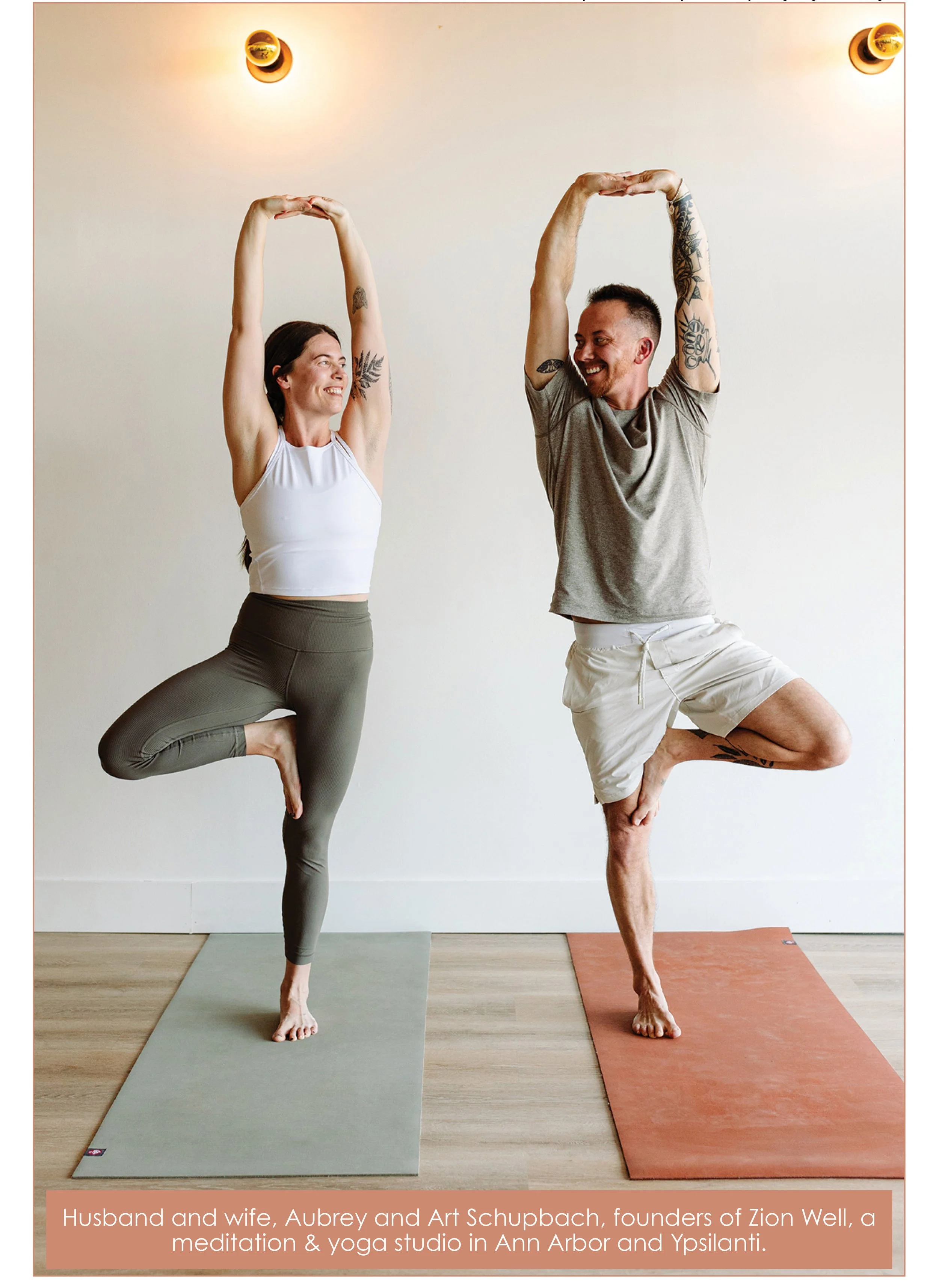

































































































































Mindy Eisenberg founded Yoga Moves MS, a nonprofit adaptive yoga organization, over 20 years ago, providing free classes to those impacted by multiple sclerosis, Parkinson’s disease, and other neuromuscular disorders. Her inspiration? Growing up with a mother with multiple sclerosis who spent the better part of twenty-seven years in bed paired with a profound belief in the healing impact of a regular yoga practice.