
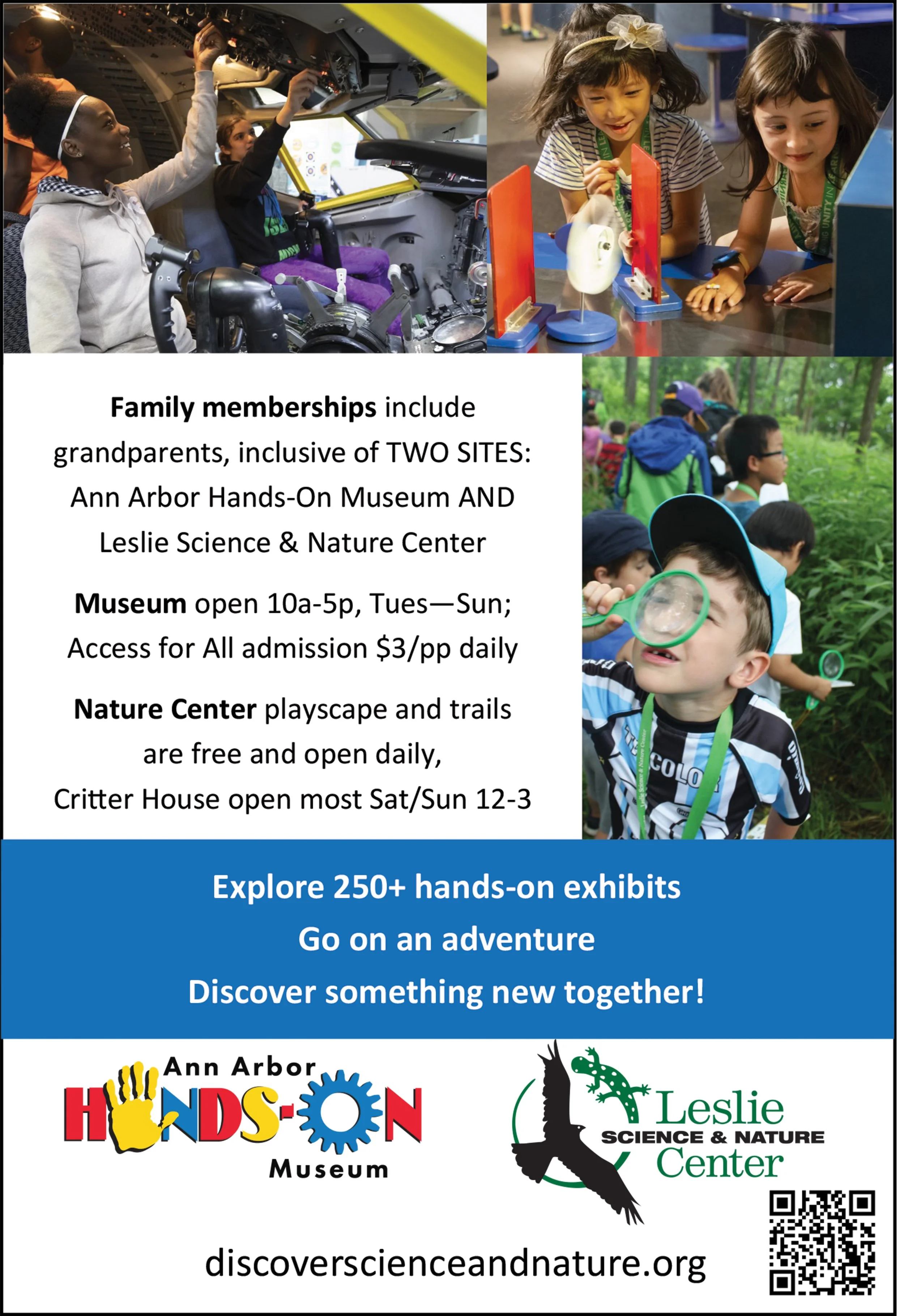
Most Ann Arborites know the Leslie Science & Nature Center (LSNC) off Traver Road is free and open to the public. When was the last time you visited? Maybe you played around on the lawn, in the woods, or in the unique, tunneled playground on a school field trip. Or maybe you showed up for the Annual Earth Day Event or October’s Animal Haunts. The property is still there, better than ever, with a friendly crew to help you when you desire it. Some day you might just want to wander around, or let your mind relax on the Black Pond Woods nature trail.
Posts filed under Animals
A visit with Sushma the Animal Psychic, or How I Reconciled with Naomi, My Russian Archangel Blue Cat
If you own a cat, then you have long ago figured out that your cat actually owns you. But dogs aren’t like that, oh no. It’s clear from day one that your dog belongs to you and wants to please you in every way. They will do everything they can to anticipate your needs and make you feel happy and content. For example, dogs don’t really want to go for a walk with you. But they can tell that you want to go for a walk. So, they’ll bring you their leash and act happy when you take it in your hands, no matter how they might be feeling.
Pollinator Hotels Part 2: Welcome Back, Bees!

By Karen Quinn
After a long, bitter cold winter, it’s time to welcome our bees and other pollinator friends back after their much needed, and well deserved, hibernation.
If you built pollinator hotels and overwintered them last fall (see my article in issue #90 of The Crazy Wisdom Community Journal for building directions), you can put them back out in your yard when the mid-day temperature reaches a consistent 55 degrees, and the overnights are above 35 degrees. In Southeast Michigan, that puts us around late March to mid-April, on average. However, we natives know that Michigan weather is hardly consistent, so use your best judgment.
Here are a few tips to help the flying friends as they come out of hibernation. First, I will suggest creating something called an “Emergence Box.” This can be a plastic bin or heavy-duty cardboard box that your hotel will fit inside. On one of the sides of the box/bin, cut a single ½ inch diameter hole. As our little buddies wake up, they will follow the light of the hole and leave the box. I went the plastic bin route, since I can use it year after year, and I don’t have to worry about it if it gets wet. If you choose to go this route, I suggest using a non-clear bin to make it easier for the groggy bees to find their way out. However, my first few years I did use heavy duty cardboard boxes. If you decide to take this route, just keep it up off the ground and under cover to keep it from getting soggy during spring rains.

There are a few reasons why this is a good practice. One reason is it keeps the pollinator hotel dry and free from most rodents and predators. The only stinkers you have to keep an eye out for are mice. If you find mice are making their way in and out of the emergence hole, you can cover it with a mesh screen. I use old potato or onion bags to cover the hole. The second reason is that a nesting female won’t see that as a safe place to return to lay her eggs.
Be sure to monitor the hotel in the emergence box often for unwanted visitors as well as keeping track of when it’s empty. You will know that a tube nest or the wooden block holes are empty when the plug at the end of the tunnel is broken. If you used pinecones, straw, or sticks, a cursory look for anyone sleeping among the debris is your best bet. Another important thing to watch for is moisture. This could be due to rain, or leaks in the wood. Access it to see if you need to weatherproof the seams, extend the roof, or adjust the placement of the hotel. Keeping the hotel dry, safe, and warm is of the upmost importance as our buzzing buddies wake back up.
Once the hotel is empty of occupants, it’s time to clean it up and get it ready for the next use. Start by removing all the nesting materials. Then, give it a good sanitizing scrub with a diluted bleach mixture. MSU suggests a ½ cup of bleach to a gallon of water for this process. This is a very necessary step to keep your local population of pollinators healthy. It is imperative to remove any parasites or pathogens that can cause diseases from the nesting areas. If you are reusing your tubes, clean them out with a pipe cleaner or straw cleaning brush to remove any debris, then soak them in the bleach solution and allow them to air dry. If you are using the drilled block method, you can use the same size drill bits to rebore out the holes if you wish, then soak the wood in the bleach solution, and allow it to air dry completely. You can use the natural tubes and wooden blocks for two years before they need to be replaced. Be sure to wash the box of the hotel completely as well and make any necessary repairs to rotten wood. Once it’s all cleaned and dried, you can place it back out in your garden or store it and use it next year.
Now, if you want to help your nesting female friends out all summer (and I highly recommend you do!) Simply place a new, clean, bee hotel, identical to the one you put out in the fall, near the emergence box in your garden. Now, it doesn’t have to be “new,” it can also be the nesting box you just cleaned or one you stored from the previous year. Make sure it is in a protected, covered space, facing southeast so it receives direct sunlight in the mornings. It is best to put the new hotel up about 4’-5’ on a post, building, or tree as close to your garden as possible. Then simply leave it all summer, and when the temperatures drop again in late October, your hotel is full of pollinators and ready to be put in a safe place!
If you place a new bee hotel out, continue to monitor it throughout to garden season. When you see tubes or drilled holes capped with mud or leaves, that is a sign of mason or leafcutter bee nests. You might even find cocoons of moths or butterflies in your straw and sticks, which are oh so much fun to watch. But aside from “wanted activity,” you should also watch for unwanted events as well
Next, watch out for ants! They will gladly use your hotel as a bee larvae diner and destroy your bees’ nests. There are many pollinator safe remedies out there. Diatomaceous Earth (or DE) around the base of the post or in the bottom of the nesting box can be a good preventative as well as deterrent. I’ve also heard other gardeners have success using ant bait and sticky spray to deter an active invasion. The last thing I watch for is an excess of spiderwebs. Now, if some enterprising genius arachnid sets up shop on my bee box, I’m not above moving a spider away from my hotel, but a lot of webs is an indication that it might be in a little too shady of a spot.
Finally, be sure to add more native blooms and natural habitat around your garden to encourage even more bees, flies, beetles, moths, birds, and butterflies to stay. Be the oasis these little creatures are dreaming of, and they will pay you back tenfold by simply being themselves, and making your garden more beautiful than you knew it could be.
Karen Quinn is a writer and artist who homesteads on a rural urban farm in Livonia, Michigan with her husband, son, and a menagerie of animals. Her favorite things are reading, exploring, and drinking tea.
Read Related Articles:
Featured

Annie G’s: A Dairy Farm for the Future
Let me introduce you to Annie G’s, a small herd dairy cow farm run by Kat and her husband David Mageean. This dynamic duo, along with their two young children, Annie and Angus, whom the Dairy is named after, have a dream of their own to share. Their dream is to make the “100 cow dairy farm” viable again and they are working to revolutionize the dairy industry to help encourage others to do the same.
Messages from the Beyond, Empowerment from Within — Discovering My Purpose as an Intuitive Animal Communicator
After this eureka moment, I took a leap of faith—I started offering free readings via Zoom for pet parents—I did group, one on one, and email readings. It was at the end of my first group reading in July 2020 that a participant (Julie) asked me if I could read horses. (During the gallery, I had been able to connect with her dog Ripple). I told her that I didn’t know but was willing to try!
The Buzz on Protecting Pollinators Through the Winter
During the spring and summer there is always a lot of buzz around pollinators, their habitats, and how to support them. But did you know you can continue to support your backyard friends in the fall and winter as well? Through a few simple steps you can continue to provide for your local pollinators as the weather turns cold. By offering them housing during the snowy winter months you can guarantee they’ll return to your gardens the following year. It’s a win for everyone!
Wild Wellness at Mother Bear Sanctuary and Retreat Center
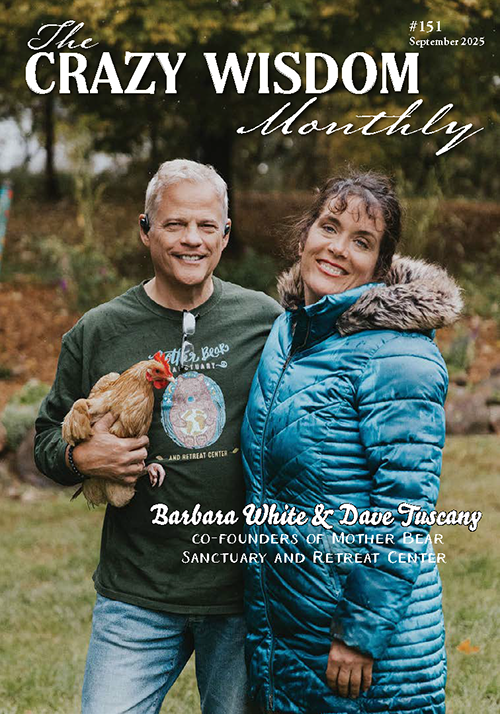
Barbra White, co-founder of Mother Bear Sanctuary and Retreat Center, believes that all living beings are deeply interconnected. “It’s kismet,” she explained, that just as she was longing to spread the word about her retreat center, which opened in 2018, The Crazy Wisdom Journal came calling for an interview. “I feel like I’ve been in a cooking pot for 30 years in this work, but here, specifically with Mother Bear Sanctuary for the last eight years, I feel like I’m saying to the universe, ‘I’m ready. I’m ready.’ So when [the Journal] called, I thought, ‘kismet.’”
What’s It Like to Be an Animal Communicator?
My first real conversation was when I started talking to a squirrel one day to practice my new skills. He interrupted with, “Don’t just waltz in here and start talking, that’s rude! Be. Become. Then ask if someone wants to talk.” He flicked his tail and departed, and I saw the name Tuu-Liss in my mind.
Dirty Windows
The birds are exuberant this morning. By the dozens, tufted titmice, rose-breasted grosbeaks, cardinals, gold finches, black capped chickadees, blue jays, mourning doves, and an oriole sing and flit from branch to nearby branch in a riotous clamor just outside the living room windows. One of the delights of spring is the way one can luxuriate in the bookends of the day. Morning unfolds slowly as the light gathers until the sun crests the horizon, and then all at once the day bursts open like a flower. Evening lingers before the day finishes. It is at these times that I especially enjoy watching the birds come and go.
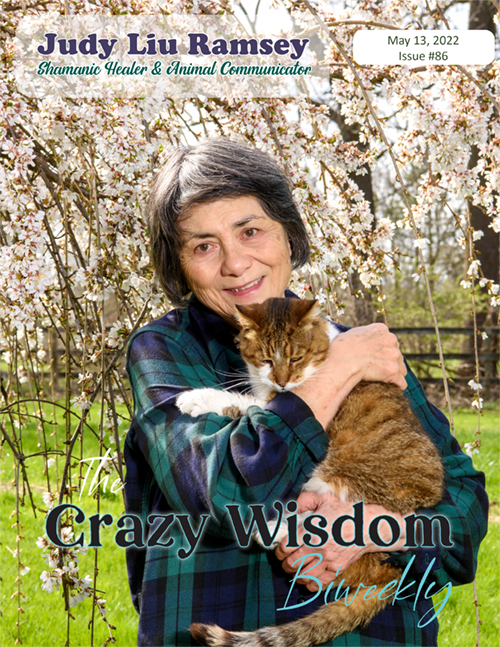
Listening and Learning with Nature: Judy Liu Ramsey--Interspecies Counselor and Shamanic Healer
Living on a farm in Chelsea, Ramsey’s journey from community developer and social worker to shamanic practitioner and animal chaplain exemplifies an authentic evolution of one’s unfolding of identity, own healing, and epiphany in recognizing one’s place within the actual world contrary to the confines and misperceptions of society.
Out of My Comfort Zone: My Cat Ate My Comfort Zone
This is the story of Margot, a recently rescued tuxedo cat, and how she curled up in my heart and broke it open.
K9 Translations: Training Dogs, and People, With Kindness
The biggest picture on the wall of my home office is not of my wife or daughter, or our parents, or any other relative. It is of a now long-gone but still cherished member of our family—our first dog. Murphy was a brown and white, thirty-pound Sheltie my wife and I adopted a few years after we married. He was, before our daughter was born, our first “child.” He was a thoroughly lovable dog. Sharp as a tack—I taught him to sit and shake in about ten minutes—an endless source of delight in games of fetch, and great company—most of the time. He was also an incorrigible chowhound, forcing us to guard our food zealously at mealtimes. He exploded into fits of barking and jumping whenever we had guests or if he saw a bicyclist, car, or dog on our walks. We tolerated it all, not knowing that it might be possible to change those behaviors. We figured it was a small price for living with a wonderful dog.
All Creatures Great and Small: Winter Coop Wonderland
As the evenings grow colder and the nights get longer, I find myself looking for signs of Jack Frost on the windows and a small dusting of snow on the pines. As the season progresses, I make treks down to the river to see if the edges have started to form their delicate lace of ice and wake up each morning hoping to see a snow-covered wonderland. The kind of snow that brings silence and a deep, peaceful calm to the landscape where, when the sun hits it just right, the world glitters like diamonds.
All Creatures Great and Small~The Decision
Dogs have been a part of my life for as long as I can remember. Their unconditional love has provided a lifeline of emotional support during some very dark times. In the aftermath of a failed relationship and a thoroughly broken heart, being accountable to my dogs, and needing to care for them, literally gave me a reason to get up and carry on living. I was struggling with a very bad episode of depression—the kind that comes with such crushing, completely debilitating fatigue that it’s nearly impossible to get out of bed.
Stories from the Farm— Sheep: Our Sweet Wooly Babies
For as long as I can remember, February has always been synonymous with sheep. This comes from my lifetime on farms and from stories passed down by ancestors that I’ve never met, yet whose tales live on through the generations of Celtic folklore. One of my favorite folktales is of Cailleach, the divine winter hag of the Isles. Cailleach created the landscape using her basket of stones and her hammer. She would clash and fight for control of the seasons with Brìghde, the goddess of summer.
Adventures In Cat Sitting
3:00 p.m.: I just arrived at my sister Deb’s for my pet sitting gig. The cats are wary and stand-offish but I’m sure I can remedy that. I begin by reading the little sticky notes left by my sister. Everything is efficiently tagged and labeled, then I see it—the notebook. As I scan the many pages of instructions, I can only marvel over how these animals have her trained. I will not be dictated to by a pack of felines!
A Life of Cat Companionship
Giant ears disproportionate to the rest of his tiny body, beady eyes, a thin mousy tail, and tiger stripes. His name was Peppy, and he was the first kitten I ever called my own. My parents got him from a pet store, probably to quiet my constant nagging. I'd always loved cats.
Learning From Our Year Round Birds
Whether you enjoy watching birds flit about casually, are a dedicated birder, or keep a bird feeder going, it is likely some of our beautiful year-round birds have caught your eye on more than one occasion. For centuries, humans have observed birds for signs and omens (called augury or ornithomancy) as well as told stories illuminating the lessons birds carry. Birds have a wealth of wisdom to share with us, and this article highlights several of our year-round winged teachers who can be called on at any time in our hearts and, with some bribing, in our yards. These Michigan loyalists are the Black-Capped Chickadee, the Blue Jay, and the Northern Cardinal.
Peace, Love, and Cows
There is a feeling of peace in the cowbarns at Goloka Eco Experience in Maybee, Michigan. The farm air feels crisp as it enters the lungs—unequivocally more clear than city air. In this moment, the gentle thud of a heartbeat or thwap of a tail against the ground is one’s only soundtrack against the world. Soft, big brown eyes peer out from underneath impossibly-long eyelashes, begging for pats on the head or scratches at the nape of the neck. Goloka Eco hosts an experience one simply cannot find among the hustle and bustle of regular everyday life--an invitation to be present. To come sit. To forget about time for a while. To cuddle a cow, as volunteer Karunasindhu Nitai Gaura Dasa says, is to form a “meaningful relationship.”
A Good Crop of Mental Health: A Conversation about Animal Assisted Therapy with Laura Sanders
Laura Sanders, LMSW, ACSW, has been practicing in the Ann Arbor area for 34 years and has been teaching as an adjunct professor at the University of Michigan School of Social Work for 26 years. Her approach to therapy utilizes a wide variety of evidence-based and creative therapies, including trauma recovery methods, art and play therapy, Cognitive Behavioral Therapy, and relational approaches through Animal Assisted Therapy.









































































































































Most Ann Arborites know the Leslie Science & Nature Center (LSNC) off Traver Road is free and open to the public. When was the last time you visited? Maybe you played around on the lawn, in the woods, or in the unique, tunneled playground on a school field trip. Or maybe you showed up for the Annual Earth Day Event or October’s Animal Haunts. The property is still there, better than ever, with a friendly crew to help you when you desire it. Some day you might just want to wander around, or let your mind relax on the Black Pond Woods nature trail.