
Everybody Carries a World
By Sandor Slomovits
“Look around, look around/At how lucky we are to be alive right now.”
The first time I heard that line I was listening to the cast recording of the musical Hamilton. It was the fall of 2015 shortly after the musical opened on Broadway. That first listen of the entire musical was so powerful for me that I still vividly remember exactly where I was, in our van with my wife, on our way home after a brief vacation in South Haven. We listened throughout the entire trip, and I marveled at the singing, the orchestrations, the words, and the music. A few months later when my daughter, wife, and I finally got to see Hamilton on Broadway, we all knew many of the lyrics by heart (actually, my daughter knew all of them) and burst into tears at the sound of the opening dum da da da dum dum dum, as powerful it seemed to me, as the da da da dum of Beethoven’s Fifth.

I found many of the lyrics in Hamilton to be instantly memorable, but that line, “Look around, look around/At how lucky we are to be alive right now,” particularly spoke to me that first time I heard it in our van, as well as the day I finally heard it live in the Richard Rodgers Theatre on Broadway; it perfectly captured not only how I felt about my life, but also my feelings about the state of our nation and of the world. Listening to Hamilton while we drove on back roads to extend the trip in order to finish listening uninterrupted, and then sitting in the very last row in that dark theater and feeling like I was almost on stage with the actors, I felt that despite everything that was not right in the world at the time—as always, there was plenty of that then also—even so it felt like a hopeful, good, and yes, lucky time to be alive.
Today, when I “look around,” our “right now” does not seem as fortunate. (I don’t want or feel the need to list the litany of disasters and outrages of the last ten years. You, dear reader, know them as well as I.) But now, a decade after I first heard, “Look around, look around/At how lucky we are to be alive right now,” I find it difficult to agree with that assessment. While I am still keenly aware of and deeply grateful for my good fortune—I’m healthy, have family I cherish, work I love—the events of the past decade, magnified and amplified by the rolling thunder of the daily news, at times leaves me feeling unsettled and helpless in the present and fearful of the future.
I have read enough history to know that there have been countless tough times before, many arguably much rougher than now. Nonetheless, I don’t find the old bromides, “It could be worse,” and “This too shall pass,” comforting.

Listening to Hamilton recently, hoping for heartening words and a broader perspective, another line caught my attention. “Look at where you are, look at where you started/The fact that you’re alive is a miracle.”
In the musical, those words are sung by Eliza Schuyler and directed only at her husband, Alexander Hamilton, but I found myself expanding her audience to include all of us.
“Look at where you are.” Every human being on Earth today is the end product, if you will, of an unfathomable number of evolutions of life forms, a vast number of generations of human beings, over an unimaginably long period of time. “Look at where you started.”
Each of us owe our existence to all our forebears. Each of us is the most recent link in an inconceivably complex chain of humans and other life forms dating back to the deepest history of life on our planet. “The fact that you’re alive is a miracle.” We all are the literal embodiment of all our ancestors, of all their failures and successes, of all their trials and perseverance. As Niall Williams wrote sparely and elegantly in his novel, This Is Happiness, “Everybody carries a world.”
This is no passive act, this carrying. We all have a say, however small, in what happens.
The past presses inexorably on the present. Shakespeare said in The Tempest, “What’s past is prologue.” Yes. However, it is not destiny. It is a guide, though not always a reliable one. “There were many wrong things thought then, as no doubt in time we’ll find out there are now too” (Niall Williams, This Is Happiness).
Time, the ultimate alchemist, transmutes the past into the present and minute by minute into the future. Still, we are the ones who carry our world from the past into the present and the future. Niall Williams writes in This Is Happiness, “We’re all, all the time, striving, and though that means there’s a more-or-less constant supply of failure, it’s not such a terrible thing if you think that we keep on trying.”
Sandor Slomovits is one of the two brothers in the Ann Arbor folk music duo, Gemini. Along with his daughter, Emily, San and Laz also perform together as Gemily (Gemini+Emily=Gemily). Visit them at GeminiChildrensMusic.com. In addition to The Crazy Wisdom Community Journal, he also writes for The Ann Arbor Observer and The Washtenaw Jewish News. His essays and other writings can be found at SandorSlomovits.com.
Read Related Articles:
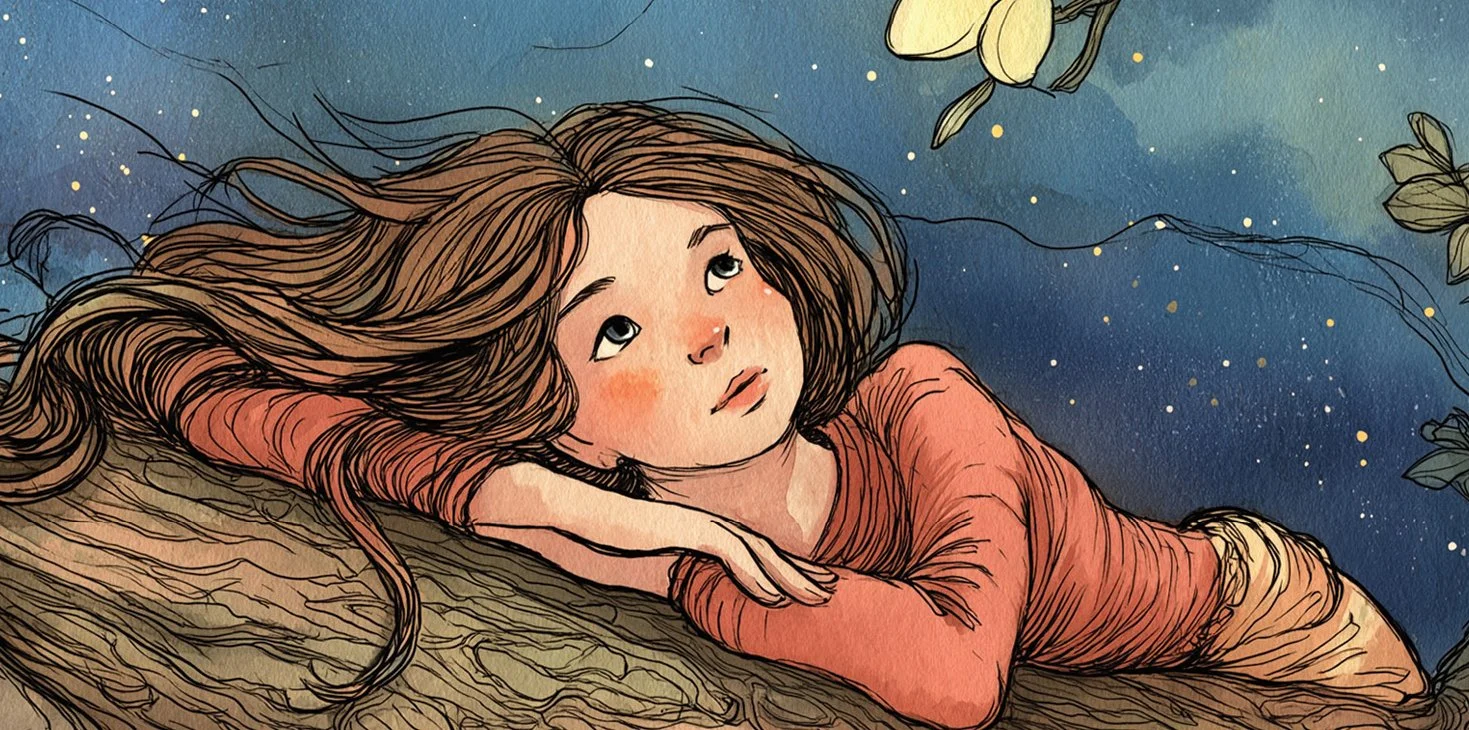



































































Time can seem to come to a standstill when we are waiting. During my grade school days, I would stare at the clock above the classroom door silently pleading for the bell toll to release me. Sometimes, I would avert my eyes, hoping that more time would pass between my longing glances. I’d spot birds outside the window, and my jealousy grew as I sat in a hard plastic chair and ached to stretch my limbs. When I’d look back at the clock face, I was often disheartened to see how little time had passed since my last glance. I wondered whether the clock was growing too tired to make it all the way around the dial, or perhaps whether it had fallen asleep to the lull of my teacher’s voice.