
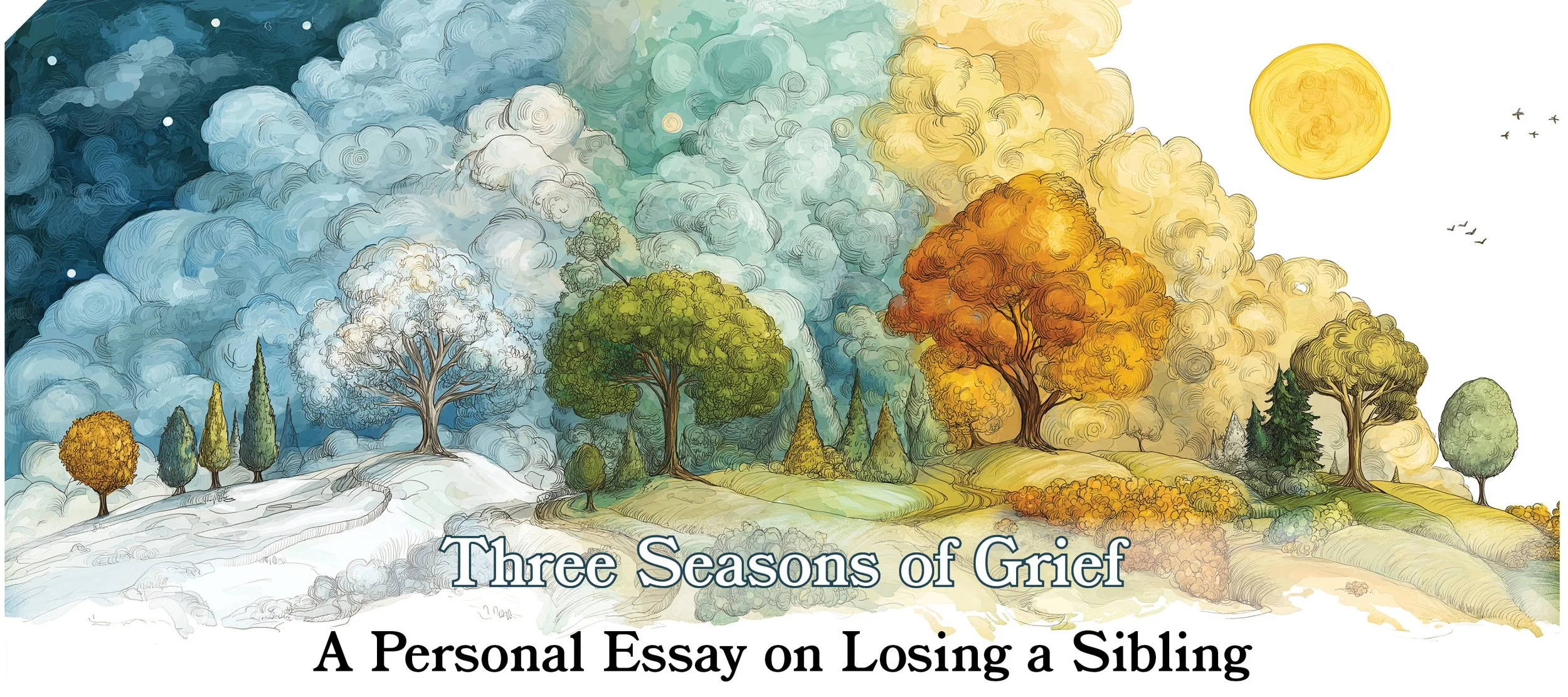
By Frank Vandervort
There is meaning in the natural rhythms
of dying and living, winter and spring,
bones and leaves.
—Kathleen Dean Moore
Spring
“Hey there, Janey Junkyard,” I said in a sing-song voice, invoking the childhood moniker my sister still carried at age 63. I don’t know where the nickname came from, how or why we started to use it. I do know that when I said it, she always blushed and grinned. And this time was no exception—her cheeks turned red as a June strawberry, a big smile spread across her round face as she reached out her arms to give me one of her crushing hugs.
I was surprised to see Jane sitting up when I arrived. I hadn’t seen her out of a hospital bed in the four years since she’d moved into the nursing home in Sutton’s Bay. Though her health was generally good, she could no longer walk. At well over 500 pounds, she’d developed neuropathy and recurrent infections in her legs.
I pushed her wheelchair from the hallway where she had been awaiting my arrival to an interior courtyard. It was a beautiful spring day. The early May sun high and bright, though the air still held a chill. I wore a light jacket, and she draped a sheet over herself. Tulips and daffodils were in bloom. A hummingbird flitted about, the mummer of its wings coming and going, undulating like the waves of Grand Traverse Bay against the shore of the Leelanau Peninsula.

Driving from my home in Ypsilanti, I recalled Edwin Way Teale’s book North With The Spring, the first installment of his four-volume series The American Seasons. The book documents a journey he and his wife took to assuage their grief after their son was killed in World War II. Teal describes how spring in North America begins in the deep south and moves north about 15 miles a day. Driving along Interstate 75, time seemed to turn backward, I could see the season’s regression on the landscape. Spring wildflowers that had already faded at home were just beginning to bloom. Around Roscommon, the nubile leaves of the paper birches, still chartreuse, were radiant in the morning sun.
We sat in the garden chatting for two hours. My sister, the genealogist and keeper of our lore, talked of family members spread across the country and back two generations. We chatted about our parents—both gone a quarter of a century now—and laughed about their foibles and reminisced of cousins and grandparents.
She was in a good humor that day, talking with her hands and chuckling. She had lost a bit of weight. I could see it in her face. She told me she’d been making some progress in physical therapy. Holding onto the parallel bars, she reported she had taken a few steps. She expressed determination—“I’m gonna walk again!” She was optimistic.
Summer
The first call came about 1:30 in the afternoon on July 31. It was a doctor who said she was calling from the ICU. She explained that Jane had been brought into the hospital from the nursing home the night before by ambulance after her health took a turn. They had determined that she had sepsis, but that they were having difficulty locating the source of the infection. They had tried to do an MRI, but when they laid her down, her weight made it impossible for her to breathe. “She couldn’t tolerate it,” the doctor explained.
She had grown disoriented and was unable to authorize them to take further steps. They needed to check with me as her designated medical decision-maker. The doctor wanted my permission to intubate her and try again to complete the MRI. I agreed. But she also wanted me to know that things did not look good. Jane’s kidneys were beginning to fail.
The doctor called back two hours later. The attempt to conduct the MRI was unsuccessful. Jane’s condition was deteriorating rapidly. Her kidneys were failing, and they might need to place her on dialysis. The doctor wanted me to know that sometimes people in her condition begin dialysis and can never come off the treatment. Things did not look good, the doctor reiterated. Then she asked about Jane’s end-of-life preferences.
I swallowed hard. I knew it had not been good earlier, but somehow, I had not quite understood until that moment just how serious her condition was. I explained that Jane had always been a deeply religious person and that she wanted all life-saving measures to be taken.
We were on vacation in Maine. We decided that we would leave first thing the next morning for the drive back to Michigan. Just as we were about to sit down for dinner, the next call came. This time, it was a nurse rather than the doctor. She explained that Jane was continuing to deteriorate. She was beginning to experience multiple organ failure. Her kidneys were barely functioning. Her blood pressure was dropping, and they were giving her large doses of medication to try to stabilize it, but the medication wasn’t working. She explained that there was a good chance Jane would not make it through the night. She, again, asked about end-of-life care. I repeated what I’d told the doctor earlier.
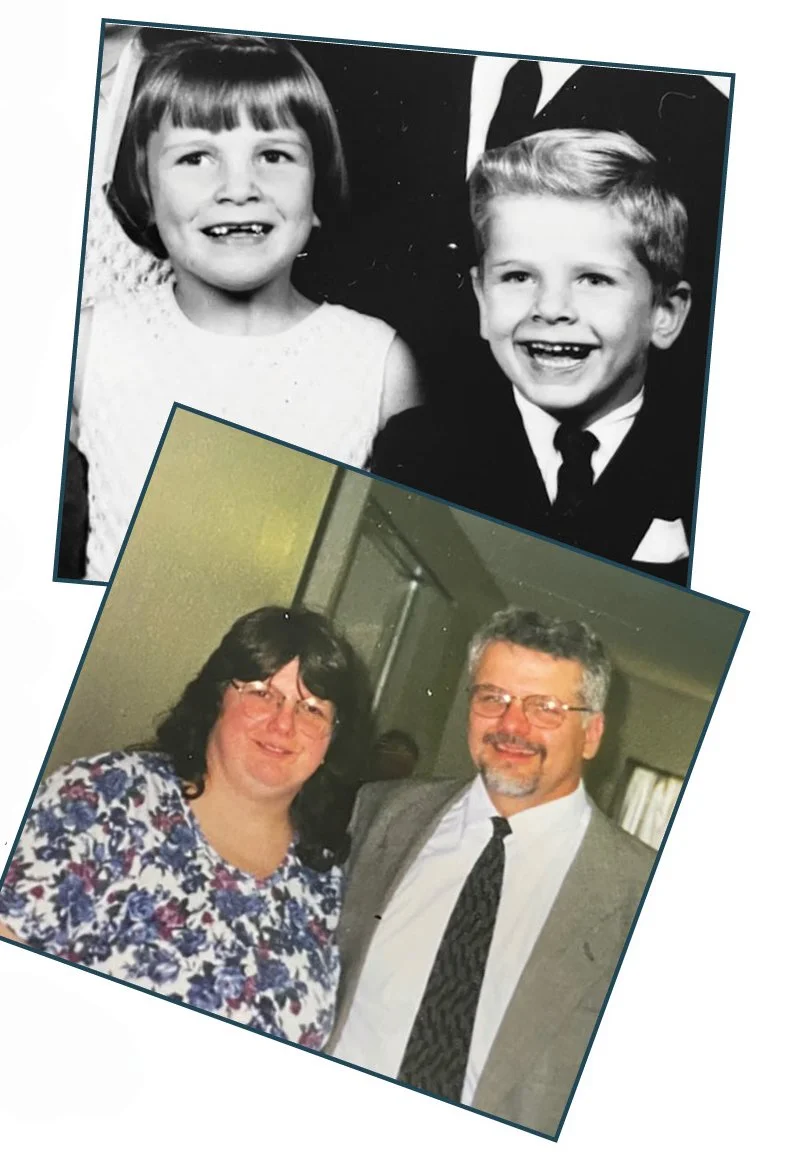
I laid down around 11:00 p.m. I was exhausted but could not sleep. Dozens of scenes played over in my mind: fetching her a couple times a week from her third grade classroom when I was in the second grade so that she could join me in our slow reader’s group, a long walk we’d taken together in the Arboretum nearly thirty years earlier, a trip we had taken to visit relatives in Georgia for Thanksgiving one year in the 1990s during which she and I took a day trip to Atlanta. On and on.
At 12:45 my cellphone rang. It was a nurse. She was at my sister’s bedside. Jane was in cardiac arrest. The nurse was explaining the current situation to me while simultaneously giving directives to the medical team.
As I understood it, they had defibrillated her once and were about to do it again. She again asked me about end-of-life directives. I said, again, Jane wanted all measures taken to preserve life. “We can do this for a couple more rounds,” the nurse responded, sounding vaguely angry, though perhaps she was only stressed. “But it’s futile. She is actively dying.”
She turned away from me to instruct the others at the bedside. She then said that if I wanted to change the directive, they could administer medication that would allow her end to be pain and anxiety-free. I instructed them to stop the lifesaving efforts. It was clearly of no use, and I saw no reason to continue. I didn’t want her to suffer, and the outcome was inevitable.
The next morning, we left the Maine coast as the sun rose over the Atlantic Ocean, having slept little. It took nearly 14 hours to drive the 700-plus miles. After another fitful night, I was back on the road for the drive to the Traverse City area. Michigan’s landscape was at its height of summer verdancy. The trees were lush with shiny leaves, the forests lining the interstate and two-lane roads a hundred shades of green. The white birches, so beautiful in their May bud, were delightful at the height of summer, their trunks white slashes that stood out against the deep green hues of conifers, their full leaves shimmering in a light breeze. The corn stalks were six feet tall, helical with cobbs, and capped with silky tassels. The roadside ponds were abloom with water lilies, white and pink, their bright yellow-orange pistils visible through the window even at fifty-miles-an-hour.
I met my older brother, and we drove to the hospital and met with the staff of the nursing home.

By the time we held her memorial service a few weeks later, the leaves had lost their luster. The first hints of the autumnal turn showed in the forests and on the fields. The corn had been picked and small clumps of maple leaves, or occasionally an entire tree, burned orange or bright red. Late summer wildflowers—Queen Anne’s lace, Joe Pye weed, and my favorite, goldenrod, were in bloom as milkweed leaves were turning brown. Monarchs had begun to flutter south.
Fall
The trees, so brilliant with autumn’s mosaic only a few weeks earlier, were bare in November. The landscape’s color palette of muted greens and browns so dull that the few russet leaves that clung to oak branches and the sallow corn stubble in the fields seemed brilliant by contrast. The early afternoon sky was mottled, a camo blanket in shades of gray; it intermittently spit cold rain. Set to auto, my headlights turned on, then off, then on again. The day closed in as I drove back to Traverse City to inter my sister’s remains.
Afterward, as darkness gathered and a cold, steady rain mixed with snow, I walked along the main street of my hometown in the presence of ghosts. Here, the little greasy spoon where we sometimes accompanied my father to meet his cronies for coffee. There, the shoe store where my mother bought our school shoes, still run by the same family nearly sixty years later. The building that housed Mr. Kreps’s little grocery store where my mother sent me and my younger brother to buy milk or bread was still standing though it now housed an insurance agency.
As winter’s dormancy fades and spring replenishes the land with new flowers, fawns and foals, I feel the excitement of new life and am reminded that the human spirit, too, always renews.
Frank Vandervort is a clinical professor at the University of Michigan Law School and a freelance writer. He lives in Ypsilanti Township. He can be reached at fevandervort@gmail.com.
Read Related Articles:






























































































































































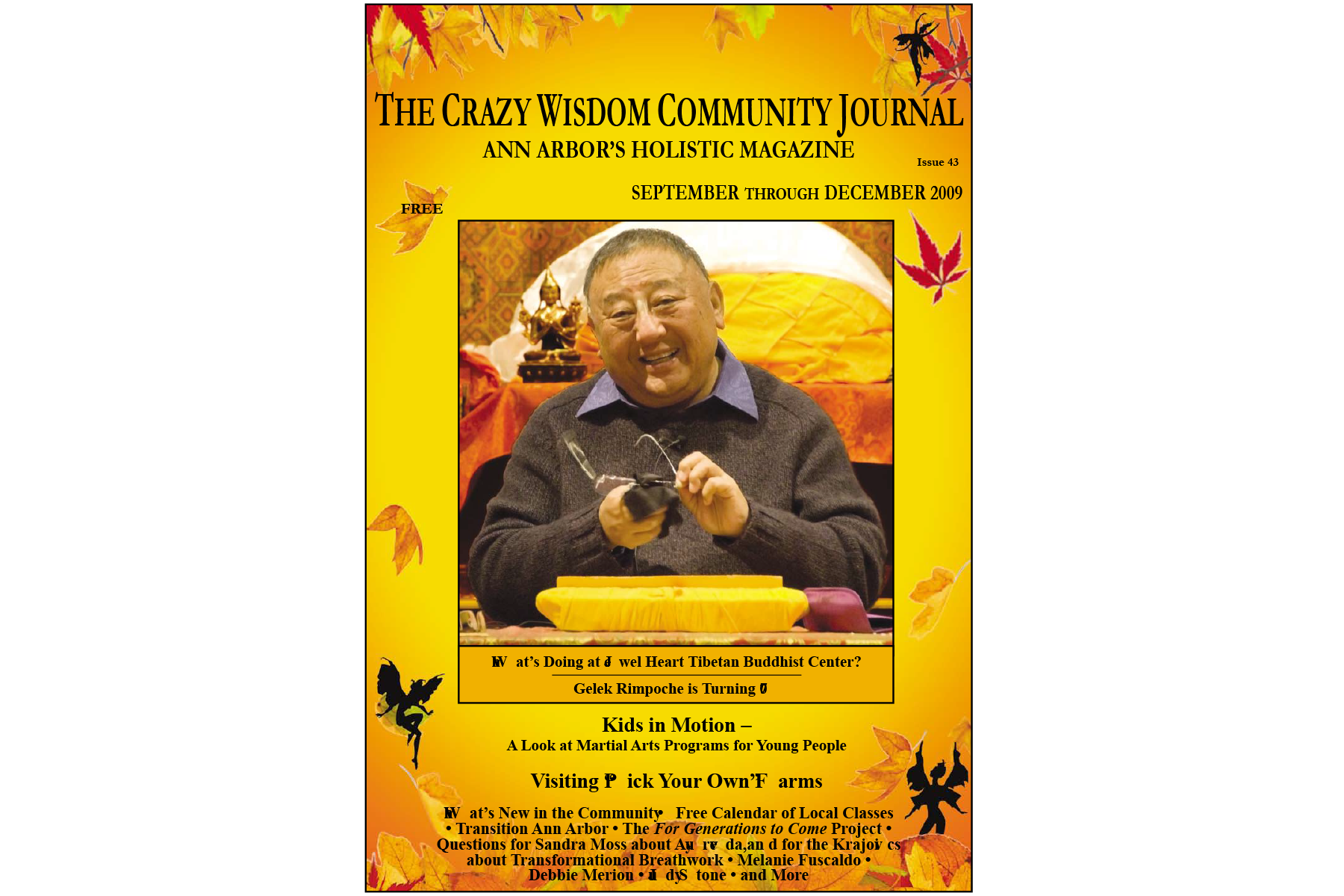



Over our lives, when we are shut out from things we want—getting into a school program, scheduling a date with a lovely person, not getting the job in your chosen field—we can tend to dampen our heart’s desire and diminish our joy in the world. We then tend to think of the world as a place to be tolerated. When we follow our open loving heart, we touch into that reservoir of delight and joy which we all have, and then we fully inhabit our precious life. When I get stuck on a project or something I want to do, I often think of this delightful energy we all have, and I reminisce about when I was small, and in my innocence, would not take no for an answer.