
by Caitlin Potere
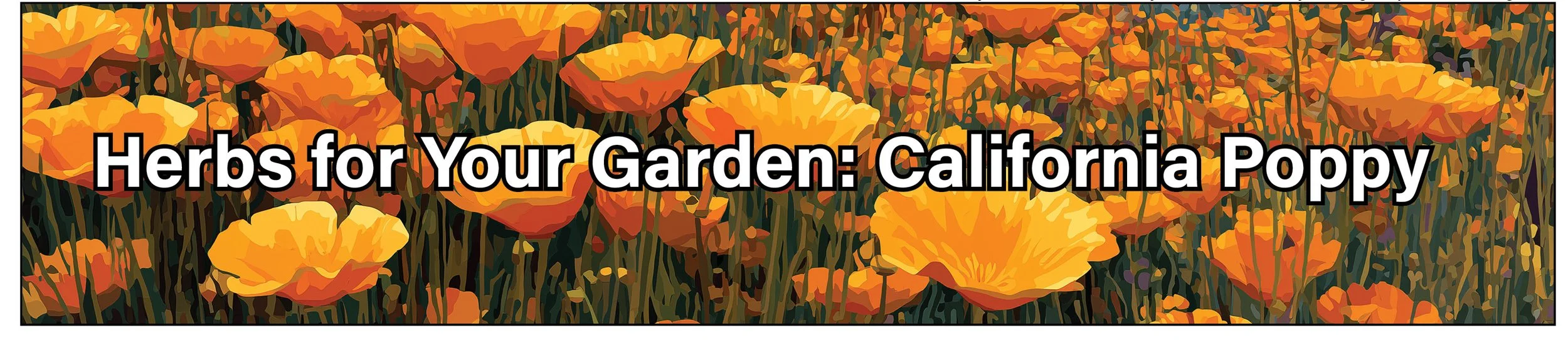
I’d love to introduce to you one of my favorite herbs to grow in my garden: the California Poppy. It’s used in traditional herbal medicine for certain types of anxiety and insomnia, as well as pain associated with tension. And while it is a useful plant, it could be grown simply for its beauty. The flowers glow a brilliant orange color, floating playfully over a carpet of airy green foliage. In over 10 years of community gardening, California Poppy always attracted the most attention from visitors and fellow gardeners. Down on my knees with hands in the soil, I would often hear from astonished passersby: “What is that beautiful flower?”
Native to California (it’s the official state flower), California Poppy thrives in arid, nutrient-poor soils and grows in huge orange swaths across mountainsides and plains. Keeping its native landscape in mind can help when choosing the perfect spot in your garden. The only time I’ve heard about failed plantings is when the soil is actually “too good” meaning very rich garden soil or wet areas lacking drainage. Save the pampering for your spinach and carrots. California Poppy prefers a dry, unenriched spot with plenty of sun and a bit of neglect, but it will grow in most conditions. It shouldn’t need any watering; rain is usually enough. Seeds can be purchased through Strictly Medicinal Seeds, Mountain Rose Herbs, and the Theodore Payne Foundation Store among others.

I vividly remember the first time I planted California Poppy almost 15 years ago. I was working in a medicine wheel garden on the property of the Gaia Center Herbal School in Ann Arbor. I had been tasked with planting California Poppy from seed. After preparing an area, I read the seed packet: spread on top of the soil, sprinkle a small amount of soil around, and tamp firmly. I was used to planting vegetable seeds at least ¼” deep, so these instructions were foreign. Despite my doubts, I followed the instructions and a few weeks later I received generous feedback about how well the seeds had grown. I’ve used this planting method many times now without fail. Consider this: when the plant goes to seed, it creates crescent-shaped seed pods that explode and send seeds flying. They land right on top of the soil and start growing.
In Michigan, California Poppy is grown as a self-seeding annual. The entire plant (roots, leaves, and flowers) can be harvested in late summer when the plant is flowering. Preserve the fresh, finely chopped roots in 40% alcohol to make a tincture that will last for years. Flowers and leaves can be carefully dried to make tea. Use one or two teaspoons of dried herb in eight ounces hot water and steep for 45 minutes. To collect seeds, watch for the plants to form long, thin seed pods and wait until the pods begin to turn brown and dry. Collect intact pods into a brown paper bag and allow them to dry. The pods may burst open on their own, or you can gently roll them between your fingers to extract the small, black, round seeds.
The entire plant is used in herbal medicine, although the fresh root is the most potent part. It’s indicated for “yang” insomnia, usually characterized by the inability to slow down and become still enough to sleep. The person may be anxious, irritable, or feel excited. It’s a common side effect of our modern society’s hectic lifestyle. California Poppy is also useful for tension headaches caused by stress. As a pain reliever, it’s used in cases of spasmodic pain, such as muscle cramps, menstrual pains, and digestive spasms. Herbalists generally use California Poppy combined with other herbs as part of a formula, rather than using it by itself. For best results, consult with an herbalist for a customized recommendation.
Modern holistic practitioners have explored the healing powers of California Poppy flower essence, a special medicine made just from the flowers which amplifies the spirit of the plant. (Flowersociety.org has an excellent article for anyone interested in a deep dive.) In a nutshell, this flower essence helps us learn to tame and balance the inner and outer motions of our soul. It teaches us how to gather the energies of our spirit and anchor them in our heart—the home of the soul. Patterns of imbalance include anxiety, sleep troubles, addiction, escapism, and ungrounded spirituality.

The pressures of modern life can create excess energy in the ecosystem of our body. In Traditional Chinese medicine, the spirit, or “shen,” could be imagined as a flock of birds migrating around the body during the day and roosting in the heart at night during sleep. The heat and excitement of our daily stresses can make the heart an uncomfortable roost for our metaphorical flock of birds, leaving them no choice but to fly restlessly around our heads. California Poppy essence gently reminds us how to kindle the light and warmth of our hearts, ensuring a calm, safe, and attractive environment within for our spirit to dwell.
Now for some words of caution. California Poppy is in the same plant family as the opium poppy, but it is non-addictive, and its pain-relieving properties are comparatively feeble. There’s controversy amongst herbalists about whether this plant can cause false positive on drug tests, so consider avoiding internal use if you expect to be tested. There’s a possibility that California Poppy may interact with certain prescription medications including sedatives, antispasmodics, and anti-anxiety drugs. If you are pregnant or breastfeeding, consult with your healthcare practitioner before using any herbs or supplements. California’s native people used this plant to dry up breast milk.
Herbalist and gardener Caitlin Potere is the manager of Castle Remedies in Ann Arbor and a volunteer coordinator of the Great Lakes Herb Faire. If you would like to learn more about adding herbs to your garden, check out Caitlin Potere’s free online class: Herbs for the Michigan Gardener, which covers 20 different medicinal and culinary herbs suited for the southeast Michigan garden. It’s pre-recorded so you can watch at your own pace. Visit CastleRemedies.com and click on “Classes.”
Read Related Articles:















































































































































































In Michigan, California Poppy is grown as a self-seeding annual. The entire plant (roots, leaves, and flowers) can be harvested in late summer when the plant is flowering. Preserve the fresh, finely chopped roots in 40% alcohol to make a tincture that will last for years. Flowers and leaves can be carefully dried to make tea. Use one or two teaspoons of dried herb in eight ounces hot water and steep for 45 minutes. To collect seeds, watch for the plants to form long, thin seed pods and wait until the pods begin to turn brown and dry. Collect intact pods into a brown paper bag and allow them to dry. The pods may burst open on their own, or you can gently roll them between your fingers to extract the small, black, round seeds.