

Lou Weir has been an Ann Arbor native since third grade. He graduated from Pioneer High and the University of Michigan. He has two grown sons and lives with his wife, Susan. A retired attorney, he is an ordained teacher of the Diamond Approach, a spiritual path which incorporates the ancient wisdom with psychological understanding. The path supports people living from their essential nature, not from personality. He teaches in the Ann Arbor area in both group format and private sessions. For more information about this teaching, please email Weir at diamondworkmichigan@gmail.com.
By Lou Weir • Photos by Mary Bortmas
Sometimes spiritual teachers will say that desire is the source of suffering. At a certain place on the journey, it is a helpful teaching, but I think many times our tendency can be to dismiss the heart’s desire which can come from a place of wisdom and love.
Over our lives, when we are shut out from things we want—getting into a school program, scheduling a date with a lovely person, not getting the job in your chosen field—we can tend to dampen our heart’s desire and diminish our joy in the world. We then tend to think of the world as a place to be tolerated.
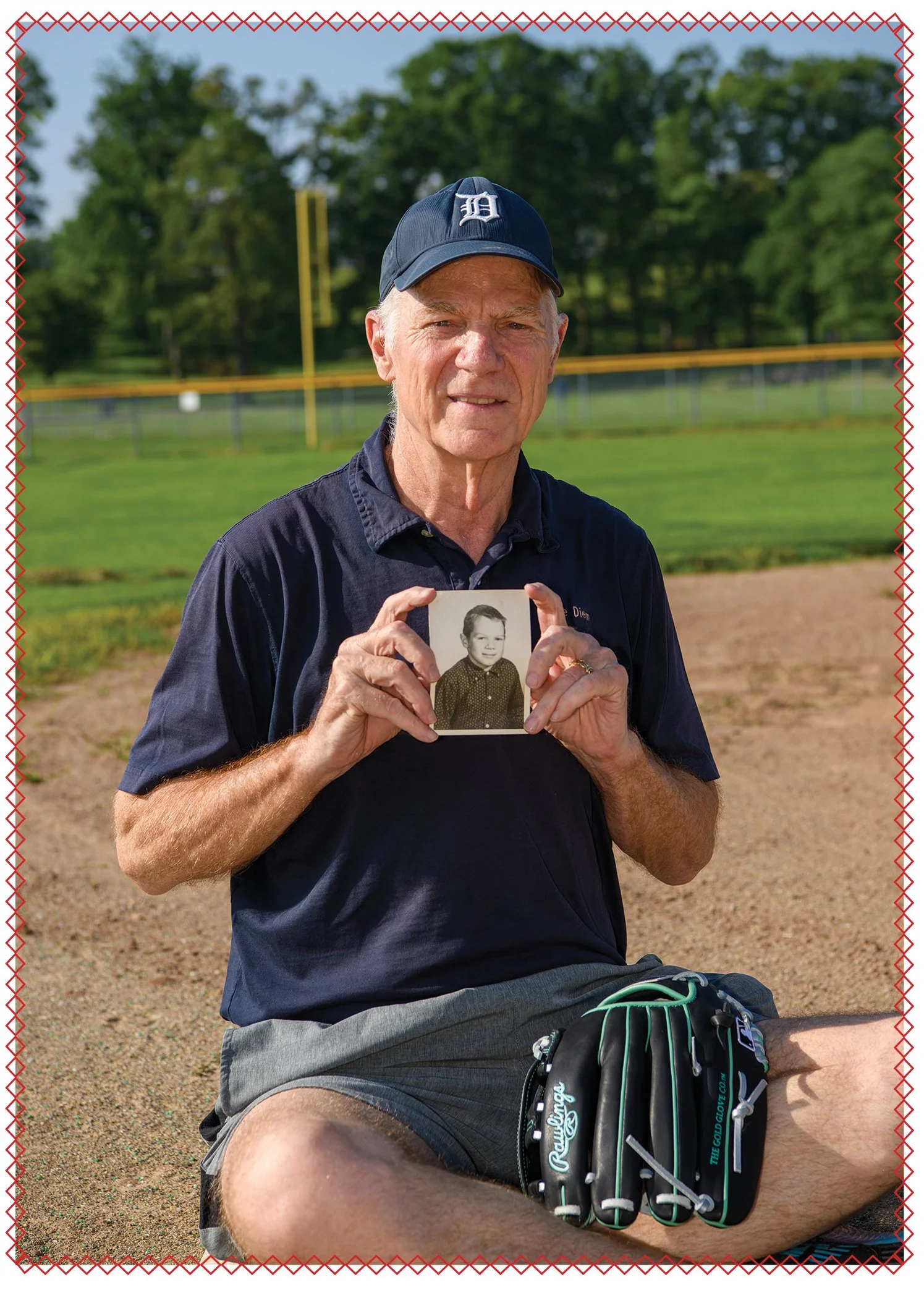
When we follow our open loving heart, we touch into that reservoir of delight and joy which we all have, and then we fully inhabit our precious life. When I get stuck on a project or something I want to do, I often think of this delightful energy we all have, and I reminisce about when I was small, and in my innocence, would not take no for an answer.
Spring 1957, Prospect Park, Ypsilanti Michigan.
I was a kindergartener in Ypsilanti at Prospect School which was renamed Adams Elementary in 1963 and then Ypsilanti International Elementary School in 2016. It is at the corner of Oak and Prospect.
My family lived across the street from Prospect Park which is adjacent to the school. It was a wonderful place to grow up and given those times (the late 50’s) I could play in the park anytime my mom was home at the house—which was most of the time.
Prospect Park was a great place to be. I learned to ride a bike, play tennis, skate, throw a ball, play baseball, and swing on a swing set. In the winter we could skate, and in the summer, play all of the outdoor sports, and in the pavilion square dances would be held. It also had a small pond (which has been converted to a “water garden”) over which the fire department would play tug of war against the police department, trying to pull the other team into the water.
My kindergarten class met in the morning, and often I would go home for lunch then go to the park to play right after. In the spring of 1957, I noticed that there was often a baseball game happening on one of the diamonds near the school. For a few days, I watched the game. I also watched the way the game progressed and learned that it was “work up” softball.
This was a common way of playing baseball in those days because you didn’t need two teams of nine players to make it work. Two or three players would be the batters. They would hit until they were “out” and then they would take the field, usually in right field, then rotate through the positions until they were up again. Usually, the catcher moved to the batting position, then the pitcher moved to catcher and so forth. You could play full field with 11 players and, by eliminating some positions, could still play with as few as seven.
Naturally, the first players to the field would be the batters and then catcher, pitcher, and so on. After watching for a couple of days, I wanted to play, too, but these were the “older boys,” probably eight to ten years old. I did not know any of them. They only played for about 20 minutes, because it was over their lunch hour. One day, after the game ended, I gathered my courage and asked one of the players how they got to play and he replied, “Whoever shows up first gets to play, but you’re too little.” Over the next couple of days, I couldn’t get the game out of my mind and my heart ached. I badly wanted to join the game.

On the third day I ate my lunch as fast as I could, and ran to the diamond, but there was no one there. Then I saw one boy come to the field with a bag of equipment (balls and bats), and some other boys came shortly after that. When about a dozen were there, they called out their positions. I was milling around with them and I said, “I want to play, too.” One of them told me I was too little, and others echoed the sentiment, so, I just watched again from the sideline.
I was disappointed, but I continued to watch them. I watched a couple more days, but still really wanted to play. So, I started to think, “I’m going to try anyway.” The next day, I got there in time to be among the first seven or eight players, and they chose positions. When they had all chosen there was still center field and a right field positions to be filled. I gathered my courage and called center field. Again, they told me that I was too little. I sat and watched as others come in and fill the position.
After another couple of days watching, I decided I would try again. I got there early. I was the second player there, right after the boy that brought the equipment. When others arrived, he called “first batter” and I immediately called “second batter.” But one of the players said, “He’s too small, he can’t play,” and the others agreed. So again, I watched from the sidelines. But I still wanted to play.
I thought about the problem for a couple of days, then I realized that the equipment came from the janitor of the elementary school. I didn’t know where the equipment was kept or where the janitor was during the lunch hour. I sat on the steps of the school and followed the boy who got the equipment. He went down a hall to a place where the janitor was having his lunch. Then the janitor got the bag of equipment out of a closet and gave it to him. I walked with him to the field and a couple of players were there and we waited a few minutes for some more. He then called “first batter” and I called “second batter” and again they said I was too small.

Again, I watched from the sideline, but I kept thinking how nice it would be to play. Although I was turned down three times already, and was disappointed, my heart was set on being able to play. I came up with a plan.
I decided that I would go to the school first, ask the janitor for the equipment, then bring it myself. I thought, if I had the equipment, they would have to let me be first batter. I was excited and I had a feeling that this would work.
The next day, I hurried through my lunch in about ten minutes, and I went back to the school and down the hall into the break room of the janitor. I saw him there with his lunch and I said, “I’m here for the baseball equipment.” He looked at me and paused a minute, because he didn’t recognize me from the usual boys who came, but then said, “Okay.” He gave me the equipment bag (which was almost as tall as me) from the closet.
I dragged it out of the school and as I came down the steps, one of the usual “bigger boys” saw me and said, “Give me the bag.” I said, “No. I’m bringing it.” He tried to take it from me, but I hung onto one side, and he hung onto the other as we walked the 50 yards to the ball diamond. We arrived with both of us holding the bag. As we stood there waiting, I kept holding onto the bag, and then a few others showed up to play and the other boy called “First batter,” so I immediately called “second batter” and the others chose their positions. I could hear a couple objections to me playing, but the first boy said, “Oh, let him try it once. He’ll see he’s no good.”
Now was the easy part. I had played baseball with my older brothers and father, and I knew I could hit a slow pitch ball. When I got up to bat, the pitcher turned around and said to the fielders, “Everybody in,” meaning that they needed to come closer to the home plate because I wouldn’t hit it far. The outfielders crowded into the infield. The pitcher pitched a ball, and I let it go by. Then, on the second pitch, I made good contact. I hit the ball over all their heads.

Happy, I ran to first and saw that they still hadn’t gotten to the ball, so I ran to second base. By then they had fielded the ball, so I stopped up at second. I was thrilled with the hit. I had a big smile on my face. It was very satisfying. After that, I had one more hit that day, and each day after that I could play with them when I wanted and did many times.
I practiced law for 33 years, until a few years ago. I faced different cases and challenges nearly every day. Since that time, I have been teaching the Diamond Approach, a spiritual teaching which involves meditation and inquiry along with a body of knowledge. It requires a lot of planning and study.
Sometimes, when I am stuck on a project or can’t find a way to do something, I think back to my baseball days. I really value the innocence and persistence of a six-year-old boy who just believed that if one way didn’t work, then another one would. The younger me used his head but followed his heart. It makes me smile to just think about his innocent heart fully inhabiting his life.
Read Related Articles:

































































































































































































Over our lives, when we are shut out from things we want—getting into a school program, scheduling a date with a lovely person, not getting the job in your chosen field—we can tend to dampen our heart’s desire and diminish our joy in the world. We then tend to think of the world as a place to be tolerated. When we follow our open loving heart, we touch into that reservoir of delight and joy which we all have, and then we fully inhabit our precious life. When I get stuck on a project or something I want to do, I often think of this delightful energy we all have, and I reminisce about when I was small, and in my innocence, would not take no for an answer.