
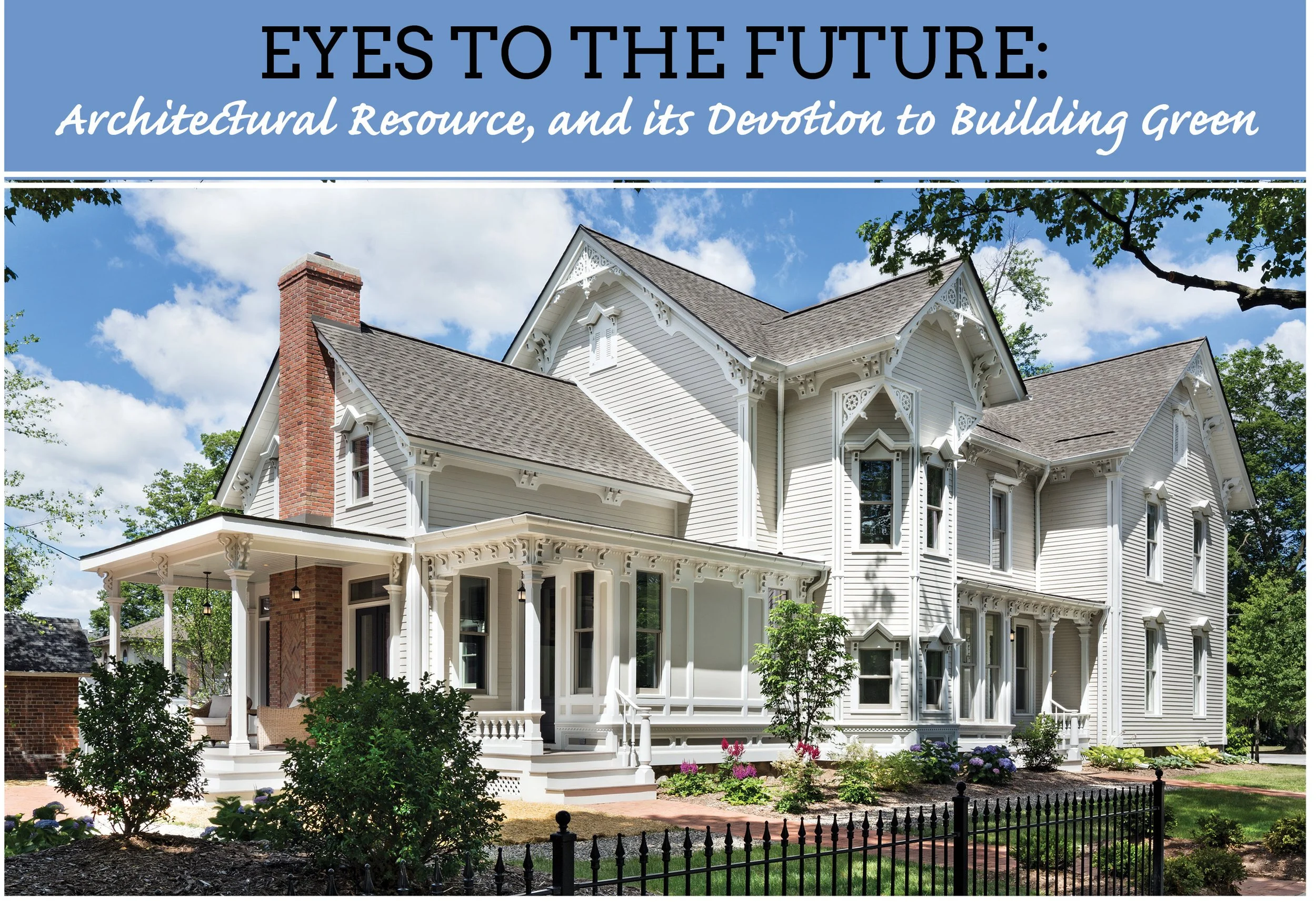
Story and photos By Hilary Nichols
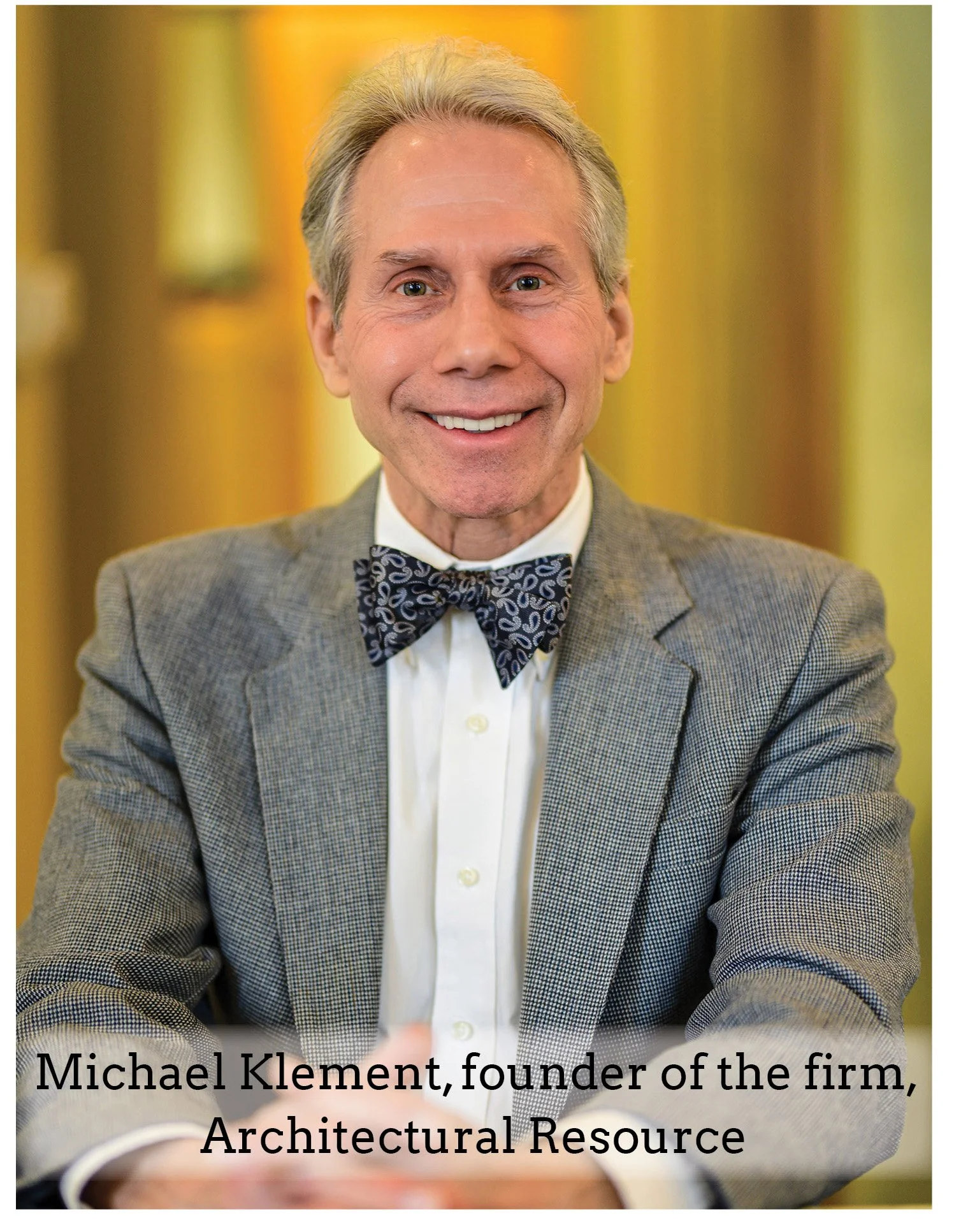
“Why aren’t the adults doing anything about this?” Michael Klement shared the question his granddaughter asked, in tears, when she was 12 years old. That question has been a driving force for Michael Klement ever since. In 1991, Klement founded Architectural Resource, one of the most sustainable architecture firms in Ann Arbor.
But his firm didn’t start out that way. Michael Klement additionally credits his wife for the inspiration to shift toward sustainability. When they moved into their new home in 2004, it was discovered that she suffered from multiple chemical sensitivities. Klement became aware of how many elements of their new home were probable culprits. “In our business we would determine our client’s choices by three criteria: do they like it, can they afford it, and can we get it?” Klement shared. “Never did we ask, ‘will it kill them?’ Once we learned about the effect of toxins so prevalent in building materials firsthand, you can’t unknow what you know.” His wife Cindy Klement wrote a book titled Your Body’s Environmental Chemical Burden: A Resource Guide to Understanding and Avoiding Toxins and is now a leading expert on the subject. With this newly pressing awareness, his firm found its focus: “We are residential design specialists with a smart sustainable design emphasis,” Michael said.
Architectural Resource designed Sanctuary at Hope Farm, a cutting-edge example of a Net Zero, climate-responsive home. (Read the article in issue #91at crazywisdomjournal.com/thecrazywisdomjournalonline/2025/12/17/jeff-parness-and-the-sanctuary-at-hope-farms-how-to-transform-loss-into-hope-and-healing.) Netzero indicates a home that creates as much power as it uses. “This was one of the most incredible pieces of architecture that we have ever designed,” Michael said. With permanent wood foundations, geothermal cooling, bird safe glass, solar power generation, and reclaimed lumber, the firm was able to maximize innovations to minimize harm to the planet. The home is an ideal example of the firm’s devotion to the latest in building science, and it exemplifies their collaborative principals as well. Their website states, “We endeavor to work from an inclusive basis incorporating our clients, builders, and consultants as integral and respected members of the team.”
“We wanted to work closely and intimately with our clients,” Klement shared. Architectural Resource practices residential architecture so well because it is what they do exclusively. “We want to help clients craft their immediate and essential environment: their home.” Klement understands that our homes are a kind of human exoskeleton. “I call it our third skin, after our skin and clothing,” he described. “Nearly everything we do, we do inside a structure, in a built environment.” Klement is committed to building those environments with care.
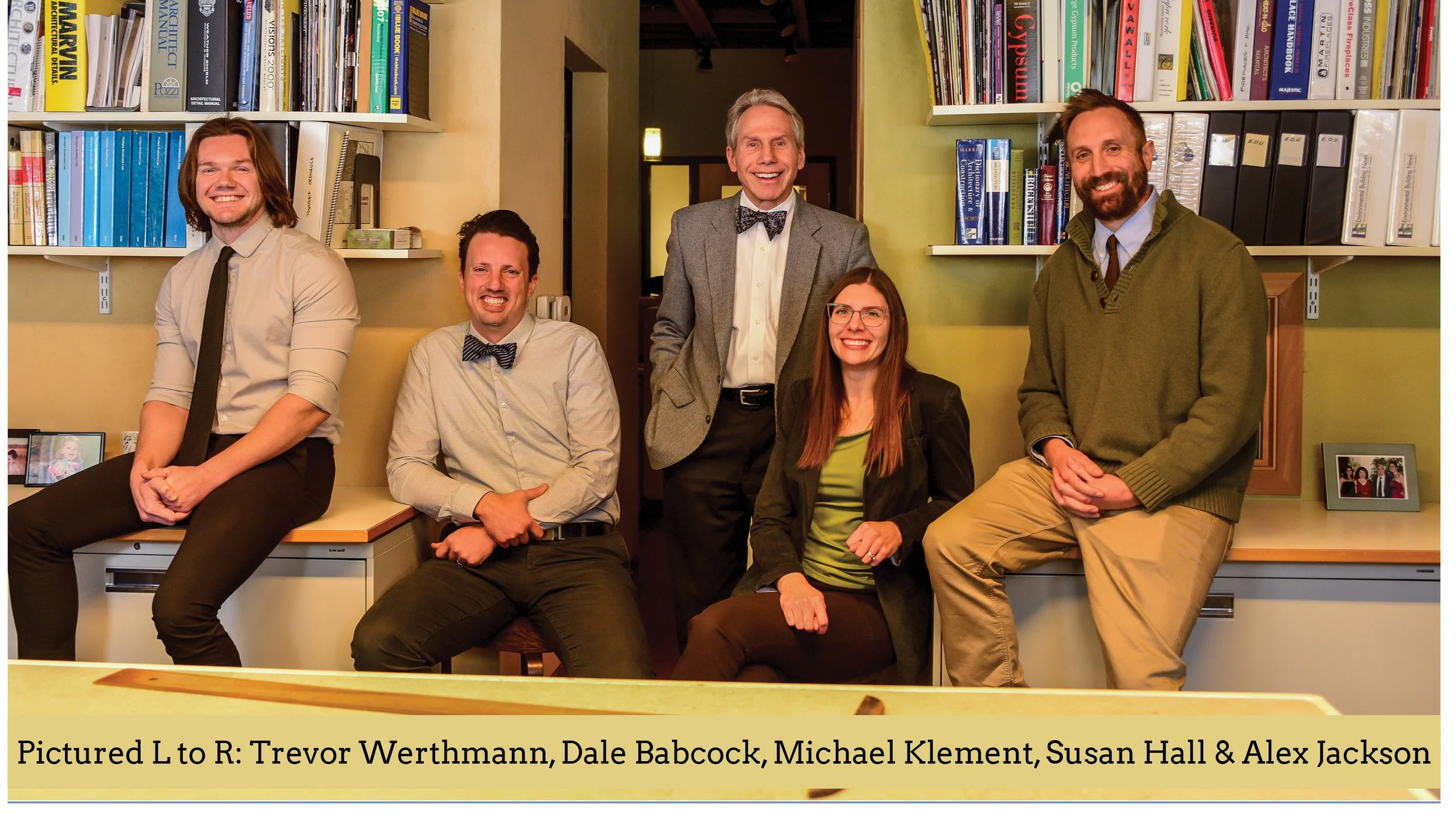
Even in their office, Klement remains committed to the most sustainable choices available. “Everything you see here has a sustainability story—from the formaldehyde-free surface materials to the cork floor tiles and the wall surface. It is called American clay plaster, which emits negative ions. Our filtration system is in our walls,” he boasted. Negative ions are electrically charged molecules that can filter the air, and it is widely believed they may also have some positive effect on mood, sleep, and immune systems…which is fitting. There is an atmosphere of joy in their small offices on the east side of Ann Arbor. The space isn’t fancy, but it is effective, where the firm’s edict is palpable and in practice. All the workstations are identical, from the interns to the leads. “We believe in investing in the new generation of talent,” Klement assured. He is adamant to share the credits with his staff of four young architects.

“Trevor is the youngest architect here, but probably the most influential, because it is his generation that is going to inherit the mess that my generation has left them with,” Klement lamented. Through their enhanced internship program, Trevor Werthmann went from being a fan of the firm, to intern, to full time project designer, bringing his youthful perspective and enthusiasm to the company.
“Being from this generation [Gen. Z], I have the consciousness that if we don’t do this right, our time on this earth could be limited,” Werthmann shared. “Climate anxiety is real, and ecological concerns are at the center of all the design choices here.” Werthmann was introduced to the firm when they hosted his Lawrence Tech class through a green building tour. High performance, ecological architecture was Werthmann’s career commitment. “The moment that presentation was over, I realized I had to be here at Architectural Resource. I have been here ever since.” As President of the National Association of Architecture Students, Werthmann was prepared to put in the work. “Their enhanced internship program revolutionizes how professionals impact the student experience,” he shared. “Here you are going to have a hand in everything that happens. I worked right alongside the project designers, trying to absorb all that I could from this talented team.” Micheal Klement added, “Though young in his career, Trevor points out things that I miss in our projects. He brings an additional perspective not informed by past limitations.”
This is a firm that is not slowed by limitations. They describe themselves on their website as “boundless and limitless.” “We delivered Michigan’s first LEED Platinum whole house remodel in 2008,” Klement said. “And then went on to design Michigan’s second and third LEED Platinum whole house remodels.”
The U.S. Green Building Council’s website describes Leadership in Energy and Environmental Design—better known as LEED certification—as a globally recognized building rating system honoring a commitment to sustainability within a framework for healthy, efficient, and cost-effective green buildings, with environmental and social benefits. Platinum is their highest certification level, signifying innovation and leadership in regenerative design that incorporates holistic solutions.
“We are eager to invite our clients to embrace the full breadth of what is possible,” Klement said. “We had clients come to do a standard remodel of their existing home and they ended up with the second Living Home in the world. We opened them up to possibility.”
The Living Building Challenge (LBC) establishes the most rigorous standards in the world, concerned equally with beauty and inspiration, human equity, health, and happiness that improves the symbiotic relationships between all aspects of the built and natural environments.
Dale Babcock, a project designer with the firm, spent his childhood in the natural environment of his backyard in Jackson, Michigan. “I was always outside,” he shared. After years steeped in conceptual architecture at U of M, he met Michael Klement. That fact that Klement’s firm focused on sustainability and building science was the fit that clicked. “This is the complete picture from an architectural standpoint. Here we are designing custom houses that are suited to the client’s lifestyle while helping the environment and learning all the while,” Babcock shared. “I grew up on three acres,” he continued. “One summer, I helped my dad build a set of stairs from the porch to the back yard, and the whole reason was to make it easier to enjoy that natural setting. And I think that is what we do here,” he said. “We had a project adjacent to a park near here.” The one-story ranch had limited views before the second story addition was designed with the vistas in mind. “Now,” Babcock said, “every inch of that house engages with the trees of the park across the street.”
Project designer Susan Hall fell for the architectural field while exploring construction sites near her childhood home. “I fell for the tactile experience, exploring distinct spaces and imagining how different families would live in these walls,” she shared. How the built environment reflects and supports different needs, lifestyles, and cultures fed her curiosity. “How would diverse sorts of people inhabit and evolve their spaces?” she asked herself. The firm is equipped to custom design buildings that fit their people. “For the client who wanted views over here and views over there, we innovated a curved wall of glass, to get the maximum exposure,” Hall reported. The glass wall works to maximize the sun’s warmth when it is cold, and overhangs shade the direct sun when it is hot to make the home more energy efficient and more comfortable. The home utilizes nature to its greatest benefit. “We are not separate from nature. We are nature,” Klement added. “That is one of our consistent edicts that drives all our design ideals.”
“If you look at our projects at face value, they look very diverse,” project designer Alex Jackson shared. “We do projects that are historic preservation, renovation projects, and new homes of all different styles. But I think what unifies all our work is our attention and care that comes from a certain set of values.” Values are the uniting force, and it is what brought Jackson to the firm. “Architectural Resource is all about sustainability and education first. Not as an afterthought, but as the leading force toward a healthy future,” Jackson said.
On their website, Architectural Resource shares their values in one sentence: “We do not live in the now, we live in the future—your future.” They take great pride that the work they do is lasting. Klement shared, “We effect solutions that will be here for the next 100 years or longer.”
Looking to the future while building on the past, Klement honors the influences from his own mentor’s great career. Tivadar Balogh, born in 1926, taught at the University of Michigan College of Architecture and Design from 1956-1997. Klement pointed to his office wall, “Like Excalibur, his T-square is still displayed for me to see every day.” Completing his Masters at U of M in 1986 under Balogh, Klement then went on to start his own firm. “It was just him and I sitting in Eames chairs in his carport, pushing graphite with this T-square. He showed me how to think.” He cited the well-known Winston Churchill quote: “First we shape our buildings, thereafter they shape us.”
“I began to understand the impact and influence architecture can have on people, and this concept of standing on the shoulders of giants.” It isn’t lost that now, those shoulders are his as he impacts the next generation of young architects. The staff at Architectural Resource are the talents who will carry this influence forward through their full careers.

“Arguably, Ann Arbor is the only place in the world that our firm could have achieved such an impact,” said Klement. “As a town, Ann Arbor is progressive enough to embrace the environmental movement in architecture and conservative enough to get it done,” he said. And they do get it done. Architectural Resource has completed eight LEED certified home projects here and counting. “The stakes have never been higher, nor the opportunities more abundant, than they are right now. This is the best time to be alive. And to be an architect. I couldn’t imagine anything better.” With great opportunity comes great responsibility, but his team embraces the challenges boldly. “Both for the well-being of our clients and from a deeply held, personal, core belief that we have an incredible responsibility as place makers to do so.” Michael Klement can assure his granddaughter, these grown-ups are doing something.
“If I am going to build something,” Trevor Werthmann concluded. “I am going to build it right. It is going to last a long time and not only is it going to do no harm, but it will be actively beneficial for the environment. It will be a force of good in this world,” he asserted. “When I met Michael, I felt his passion and was swayed when he shared a line from a Terrance Temple poem: “The eyes of the future are looking back at us and they are praying for us to see beyond our own time.”
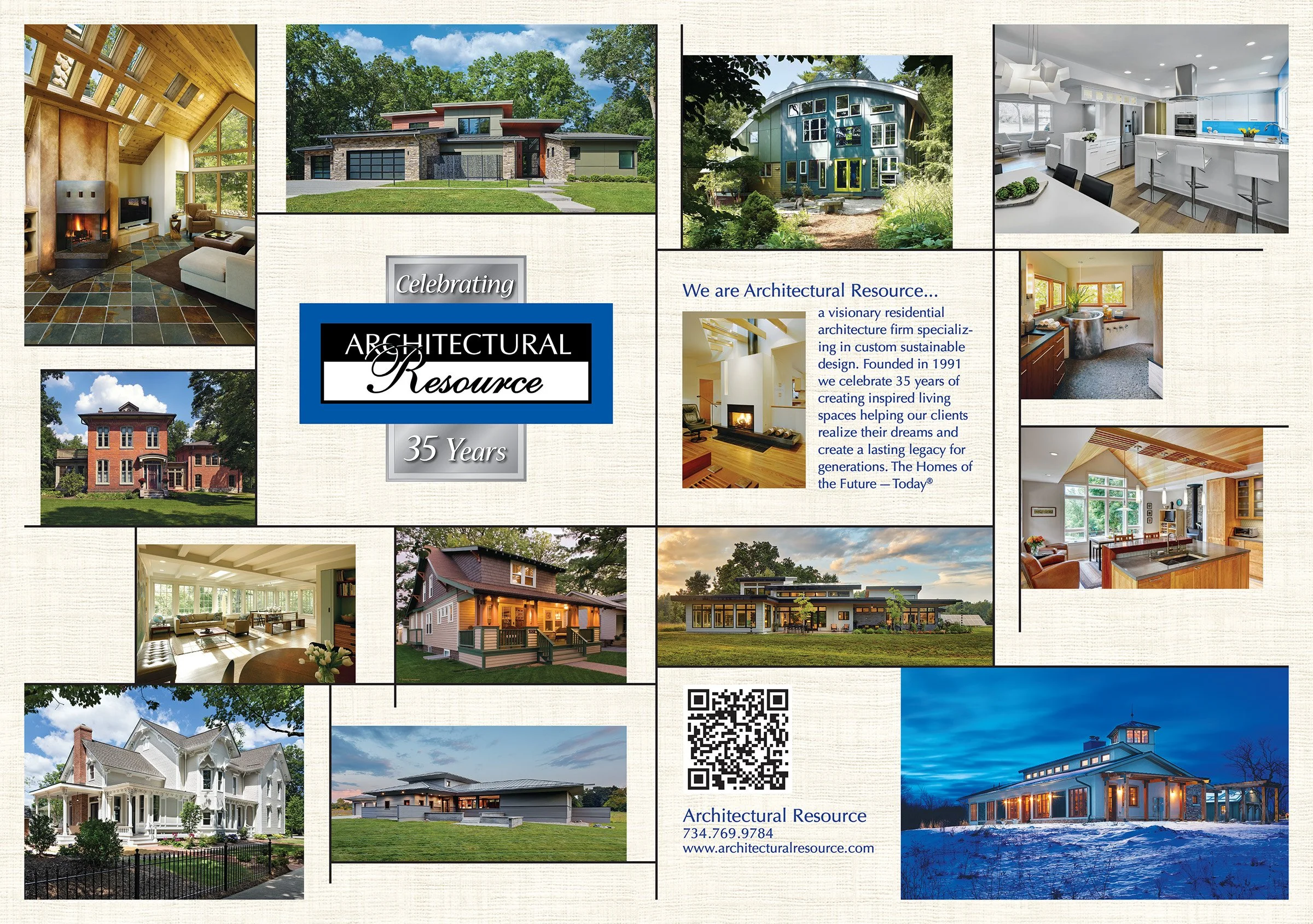
You can view Architectural Resource’s portfolio of homes at their website here: architecturalresource.com. You can also sign up to attend their seminars and tours from their website. Michael Klement and the team are also available by phone at (734) 769-9784 or email: mklement@architecturalresource.com.
Read Related Articles:




















































































































































As far as the eye can see, there are acres and acres of a great nature preserve. Allow yourself to be consumed by it for a moment. Let it envelope you. Let it return you back to the beginning. Maple trees stretch far overhead--taller than any worry could ever be. Streams meander through the land—a burst of movement happening in this otherwise still place. There is a quiet, here, but a quiet that causes introspection. A quiet that feels intentional. A quiet that feels connected to something bigger if only one is willing to stop and listen.