
By Cyrus Scholl
A few years ago, early on my path toward healing, I had a therapist who told me that the body often acts out our subconscious drives and desires, and that if we watch what our body does, we can unlock fresh understandings of what we believe, what we want, and what’s holding us back—the unhelpful patterns, the edges we’re avoiding, the cages we’ve unwittingly locked ourselves in.
This belief that our body’s sensations are a portal to understanding our subconscious—the Dreambody, she named it—unlocked a whole new perspective for me.
This concept came from Process Oriented Psychology, or Processwork; a school of thought founded in the 1970s by Arnold Mindell, a physicist-turned-Jungian analyst. A true syncretist, he pulled from disparate fields including Jungian psychology and quantum physics, but also Daoism and Earth-based psychology, Buddhism, and Shamanism. What Arny assembled resonated with gestalt therapy, Buddhist psychology, shamanic practices, IFS-style parts work, and Jung, but was distinct from all of them.
Arny would be the first to tell you that his concept of the Dreambody came largely from indigenous cultures, many of whom consider the reality we inhabit a Dream is dreamed up by some Dreamer. We are all integral pieces of that dream, each with our own unique perspectives and experiences. And so, the Dreambody is his language for describing how our bodies live out our individual fractal of this larger dream. Or, put more simply, how our bodies are playing out our own unconscious realities.
“Okay, great,” you might say. “So, what good is such an idea?
And I’d reply, the implications are immense and wide-ranging.
One of the primary applications for the Dreambody in Processwork is what is called “body symptoms”—that is, the ways pain and illness (and pleasure) manifest in our bodies as well as how we experience them.
For instance, maybe you’re experiencing a symptom right now—it could be a sore throat, an ache in the back, a stuffy nose, or something more serious or chronic. To tap into the Dream that’s happening in the body through your experience of this symptom, you could ask, “What attitude does the area of the body holding that part have toward life and the world? What illnesses, symptoms, accidents, or traumas has that part of the body been involved in? Does it have a particular history? If there is something recurring there, do you notice a certain pattern?” We might also ask if you’ve had any nighttime dreams that relate to that? (These specific questions come from Ingrid Rose, PhD & Myriam Rahman, MA.)
Through gathering answers to questions like these, we can begin to unfurl our unconscious desires (which may also be related to the unconscious desires of our family, community, city, or country).
When we understand our symptoms, they unlock a deeper understanding of ourselves. We discover what the Dream is trying to tell us through our exploration and understanding of our symptoms. And when we then act on that information, we often find that our actions bring us into deeper alignment with our whole selves; we feel a stronger sense of integrity, inner peace, and harmony within ourselves and with the world we inhabit.
One of the goals of Dreambody work is to discover our pain, amplify it, and transform it through awareness. We amplify our pain using sensory grounded information: the specifics of how we experience something. To find this information we ask: “How do you know you have the experience? How does it show itself?” To paraphrase another one of my teachers, Susan Kocen, sensory-grounded information is not a diagnosis or reaction to the experience of a symptom; it is the way we experience that symptom. And exploring our experience of a symptom is different from trying to relieve it (like with massage or acupuncture.) Instead, we ask, “What is the pain like? Is it stabbing, cutting, diffuse? What is the temperature, hot or cold?” For example, the quality of an itch might be missed when we impulsively scratch to relieve it.
We’ve mostly discussed the application of the Dreambody concept with body symptoms so far, but we can apply this concept to many realms, such as relationship patterns: addictions, peak experiences both high and low (like psychedelic journeys or psychotic breaks), life myths, or even nighttime dreams. In each of these areas, we can ask questions about our somatic experiences and uncover our body’s wisdom.
The invitation is to then act on what our body is asking us to do, and watch what happens in our lives in response.
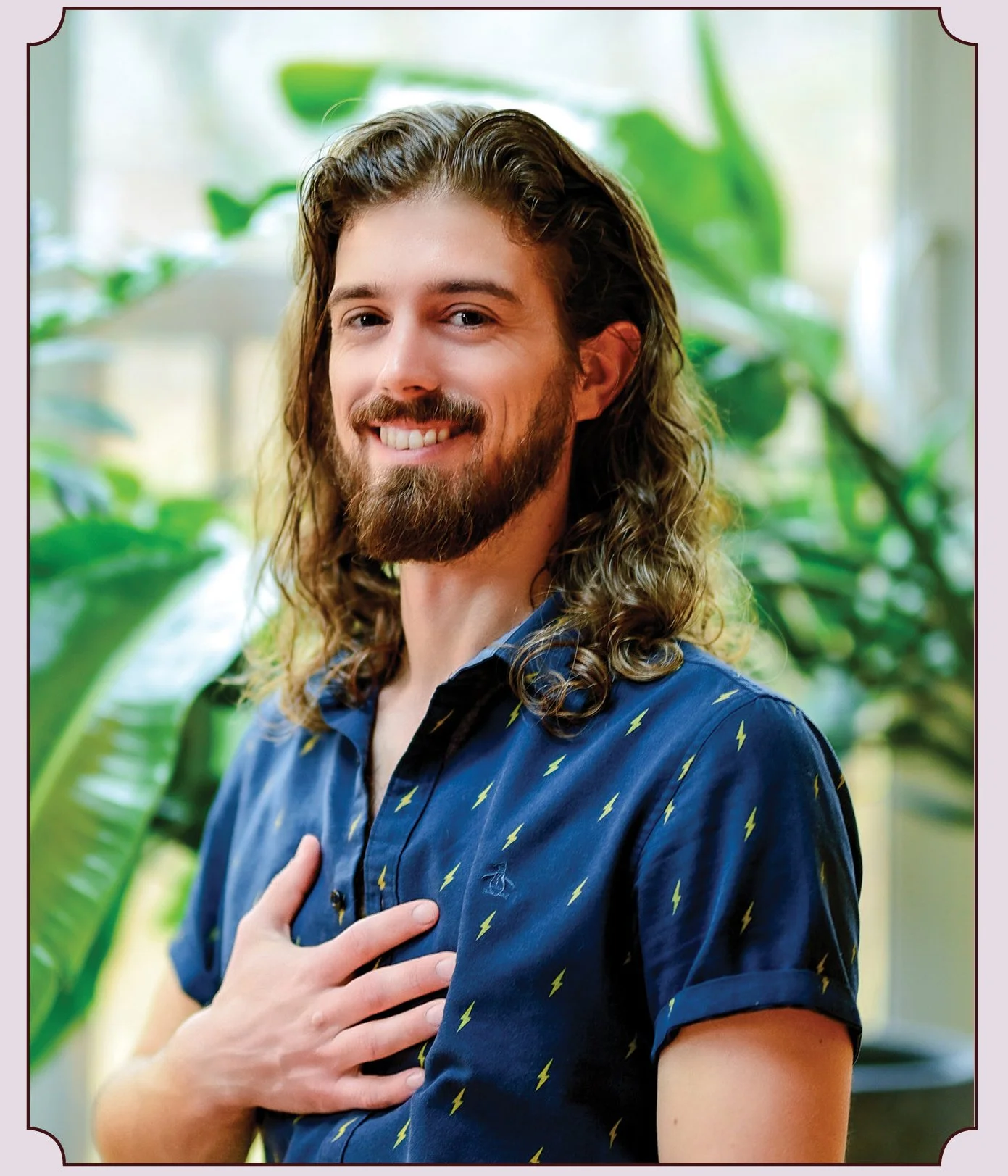
Cyrus Scholl is a traditional Chinese martial arts practitioner of taijiquan, baguazhang, and qigong; Certified Trauma Care Practitioner; and Somatic Coach; with training in Processwork, IFS (Internal Family Systems), and poly-vagal theory. If you’re interested in learning more, find him online at dreaming-butterfly.com.
Read Related Articles:





































































































Over our lives, when we are shut out from things we want—getting into a school program, scheduling a date with a lovely person, not getting the job in your chosen field—we can tend to dampen our heart’s desire and diminish our joy in the world. We then tend to think of the world as a place to be tolerated. When we follow our open loving heart, we touch into that reservoir of delight and joy which we all have, and then we fully inhabit our precious life. When I get stuck on a project or something I want to do, I often think of this delightful energy we all have, and I reminisce about when I was small, and in my innocence, would not take no for an answer.