
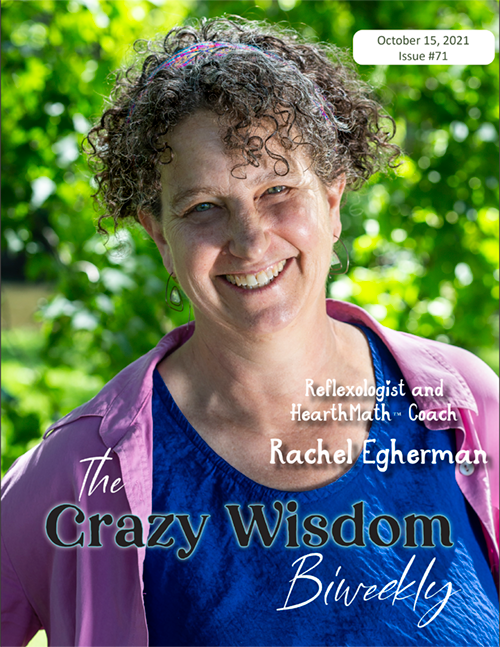
“HeartMath™ is heart-focused breathing, or breathing through the heart space,” Rachel Egherman said of the gentle form of self-care that helps you check in with your body, your heart space, and feel supported. “This is something you can do yourself in the grocery store line. It’s a way to quickly self-regulate.”
Posts filed under Local Practitioners
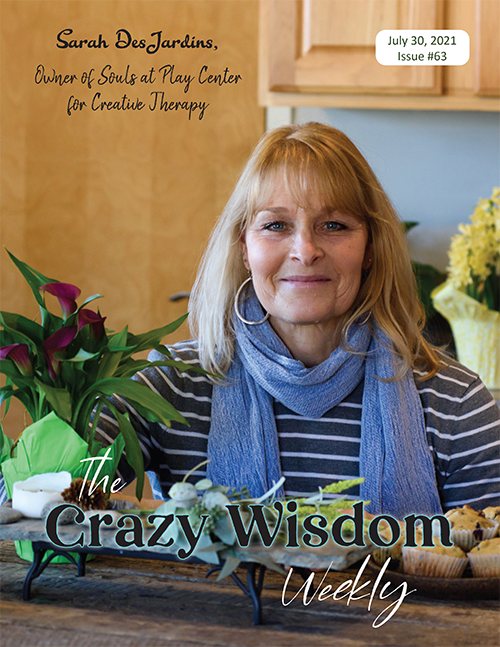
Divine Order-- Not Disorder: How Sarah DesJardins' Personal Journey Informs Her Equine Therapy and Energy Healing Work
Down a country road and around a corner in lovely Manchester, hot tea and home-made chocolate-chip cookies (my favorite treats) awaited my arrival at Souls at Play Center for Creative Therapy. This was my third time seeing Sarah DesJardins. The first was at the Spring 2015 Holistic/Psychic Fair of Ann Arbor, where as a guest speaker, she presented a powerful seminar―“Psychic Awareness: The Silver Lining of Trauma”―maxing the venue’s capacity.
Back to Basics Health with Julie Johnson
Imagine receiving results from an air quality and blood test showing that your home needs remediation—and so does your body. There were astronomical levels of mold and fungus in your blood. You suffered from pneumonia and had so many x-rays taken that you almost glowed in the dark. The medications prescribed were barely treating the symptoms but were further depleting your already near-extinct immune system. Your doctors finally admit that they have no effective options for your condition; their final suggestion was to wait and see if your body began to win the fight on its own.
Finding Wellness Through Your Spiritual Anatomy
What do you get when a poet and a chiropractor set out to explore and revitalize the physical body from a spiritual perspective? Poet Elizabeth Alberda and I created the work and workshops called Spiritual Anatomy. Our journey took us from the inner workings of the body’s organs and tissue to the mystical and mythical writings and imaginings of teachers and scholars.
Healers of Ann Arbor: Acupuncture with Dr. Cynthia Esseichick
You can try a new type of massage or read a chiropractor’s online reviews, but how do you really know when a healing modality is right for you? Columnist Laura K. Cowan goes in depth with local healers to give you a behind-the-scenes look at what they really do to help people relax and heal.
Bowenwork for Gentle Healing
I had been suffering from neck and shoulder pain for many years due to a car accident. Although weekly chiropractic and massage helped, my problems never fully resolved. Over the years I tried many healing modalities with no lasting relief until a friend suggested I try Bowenwork. I found a practitioner and gave it a try. Since I was used to vigorous massages, I was surprised with how little force was used with Bowenwork. After the second session, I started noticing some wonderful changes. Eventually, my neck and shoulder issues resolved, as well as other issues that I had not communicated to my practitioner.
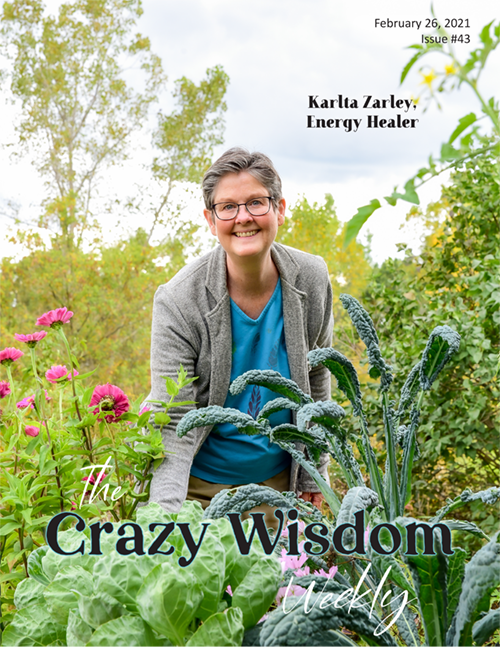
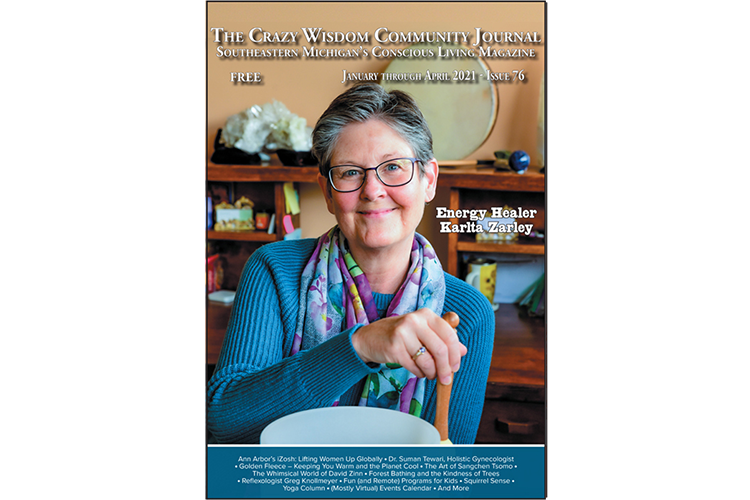
Stirring the Spirit to Health: A Profile of Energy Healer Karlta Zarley
There you are minding your own business, and the sound of a battalion of bees builds to a crescendo—and then disappears just as rapidly. If upon hearing the sound you freeze in momentary panic, you only have a nanosecond to catch a glimpse of the source, and most often it will only be a blur. Seasoned, you know to not swivel about wildly, but to scan with your eyes and turn slowly. Then, you may see the actual flight of the hummingbird. It is a flash of iridescence, a determined small head leading a wake of whirring wings—an almost visible stream hanging in the air where it cuts through this pane of reality like a knife through warm butter.
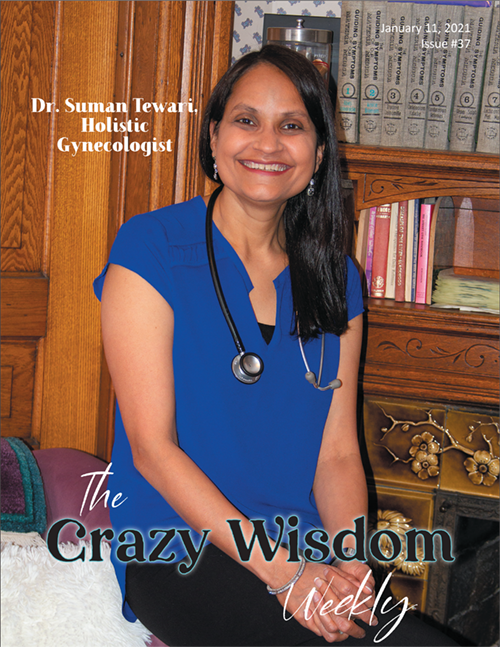
An Integrative Approach to Women’s Health: An Interview with Holistic Gynecologist Dr. Suman Tewari
A graduate of Wayne State University Medical School, Dr. Suman Tewari is a women’s doctor who has incorporated many aspects of functional medicine and mindset coaching with her allopathic training to bring the best possible care to her patients. I sat down with her at her beautiful office in the Parkway Center to discuss what she means when she says “holistic gynecology” and why women might not feel “empowered to heal.”
The Raindrop Technique
Essential oils—they’re everywhere! You can find them in the grocery store, home improvement stores, the mall, and even the gas station. Aromatherapy, with essential oils, is extremely popular right now. As the saying goes, “everything old is new again.” That’s truly the case with essential oils.
Plant Medicine and Magic
When people ask what drew me to herbalism, there are two stories that I tell. One is of my time working in the Mojave desert, where my boss—a botanist by training—would point out various native plants and tell me snippets of how the indigenous people of the area used them for food or medicine (he always spoke of this in the past tense). For him, it was an interesting tidbit of information, but I thought, “couldn’t we still?” This story is true, but the deeper truth goes back many years, to my childhood.
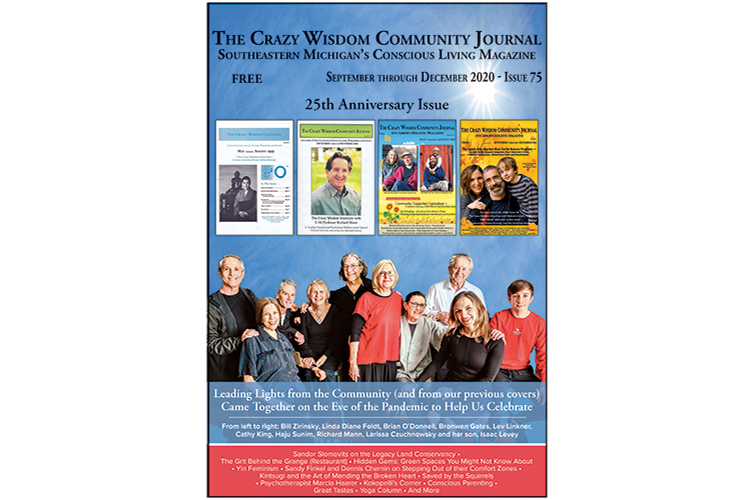
Pandemic Q+A’s for the Community Leaders on our Anniversary Cover
For our 25th Anniversary Issue, we invited eight well-respected leaders in the regional conscious living community, all of whom have been on our cover before, to gather together for a cover photo shoot to help us celebrate. (Plus, since it was our anniversary issue, we asked our founder/publisher, too.)
It turned out to be on Thursday, March 12th, the eve of the national pandemic lockdown.
Thankfully, they are all well, and so we asked them to tell us what they have been up to since that fateful evening, and what they have been thinking about during these months of sheltering in place. Here are their answers…
Healers of Ann Arbor
You can try a new type of massage or read a chiropractor’s online reviews, but how do you really know when a healing modality is right for you? This new column, from tech and wellness journalist and meditation coach Laura K. Cowan goes in depth with local healers to give you a behind the scenes look at what they really do to help people relax and heal.
Stepping Into The Current of Wisdom
I recently came across a photo of an autumn leaf inside a hand. The veins of the leaf lined up with the lifelines of the palm, blending into one another. A beautiful image of our interconnectedness. I think of the psyche similarly, as an extension of nature, an invisible landscape with its various terrains, different weather patterns, and inhabitants.
A Conversation with Erin Stohl and Dan DeSena about Somatic-Oriented Psychotherapies
An Ann Arbor couple, Erin Stohl and Dan DeSena, has found a place within the local somatic psychotherapy community. I sat down with Stohl and DeSena, pre-pandemic, to learn about how they came to somatic psychotherapy, and how their experiences as somatic psychotherapists have impacted their relationship. Stohl and DeSena are both seeing patients via video chat and doing appointments by phone.
Covid, Death, and Living in Flow
I just got off the phone with my mom and sisters discussing funeral arrangements for my father. He has COVID and he is dying. For the last days, we have been having zoom calls for several hours with him by the grace and compassion of the Canadian field hospital staff who make an iPad available for us each day. We sing, we read poems, meditations, and prayers, and share everything from our heart that we want him to hear. He is not responding and he is breathing the way dying people do: with big gaps of not breathing followed by a few shallow breaths in a row. We know however, that dying people hear everything being said to them so we don’t shy away from giving him our song and deep communication.
Kathy Braun and the Role of Hypnotherapy in Healing
Kathy Braun, the Clinical Hypnotherapist of Ann Arbor Hypnotherapy, is my cousin. When she relocated to Ann Arbor about fifteen years ago we all wanted to hear about her hypnosis practice. I was interested, but skeptical. I thought the “hypnotic state” was fiction. Kathy wouldn’t talk about her practice—explaining that the sessions she has with her clients are strictly confidential. She preferred to talk about what she calls her “bragging rights” back in the day when she was in a New York Shakespeare Festival production of Measure for Measure starring Meryl Streep.
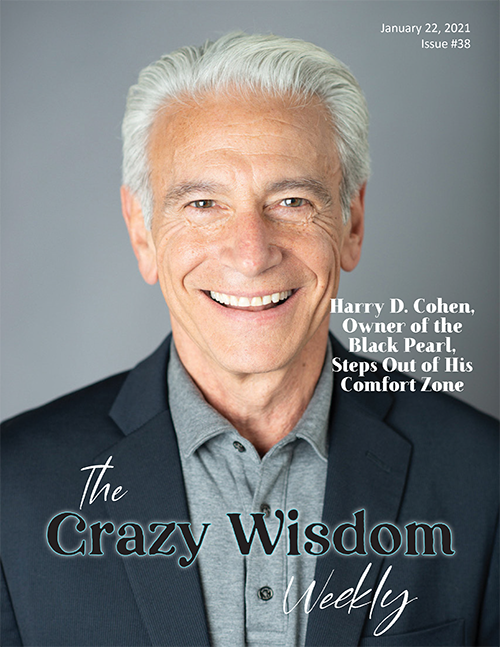
Out of My Comfort Zone
Crazy Wisdom Journal asked a number of leaders in southeastern Michigan’s conscious living community to reflect upon times in their lives that they’ve left their comfort zones to venture out in new ways. In the distant past or much more recently, we asked, what did you do, what inspired you, did it change you, inside or outside, big or little? Did you attend a new class, take an adventurous trip, go skydiving, stretch beyond a long entrenched boundary, start a new relationship or end an old one, take a leap, retire, join the Peace Corps, go on a night trek in the wilderness, or just do something way out of your ordinary?
THE POWER OF YOGA NIDRA
A lot of people have a hard time meditating, but one of the things we all know how to do is sleep. Every night when we fall asleep, there’s one thing we must do to be successful—we have to let go of our thoughts.
Yoga Nidra is a sleep meditation. It uses the biological process of sleep to help us naturally and effortlessly disengage from our thoughts. So, we don’t have to struggle to sit up straight, no kinks develop in our knees, and there is no pain in our back. Instead, we are lying down in a comfortable position and relaxing toward sleep, where we can experience the deepest states of meditation effortlessly.
Roxane Chan--A Warrior’s Path
By Debbie Wollard
“Look at every path closely and deliberately. Try it as many times as you think necessary. Then ask yourself, and yourself alone… Does this path have a heart? If it does, the path is good. If it doesn’t, it is of no use.”
—Carlos Castaneda
Dr. Roxane Chan has been a nurse all of her career. She knew that she wanted to be a nurse early on, and even though, as she says, she was naïve and idealistic, somehow she also knew that nursing was a key part of her emotional and spiritual journey. She sees her role as nurse as a vocation, as a piece of who she is, rather than merely what she does for a living.

Chan grew up on the south side of Chicago in a family with a mixture of joys and dysfunction. “In my young life, with the struggles in my family, I didn’t see a clear path to happiness and wellness, until I discovered nursing. Somehow I knew that nursing was going to be my path from dysfunction to health.”
Chan has strong Italian roots and a deep faith shaped by her upbringing and broadened by her life experiences. She tells the stories of how two key women in her life set her on a spiritual and an intellectual path, and helped her link head and heart in all that she does. Her Aunt Shirley gave her books about strong women and encouraged her to read and to learn, giving her a very different message than she received from her teachers and parents. Neither her high school teachers nor her parents expected her to go to college, nor did they encourage her. She sent her own applications off and surprised them all when she was accepted into Northern Illinois University. Four years later, she received her bachelors degree in nursing, and again surprised everyone when she graduated with honors. “My parents were continually startled throughout my graduation ceremony, because I kept standing up as they called my name for honors. In contrast, they were very excited that I was in the NIU Marching Band, and told their friends with pride of that achievement.” Submitting her own college applications, and following through on her acceptance into college by going, was the first time that Chan can remember advocating for herself and charting a course with intention and conviction.
The second woman of note in Chan’s life was her neighbor Angie, who shared her spiritual practices openly, and showed Chan for the first time that there were women priests. Although they didn’t call themselves that, she recognized Angie as a spiritual teacher and watched her carefully. Angie burned palms and said prayers in such a way that it helped Chan begin to create her own rituals. She was raised in the Catholic church and was drawn to the practices of that faith that gave her peace and a firm foundation.
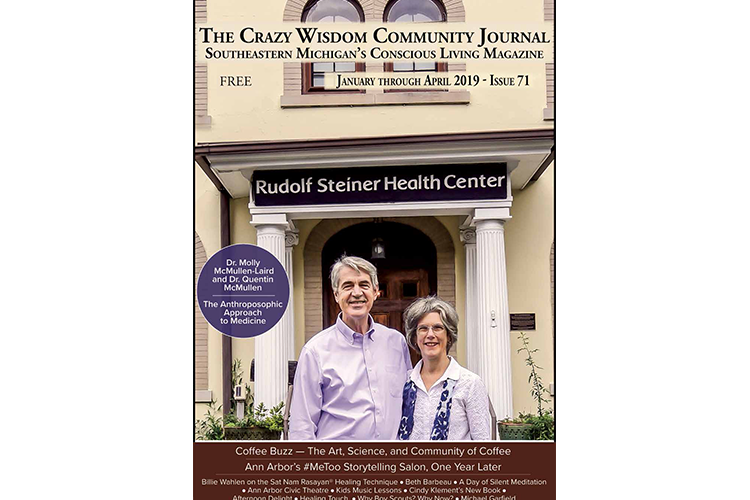
Read related article: The Crazy Wisdom Interview with Dr. Molly McMullen-Laird and Dr. Quentin McMullen, Founders of the Rudolf Steiner Health Center, on Anthroposophic Medicine
She went to public school, but for first communion and confirmation classes the public school students joined the Catholic School preparations. The Catholic School children all wrote “JMJ” at the end of their names on the top of their papers (for Jesus, Mary, and Joseph). Chan wanted to write these initials too, but they weren’t allowed to do so at the public school. She used to say the rosary every night before bed. “We learned that if you fell asleep before you finished the rosary prayer, your guardian angel would finish it. That was magical to me, and I believed it.” Her experience at the Catholic School was so compelling that she wanted to be there every day, to be with the nuns.
As a grown woman, Chan continues to be a woman of ritual—she knows how to set a sacred space and how to hold that space. When I asked her about this, she said that it started at a young age. She would go to church for the special prayers, and she loved to spend time with the nuns. She remembers only kindness from the nuns, and their calm, patient demeanor. These women were the antithesis of what she had at home, and she found comfort and peace there. She told of how she would soothe
herself by reciting the rosary, and how at a young age she would pray for others using the rosary. While Catholicism is not the faith that she practices now, Mary and the Rosary are still important parts of her spirituality.

Chan’s journey in nursing has always included care for the marginalized populations and care for the caregivers themselves, and she has committed her life to working for social change. Early in Chan’s career she was the Nurse Manager at the County Hospital in East Los Angeles, and she is proud to have been part of creating an award-winning unit in the face of low/no funding and minimal basic necessities (no clean water to drink, no air conditioning in the hottest months). Her work with this unit transformed them into a team that was called on to train other teams across the country. “It all started with a large piece of butcher paper hung on the wall with one question: What would you like to learn?” Chan said. “I was thinking they would answer with skills they wanted to learn, but the nurses took the question broader and wrote all kinds of things on this large piece of paper.” Chan went on to say, “Once this happened, and I saw that there was a lot of valuable information written down, they began to trust me, and we began to listen to each other and talk to each other. No one had ever asked them for their thoughts and ideas before, and I opened the flood gates. Talking and listening to each other matters!”
Chan has continued to broaden her “lane” from patient care, to nurse care, to teaching nurses about advocating for patients and being present to patients in a way that only nurses have the opportunity for and considering nursing as a vocation with breadth. She did all of this through her work as an Assistant Professor at Michigan State University in the College of Nursing. She tried to convey her experiences in such a way that the students who were training to become nurses didn’t miss the beauty, complexity, and importance of their role as caregiver. “As nurses we get to be in situations that are very intimate with patients when it comes to wound care and care for their bodies and our presence in their time of need.” Chan got misty-eyed as she tried to convey this complex idea of presence and continued by saying, “I could sit for days and days and think of one beautiful, powerful, meaningful exchange after another. It has been such a privilege to be with people in this way. In our medical model today, the newest nurses could miss this beauty, and I don’t want them to miss it—to overlook the things that remind us that we are all connected.”
After six years at MSU, Chan has finished her time in this role. In reflecting on the things that she is really proud of accomplishing at MSU, she cites examples like how she used innovative and creative methods to teach integral processes for patient care and the medical team approach. She started a holistic student retreat that gave the students the building blocks for not only patient care, but key ingredients and encouragement for self-care. She used her love of, and extensive experience with, drumming circles to teach the students the “Team Steps” process for calling out when they recognize that something isn’t going right in a patient care process.
The drumming circle gives them practice in making “a big noise stop and using their own voice to name what they see is happening.” In a drumming circle, even though the students felt silly sometimes, she had them all (30 plus students at a time) on drums, drumming together, making a big noise and then one by one, they made a grand gesture with their arms or their vocal voice to make the sounds stop. Then, to get the sound restarted they shared a rhythm on their drum that they have made up (representing their own voice), everyone repeats that rhythm before continuing around the circle, giving each student practice to stop the loud noise and start with their own “voice” (drum). Because the students mentioned her name repeatedly, it peaked the Dean’s interest enough to seek out Roxane and ask about her creative teaching methods. This gave Chan comfort and lifts her heart when reflecting on her time at MSU. It is confirmation that the students were understanding her message. She has been glad to be a voice in the MSU program. She has been told that she is “too creative” on more than one occasion. Chan takes that as a compliment.
As she contemplates this time of transition, Chan feels a new wave of work rising, which she calls “Warrior Nurses.” She doesn’t see this as a training, but more of a movement—a movement that, in her minds-eye, has thousands of nurses wearing Warrior Nurses T-shirts and showing fierce compassion for themselves, their patients, their fellow nurses, and society as a whole.
In the workplace, a Warrior Nurse would take the time that they need to eat, go to the bathroom (there are many circumstances where nurses go long periods of time without ever relieving themselves), and the time needed to be present with each patient—fully present. Warrior Nurses would meet difficult circumstances with compassion and be present to themselves and others more fully. “Holding a space of peace is much harder than war or conflict.” Chan is a Mindfulness Self Compassion (MSC) trainer and sees this as key to not only caring for patients, but caring for ourselves. “Acceptance, or meeting people where they are, can only happen because I can meet myself where I am.”
Read related Article: Expanding the Scope: First-Year Medical Students at U-M Shadow CAM Practitioners in the Community
Chan says that “the connections of past experiences with current moments are often surprising. Seemingly random opportunities come back to be meaningful in a current experience.” Navigating transition times takes a lot of energy when done with integrity and intention. She is opting to, as she said, “Go back to the building block skills of first things first” and ask herself the question,“What do I need to do right now?” over and over again.
Chan marvels at all of her years of nursing care and at her evolution as a nurse, mother, teacher, mentor, companion, and sponsor. A clear path doesn’t necessarily mean a direct path. In Dr. Roxane Chan’s life, the only clear path was in nursing, which helped her move from dysfunction to wellness, from the shifting sands of a life in an unstable home to the foundation-building experiences from which she will launch into her next endeavor. She is a Warrior Nurse on a clear path to changing the world one encounter at a time.
Roxane Raffin Chan, PhD, RN, AHN-BC is currently working at Cristo Rey Community Organization as program director and is a member of an eight-person CREDO faculty team providing wellness conferences for Episcopal clergy through the Episcopal Church Pension Group. Chan also maintains her own practice, Chan Body Energy, LLC, where she works teaching mindfulness and self-compassion workshops with individuals and groups in the community. Find out more about Dr. Roxane Chan, and her offerings, at chanbodyenergy.com
Related Articles:
Featured
Shamanic Healing for Pets
Buddy, a large dog, had a chronic seizure disorder from the age of two that got progressively worse with age. During some of the more serious grand mal seizures, Buddy became fearful and anxious, creating an internal environment conducive to additional seizures. Shamanic journeying revealed strategies that his person could use to support him in his process when seizures did occur, and helped to identify the parts of his brain that were affected. His journey involved a rebirth with his mother, a type of dismemberment, which also restored parts of his soul spirit. Overall, his endurance of his seizures was much calmer.















What if healing could be as natural as sunlight on your skin? For centuries, wisdom traditions have spoken of the body as an energetic system—alive with rhythm, resonance, and flow. Modern science is now showing that light itself is medicine. Each wavelength carries a frequency, a vibration, a kind of language our cells understand. When we receive light, we are not just absorbing energy; we are reconnecting with one of nature’s oldest forms of nourishment.