

Story and photos by Hilary Nichols
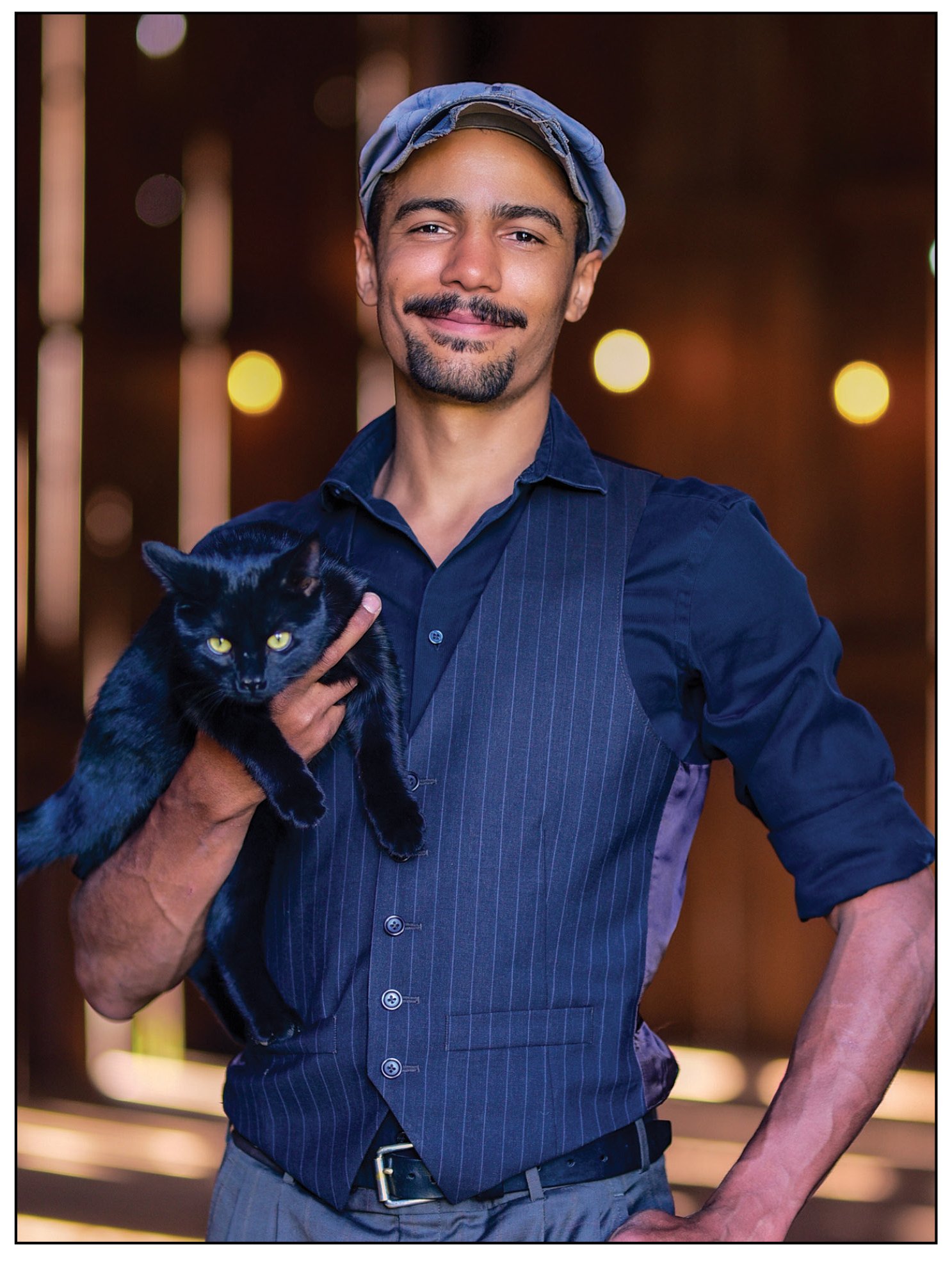
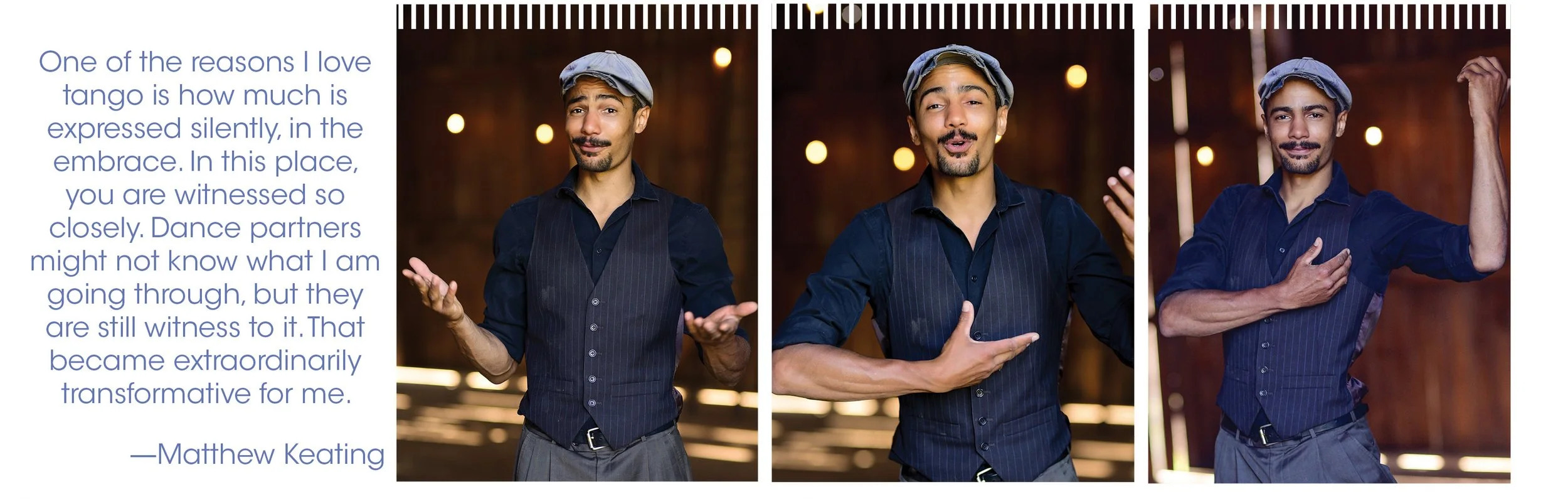
Lit by string lights and the last glow of sunset, the big barn space came alive with nervous energy as a circle of men and women shifted in their shoes. There was an air of anticipation as Matthew Keating stepped onto the dance floor with grace and ease. Dressed in a fitted vest, a well-worn newsboy cap, and pleated trousers that accentuated his long legs and vintage style, Keating effused both warmth and confidence. With an inviting smile and a sly spark in his eye, he commanded the attention of his tango students.
“First we stand tall, with a strong spine, feeling into the support of all four corners of our feet,” Keating instructed as the dancers swayed to the edge of their balance. “Inhale the spice of this music to fill your lungs. Let it expand down through your limbs. Now exhale that good spirit up to the ceiling.” He warmed the room with his calming energy allowing the dancers to relax into the rhythms of the space.
Matthew Keating discovered tango at twenty-one and fell hard. At once both sultry and stern, playful and serious, tango evokes a powerful theatrical expression. He recalled riding his bike home from work when he first encountered a milonga (a place or event at which the tango is danced) He heard the music drifting around a corner. “Like the scent of Grandma’s pies cooling in a window, I was drawn. First, I recognized the incredible skill level of the musicians. And then I saw the dancing.” He had come across an outdoor dance floor set up in Regents Plaza on campus and sat mesmerized. “Something was going on here. It just looked like magic.” That was when a dancer told him about the University of Michigan’s Argentine Tango Club. “She let me know MATC is open to anyone. You don’t have to be a university student.” He joined the classes and changed his life. “I took all the classes and started to go to every single tango event in town that season. It is a difficult dance form. I liked that.”
It is clear he loves this form of art. “Tango takes devotion,” said Keating, and he has put in the hours. Argentine Tango originated in Argentina in the 1880s. Its close embrace and dynamic lead-and-follow structure have influenced ballroom dancing ever since.
In the often-cited words of Pulitzer Prize-winning journalist and author Janny Scott, “Tango is serious and takes discipline. It must be studied hard to be done well. It is elegant, formal, passionate, and intimate. It is about power and vulnerability. It is both dance and metaphor. And to its captives, it becomes a magnificent obsession.” This resonated with Keating’s experience.
“It isn’t easy,” he affirmed. “And that’s the point. I gravitate toward high-quality things generally. I wanted to challenge myself more. I loved the dance, and I realized either you do it completely, or you don’t do it.” Diligence and devotion define Keating’s dance practice, “repeating the systems of tango over and over and over ‘til it becomes a way of life.” He noted the work of tango and the joy. “It is all about orienting yourself central on your axis to have the most fun.”
“First, I got into the local classes, then the broader community, then weekend circuits all over the country.” In 2011, tango was thriving in Ann Arbor. “I entered at the height of the explosion here,” Keating shared. University towns experience a constant ebb and flow of dedicated students who eventually depart after graduation. “Retention is a concern. I realized that if I wanted a strong tango community here, I would have to help create it. That is when my commitment deepened.”
Teaching became a natural extension of that commitment. Keating has taught at the Phoenix Center, the Pittsfield Union Grange, Rhizome Roots Studio, Ann Arbor Summer Festival, Crazy Wisdom Tea Room, and Tango Barn among other venues.
“My first gathering in town was at TeaHaus,” Keating shared. “Lisa McDonald hosted my milongas in her front room for years and years.” From approximately 2016 to 2020, dancers gathered in Kerrytown on North Fourth Avenue. “She really helped me out a lot. It was no pressure, all plus.” People sipped tea, shared a tango embrace, a dance or two, changed back into their street shoes, and strolled home.
“We danced for hours there. It was relaxed. It seemed like it was everyone’s favorite milonga. It’s what makes a town a town.” Years earlier, Keating had worked as a baker at TeaHaus. “I just asked her, ‘Could we dance at the shop?’ She was always a great support to me,” he shared with pride. “It’s in the doing. Who am I to keep tango alive? I am just one guy.” Just one guy with impact to invite our small town into a tea shop to sway together to the tempo of tango. His philosophy is simple. “Everything you could ever want is just a conversation away. If you’re prepared and put yourself in the right place at the right time, you can probably get anything you could ever imagine. You are making your own luck.”
Doing solo practice at home, attending practicas, taking classes, dancing at milongas, and teaching, Keating prepared himself relentlessly. He also studied other dance forms. The website for Rhizome Roots Dance Studio describes his offering as, “Matthew’s unique approach to teaching blends his social dance experience with other dance styles like bachata, contact improv, and zouk; contemporary practices like Gaga Technique; strength and conditioning principles; yogic breathwork; mindfulness; and play creating a learning space that is both supportive and challenging.”
Keating strives to make tango approachable. “It is a conversation,” he explained. “It isn’t simple, but it is universal, like the Yin Yang symbol.” He sees the study of leading and following, listening and leaning in, being both bold and sensitive, as the very purpose of the art form.
“Matt is an inspirational leader who can help you believe that you can do impossible, beautiful things. Even when you find out you can’t, you’re still a better person for having tried,” shared his student, Mike Appel.
“One of the reasons I love tango,” Keating added, “is how much is expressed silently, in the embrace. In this place, you are witnessed so closely. Dance partners might not know what I am going through, but they are still witness to it. That became extraordinarily transformative for me.” He paused. “This dance became a home for me. And I moved in right away.”

Keating had just received his final paycheck from Sunseed Farm when the operation closed in 2018. “Tom and Trilby paid me well,” he said. With both time and money available, he was ready to travel.
“Argentina is obvious, but Europe is where it is happening now,” he was told by Yelana Sinelnikova, one of the region’s most respected tango teachers. So, he bought a plane ticket and joined the wider world.
After spending time in Berlin, he traveled to the International Argentine Tango Festival in Belgrade, Serbia. In Vienna, he studied waltz before offering his own style of tango instruction through the Tango Argentino community at the Technical University of Vienna and the Institute of Science and Technology Austria.
Many of those same traveling tango artists continue to cross paths on dance floors around the world—even here in Michigan. “I was meeting dancers from all over who turned up at these weekend dance retreats,” Keating said. Hundreds of festivals, marathons, workshops, and tango holidays take place around the globe each year. There are fifty weekend workshops, 369 major festivals, 178 marathons, and 18 tango holidays listed in The Tango Catalogue annually. Ann Arbor itself hosts a Tango Marathon that draws approximately 180 dancers from far and wide. Hosted by Tango Lab, the popular teaching pair Yelana and Edmond describe their mission simply: “Tango is more than just a dance. We dance and teach Argentine Tango for the social dance floor.”
From across continents, dancers meet in a single embrace, but the world celebrates this artform for more than just the dance. “It is a small world on a dance floor,” Keating shared. “But we don’t want it to get any smaller.” He sees the future clearly. “The thing I think we need to focus on now is new dancers, new students, and new interest from young people. I am ready for a beginner drive.”
Before tango, Keating was a skateboarder and a boxer. Eventually, he traded rubber-soled shoes for the soft suede soles of a tango floor. He describes himself as “a movement artist. I don’t distinguish between all my work and movement practices.”
For much of his twenties, Keating often held three jobs at once. “I am a hard worker,” he said. There was a period when he arrived at a farm job by sunrise, practiced aerial arts in the afternoon, worked in a kitchen through dinner, and attended a milonga in the evening.
His friend Ben Juliar rigged aerial silks on Palmer Field. The practice was athletic, daring, and transformative. “It was dangerous, but it changed my relationship [with my body] to really knowing my anchor points and my place in space kinesthetically.” Keating credits Juliar with instilling an important aesthetic principle. “Whenever your feet leave the ground, your toes should be pointed.”
He maintained a crushing schedule throughout his twenties. “Then, I learned how to sleep.” Today, Keating swings a hammer five days a week. His physical labor is informed by years of somatic study. Working with Oak Leaf Design Build for many years, Keating has a deep appreciation for efficient and intentional movement. “Being a dancer in general helps my work, moving efficiently with ease has saved me from many injuries.”
His employer, Nick Durrie, recalls their first meeting. “Matthew approached me about a job while observing the Oak Leaf Design Build crew working at the Packard Argus. He was inspired by the tactile, hands-on aspect of carpentry and wanted to learn the skills. His desire to learn and master this work has remained unquenched as he’s discovered there is no end to it. We may master tasks, but there is a lifetime of practices to perfect. I expect him to be teaching and leading others down this path.”
Builder by day, dancer by night, Keating has crafted a life that suits both his passions and his relentless drive to improve. “The better you get, the more refined the distinctions become. The connection you feel with your dance partner is so ethereal, so effortless, that we say we strive to move together as naturally as with your own clothes.” He quoted the common comparison, “Did you choose your sport, or did your sport choose you?” Watching Matthew Keating dance, the answer seems obvious. He was made for tango.
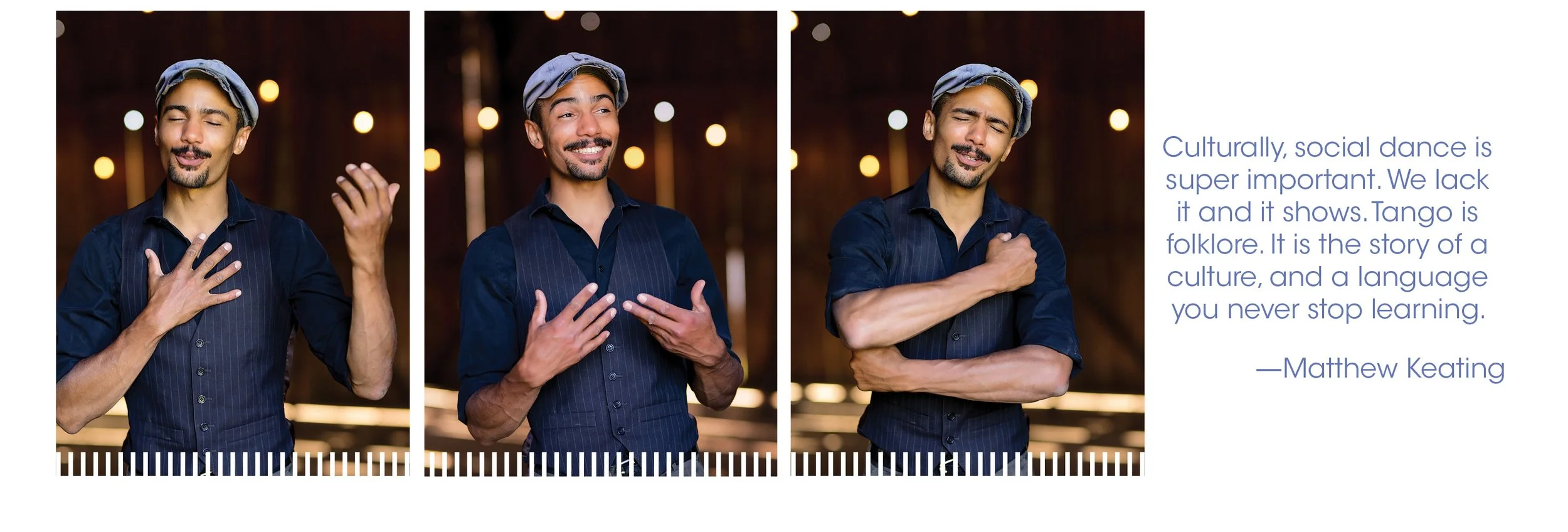
“It is a cult. I drank the Kool-Aid,” he joked. Then, more seriously, he said, “Culturally, social dance is super important. We lack it and it shows. Tango is folklore. It is the story of a culture, and a language you never stop learning. If I am contributing to bringing more dance, more human contact, more balance and embrace to this area, then I am doing something, and that matters.”
You can follow Matthew Keating to keep in touch with his private tango lessons, and group classes as they are announced on Instagram @m_j_keating, watch his tango dances posted to his Youtube channel at youtube.com/@matthewkeating7778, and find more tango resources at tangoargentinoclubinmichigan.com or tango-lab.com/aatm.
Read Related Articles:

















































Matthew Keating discovered tango at twenty-one and fell hard. At once both sultry and stern, playful and serious, tango evokes a powerful theatrical expression. He recalled riding his bike home from work when he first encountered a milonga (a place or event at which the tango is danced) He heard the music drifting around a corner. “Like the scent of Grandma’s pies cooling in a window, I was drawn.