
By Cashmere Morley • Photos by Hilary Nichols
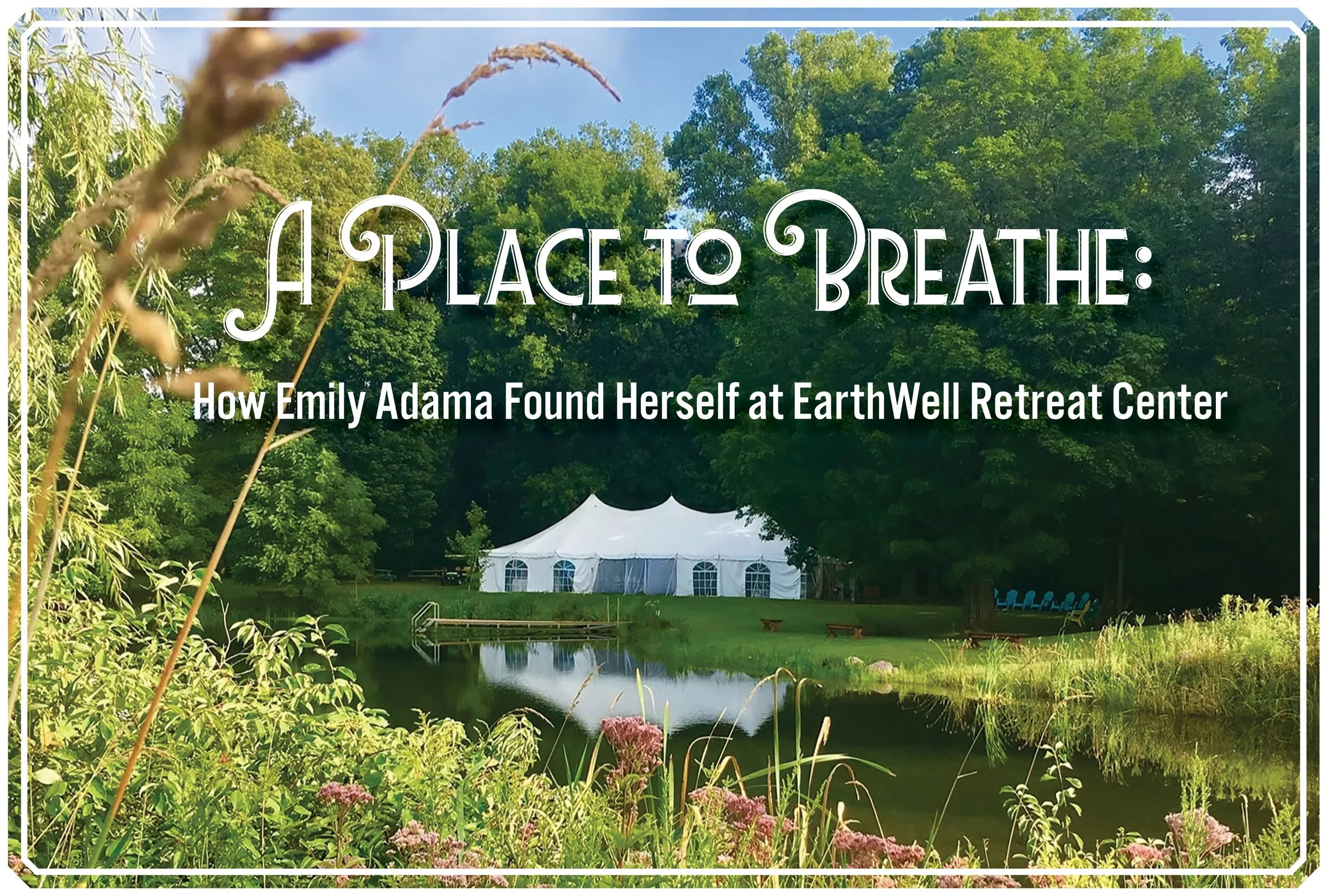
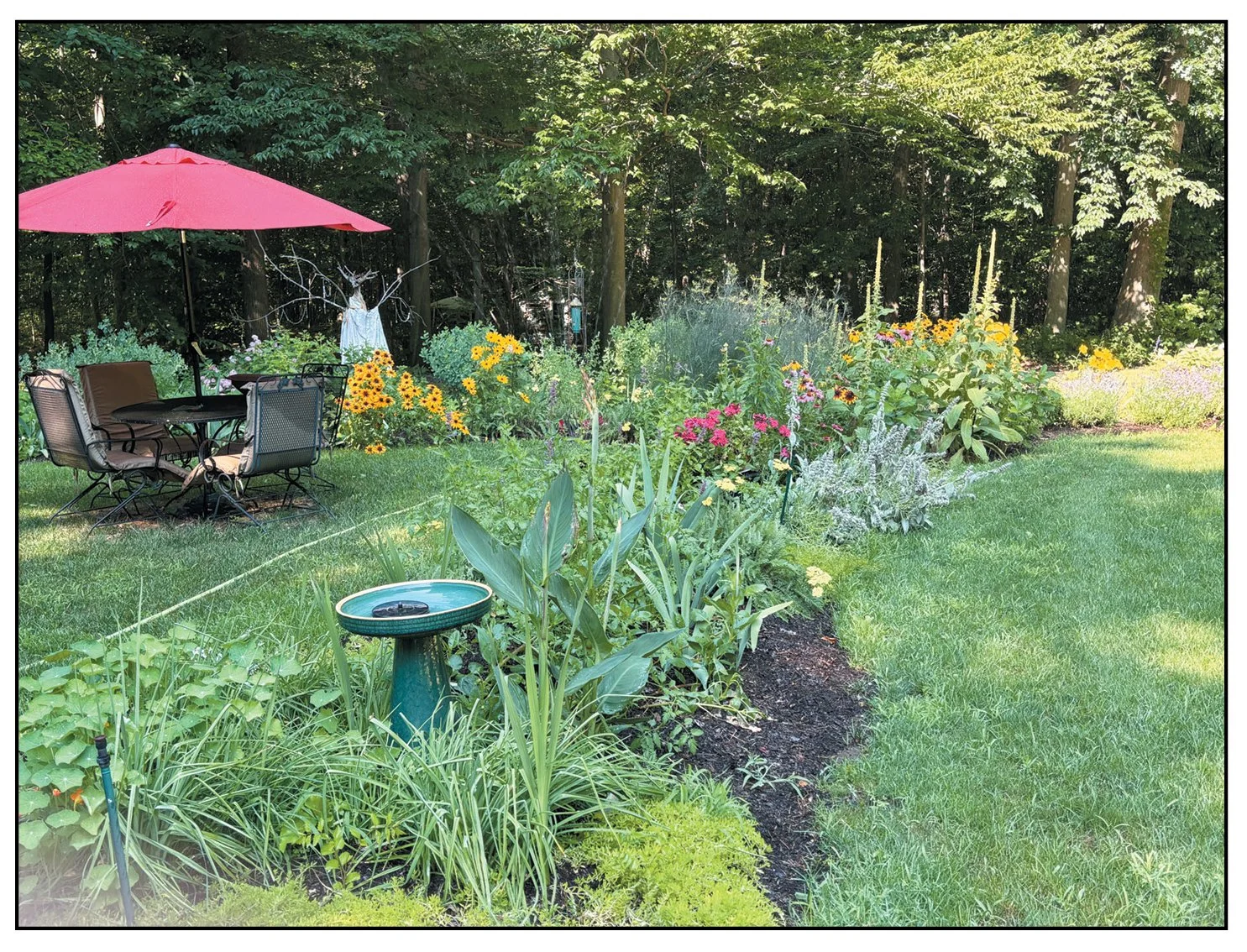
As far as the eye can see, there are acres and acres of a great nature preserve. Allow yourself to be consumed by it for a moment. Let it envelope you. Let it return you back to the beginning. Maple trees stretch far overhead--taller than any worry could ever be. Streams meander through the land—a burst of movement happening in this otherwise still place. There is a quiet, here, but a quiet that causes introspection. A quiet that feels intentional. A quiet that feels connected to something bigger if only one is willing to stop and listen.
“The work in terms of spiritual development, or teaching mindfulness, even my own meditation practice, I think, has taught me that there is an underlying thread to all of this,” said Emily Adama, Director and Mindfulness Teacher at EarthWell Retreat Center. “You know, being human. And that we can connect with that, that underlying thread, and when things are difficult, whether externally or internally, that there are time-honored pathways to get back to center.”
For Adama, getting back to center has been a journey: It started in Newaygo, Michigan, and peaked and valleyed across the state, meandering outside of state lines to the west, but ultimately circling back to EarthWell in Manchester, Michigan. “Creating a retreat center has taught me that I’m one person, and I can only do so much in a day, and that’s okay.”
Adama grew up in Newaygo, Michigan, about 45 minutes north of Grand Rapids. Newaygo, Adama explained, is a small, tight-knit town shaped as much by care as by hardship.
“Both my grandparents grew up there. My parents did, too. I was there from the time I was born until I left for college,” said Adama. Newaygo, she explains, was one of the poorest rural counties in the state. “There was poverty. Alcoholism was above average for Michigan counties. It was a very supportive community, but some people were really struggling. Not having heat, not having enough food or warm clothes, that was the reality for some of my friends, classmates, and neighbors growing up.”
Her mother worked at the center of that reality. A teacher in multiple capacities—adult education, middle school, high school, and eventually classrooms for at-risk youth—Adama remembers her mother as someone who belonged in the space between education and social work. “That’s where she really shined,” Adama said. “She was always helping kids and families.”

After Adama’s parents separated when she was three, her mother became the emotional and logistical anchor of the family. “She was doing the day-to-day raising of us,” Adama said. “My dad was a steady presence, but my mom was really the one holding everything.”
Despite how busy she was, her mother carried a deep spiritual presence into their home. “She would sing us to sleep (hymns, mostly). She had this very strong faith.”
Adama describes herself as a blend of both parents. “My dad gave me the go-getter side, the entrepreneurial, goal-oriented energy. My mom gave me the softer side, the spiritual grounding.”
Her father, Dennis Adama, was a standout high jumper with a full athletic scholarship to Indiana University. “He was a three-time Big Ten champion in the high jump, an All-American, and was inducted into the Indiana University Sports Hall of Fame and the Muskegon Area Sports Hall of Fame,” she said. When Adama’s mother became pregnant, he left competitive athletics where he had been training for the Olympics, and eventually built a successful software company serving the banking industry.
Adama’s childhood was steeped in storytelling and imagination. “My mom taught English, so we were always going to plays. I wanted to be Cosette from Les Mis,” she laughed. She tried out for local productions and wrote creatively. When she arrived at Michigan State for undergrad, she initially declared a creative writing major.
But something else began pulling at her. By her sophomore year, she shifted into Social Relations and Public Policy through James Madison College, focusing on community economic development. “I was really interested in poverty, what causes it systemically, and how you actually address inequality,” she said.
At the same time, she was running Division I track and cross country. “I was doing academics and running at a really high level, training constantly, always performing,” she said. “I didn’t have time to breathe.”
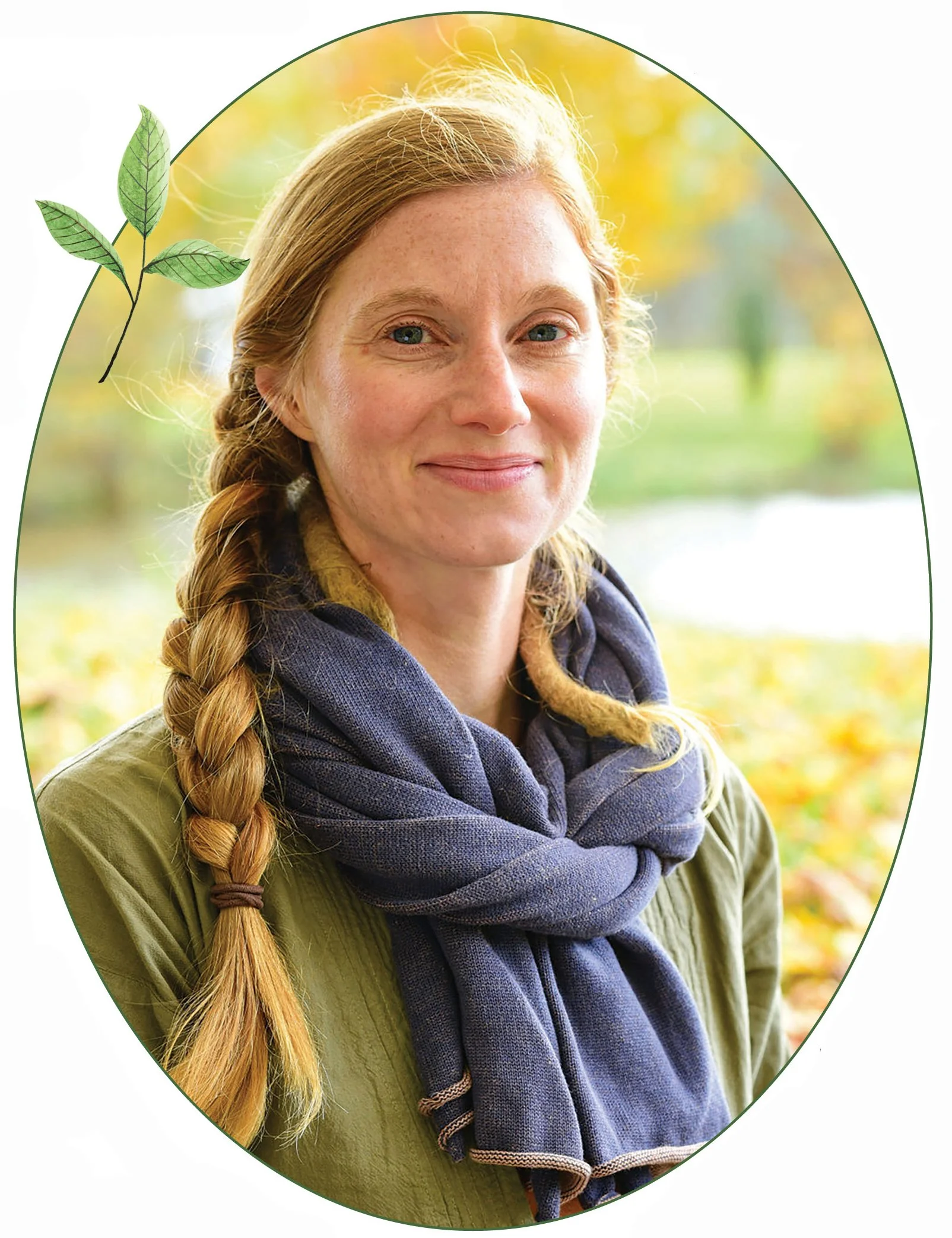
Emily Adama
Adama described herself as a highly sensitive person: someone who feels deeply and is acutely affected by her surroundings. When academics became the forefront of her life, it was challenging for her to focus on anything else. And then the crash came.
“I was so achievement-oriented—Complete the assignment. Do the workout. There wasn’t space for a spiritual life, or for figuring out who I was. I think I was set up to fall apart,” she said.
After college, she moved to Portland for AmeriCorps. A long-term relationship she’d been in—an engagement—ended. She worked full-time for a nonprofit, doing meaningful work on paper, but feeling increasingly disconnected from herself and the world around.
“My soul wasn’t alive,” she said. “I was on a ‘good’ path, but it wasn’t my path.”
Her connection to land had always been strong. Adama remembers herself as a kid who spent as much time as possible outdoors, tracking down river spots and diving into cold water after workouts or when she needed to decompress. “The Muskegon River was in our backyard. I was a runner from fifth grade on. I’d go for runs and then jump in the river. I think that was my first meditation practice,” she said. After two years, she quit her job at the non-profit. She nannied. Then she took an internship on an organic farm hoping to get back into her body and back to the land.
It didn’t go the way she hoped. “It was a workaholic culture. We were working an average of 45 hours a week doing physical labor, and we were interns. Leadership was often burned out, had chronic fatigue,and other mental issues that created an unhealthy work environment.” The food stipend was $150 a month, plus housing. “It was brutal for me, partly because I was seeking rest, community, and to re-connect with the land, but the culture on the farm was not a good fit for that,” Adama recounted.
She left after six months. Not long after, she became clinically depressed.
That breakdown, however, became a turning point in her life. Adama returned home to Newaygo in 2011, and moved to the Zen Buddhist Temple in Ann Arbor in 2013 where she started her Masters at U of M School of Social Work.

“That was really the beginning of what would become EarthWell,” she said. “During that time at home, about two years, the key elements to my recovery were slowing down, seeing a therapist for the first time, taking some medication, joining a women’s support group, reading and practicing from Jon Kabat-Zinn’s book, “The Mindful Way Through Depression,” and spending plenty of time outdoors. I also did a six-week stay at a monastery in France called Taize, attended many workshops on meditation and contemplative practice, and eventually ended up as a resident at the Zen Buddhist Temple in Arbor where I deepened my meditation practice for a year during Grad School. It’s pretty plain to see how that time in my life inspired the programming and mission of EarthWell. It was basically community, mindfulness, and nature connection that got me well again, and those are the very things that are at the heart of the mission and vision for EarthWell.”
It was from that dark place that EarthWell began to grow. It was not a retreat center built from branding, but one built from a living need to survive and reconnect with the earth around her.
Today, when people arrive at EarthWell, whether for a weeklong retreat, a staff gathering, or a few quiet days alone in a cabin, they are stepping into the same healing relationship Adama once had to find for herself: land, stillness, and the slow work of becoming whole again. But just because the seed had been planted didn’t mean EarthWell was yet ready to bloom.
When the world turned inward during the Covid-19 pandemic, Adama found herself standing on unsettled ground. Her hours as a therapist and mindfulness teacher dwindled. She was suddenly home, homeschooling her young son Therrien, and trying to make sense of a future that felt newly uncertain.
“I was a little lost, professionally,” she said. “Very grounded in other ways as a mother and a wife, but lost, professionally.”
And then, almost improbably, the land appeared for sale. “That’s when the property became available, and I was like, ‘I’m gonna do this,’” said Adama. “Even in my early twenties, honestly even in college, I had vision boards going all the way back to, like, a utopian society project in eighth grade. I was always imagining what an ideal healing environment would look like. It always involved land. It always involved the community, and some kind of contemplative practice that lets people slow down.”
Graduate school sharpened that vision. Training as a therapist made her acutely aware of the limits of traditional care. “There’s something about sixty-minute sessions in an office,” she said. “I kept thinking, ‘If I could do anything, what would be the ideal way to support healing?’”
Her own experience with depression made it personal. She wanted to build a place specifically for people who were struggling, a place that held more than talk; it held bodies, time, water, trees, and silence. When EarthWell finally arrived, it didn’t feel impulsive.
“It wasn’t some huge leap,” she said. “It just happened sooner than I thought it would.”
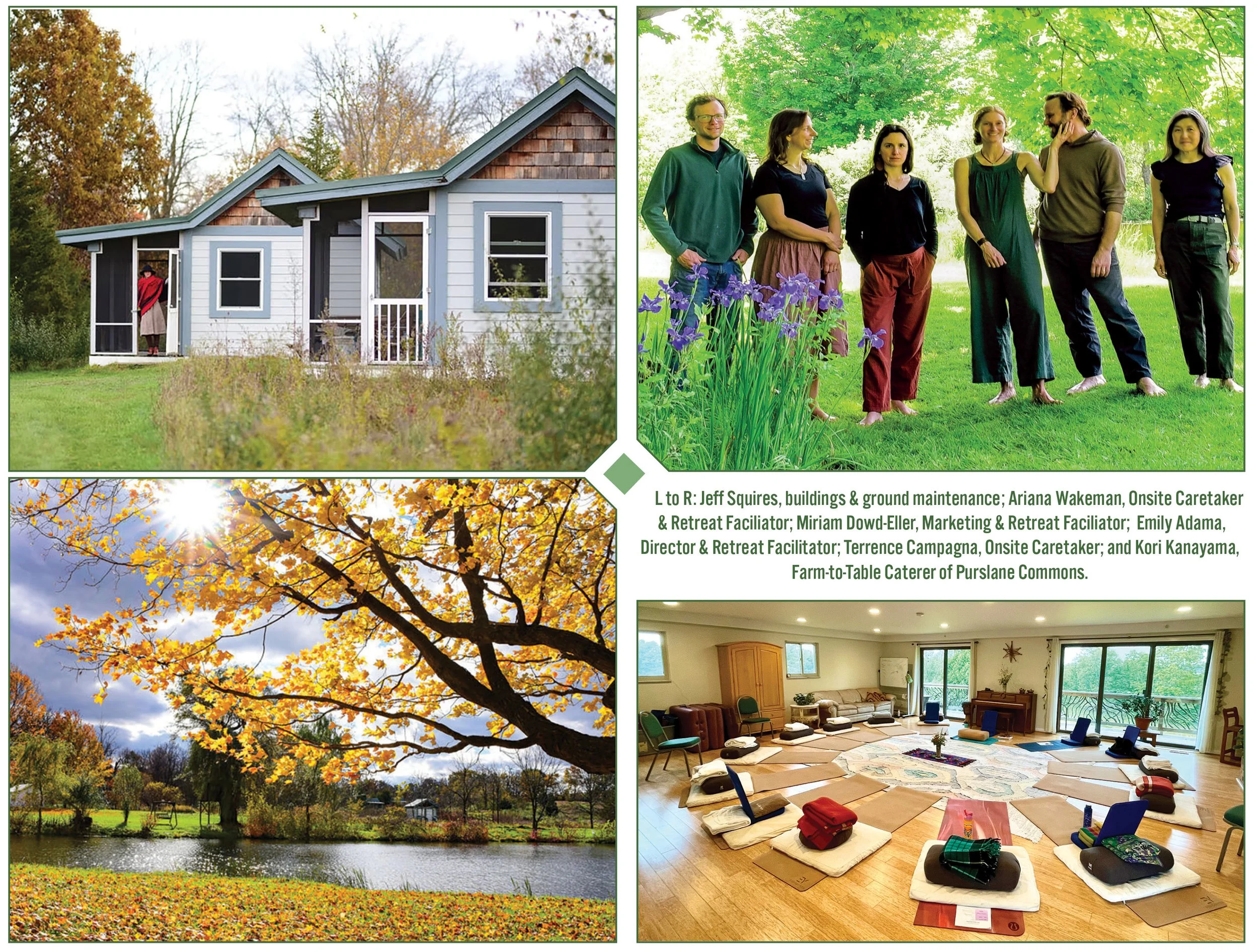
At first, the land was meant to be shared more communally. Adama and a group of friends, most of them parents of young kids, had imagined dividing the property into parcels so they could live as neighbors. Not a commune, exactly, but a kind of clustered community. But the zoning wouldn’t allow it. The land could only be used as a retreat center.
“So, the vision shifted,” she said. “But honestly, in a way, it became even more aligned.”
The first retreats were small and simple: six-hour silent mindfulness days. “We’d get really excited when people signed up,” Adama said. “And more importantly, [a wellness retreat] was actually working on the land. People were having these really meaningful experiences.”
Sometimes the emotional release came almost immediately for folks who visited EarthWell. “In the opening meditation, people would start crying,” she said. “Just realizing, ‘Oh, here’s a space where I don’t have to do anything today.’ People are holding so much. It’s not unusual for tears to come in the first half hour.”
Adama knew early on she couldn’t, or didn’t want to, do everything herself. “I brought Miriam Dowd-Eller on right away because I have no interest in marketing,” she said. “I still don’t. She does the website, social media, SEO, all of it. If you Google ‘retreat center Michigan,’ we come up. That’s her.”
But EarthWell’s real draw is the land itself. It sits beside more than a hundred acres of Washtenaw County nature preserve, stitched together with trails, forest, and water, creating the peaceful tapestry of land EarthWell sits on today.
“It’s hard to describe if you haven’t been here,” Adama said. “But people feel it. They say it has an energy.”
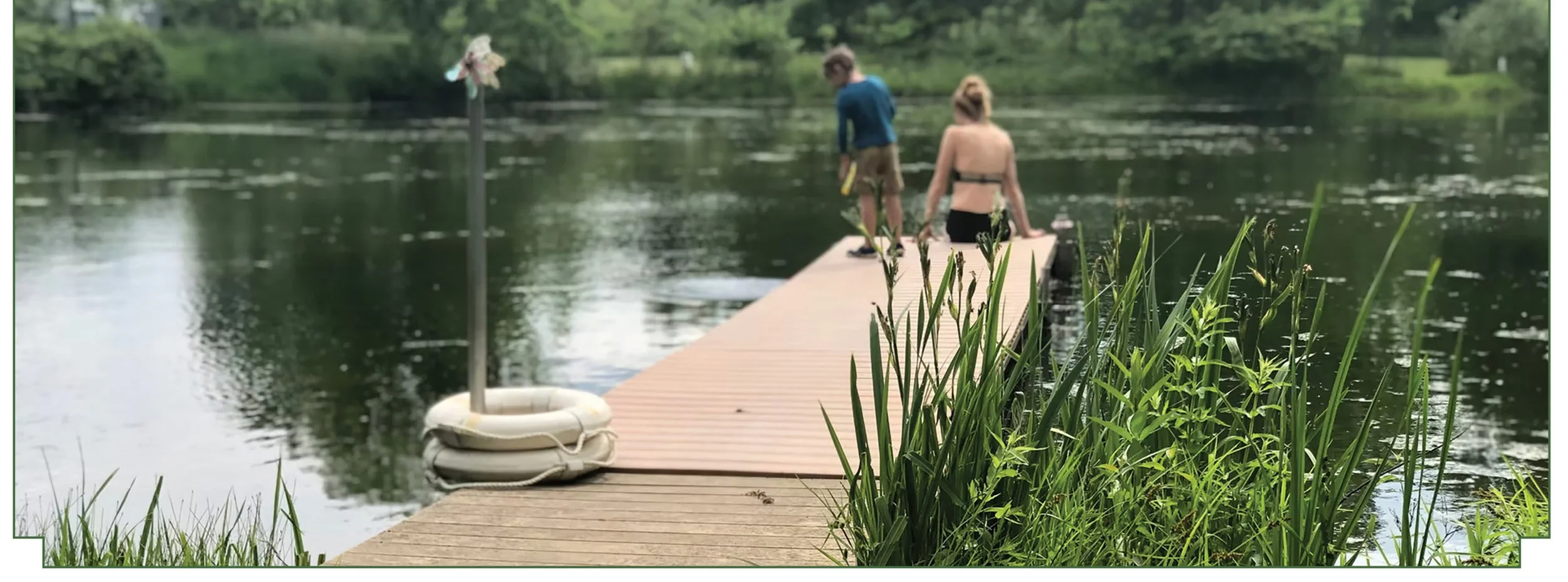
The property was stewarded for years by Clark Spike, who built many of the trails and the pond that has become a kind of heart center of EarthWell. “Clean water you can put your body in,” Adama said, “...that’s priceless. You feel like you’re being held.”
The financial reality of her new endeavor, however, was far from idyllic. Adama secured a private loan to buy the property, but starting a retreat center meant pouring money out long before any came back in. Then, about a year in, everything unraveled.
A routine repair revealed that the building had never been brought up to commercial code. Suddenly, EarthWell needed a new septic field, a whole house sprinkler system, and an ADA door and ramp to get the building up to commercial code and continue running retreats.
“Eighty-five thousand dollars,” Adama recalled. “And at that point, I had no money.”
For a moment, she thought she might have to sell the property altogether. Instead, she and her husband made a difficult decision: they quick-sold their Ann Arbor home to free up equity.
“That was the squeeze period,” she said. “You’re already stressed because you’re starting a business, and then you get hit with this massive, unexpected expense. We had to change course really fast.”
They survived it. The systems were installed. The property was brought into compliance. And now, years later, EarthWell is finally steady.
“We’re moved in to the lower level of the Common House, after renovating it into an apartment. We’ve paid everything. And this year, our calendar is full,” she said. “This winter especially felt like a healing winter. Everything is quieter. We’re just taking a breath.”
EarthWell is now not just her work, but her home. After years of moving, the land offers something deeper than financial, emotional, and spiritual stability.
“We’re building a garden. We’re stewarding this place,” she said. “And at the same time, we’re offering it to the community. That feels completely aligned.”
The center runs on relationships as much as Adama’s vision. Early on, Adama invited a friend, Ariana Wakeman, and Ari’s family to live on site as caretakers. They began in an RV, handling cleaning, linens, and maintenance. Eventually, the township approved them to build a small house on the property.
“They’re essential,” Adama said. “Ari does caretaking, but she’s also an LMSW, somatic psychotherapist, and retreat facilitator. Terrence [her husband] does land care and maintenance. EarthWell wouldn’t be what it is without them.”
Adama’s husband supports the project in his own way. A landscaper and artist, he splits his time between seasonal work in Ann Arbor and his studio at EarthWell. “He helps when I need him,” Adama said, “but it’s not his main gig, though he will be doing more onsite landscaping, showcasing his artwork around the property in the coming year. We met as residents at the Ann Arbor Zen Temple where he spent four years as a resident, and we both have a foundation in mindfulness/meditation practice as a lifestyle, so he really “gets” what I’m trying to do. It is really helpful to have a partner in my corner like that. He is very supportive.”
As EarthWell grows, so does its network. Retreat facilitators like Megan Sims now lead programs alongside Adama, Ari, and Miriam. More collaborators are coming.
“I don’t want to be the sole voice here,” Adama said. “I want trusted people bringing their own wisdom into this space.”
Formally, EarthWell is a sole proprietorship, Adama sets the long-term direction. But the retreats themselves are shaped collaboratively. “I steer the ship,” she said, “but when it comes to programming, we’re equals.”
When Adama envisioned EarthWell, she saw a “place to rest and heal,” a space that would nourish not only her own spirit but offer others the renewal of nature-infused mindfulness retreats and community. Through her reflections, Adama’s grounded philosophy and candid approach to sacred work emerges with clarity and heart.
“We have our days of mindfulness, which are monthly. Those are silent retreats in the mindfulness meditation tradition,” Adama explained. “Then, twice a year, we do retreats for helping professionals. That’s specific programming for people providing direct service and facing burnout. And then we do women’s retreats which Miriam leads. Those are all day-long retreats.”
But EarthWell’s reach doesn’t end there. “We do custom retreats, mainly staff retreats, but also for groups like bachelorette parties or friends. We can create custom programming. The staff retreats have been really great. That’s been unexpectedly popular. Organizational leaders want days of rest and stress relief for their staff. That’s been really cool.”
The calendar also includes weekend-long retreats. “We do yoga and meditation retreats where I lead the meditation and Miriam or Ari lead the yoga. This year, we’re doing nine retreats: two couples retreat weekends, two creative arts wellness weekends, and a somatic practices for depression and anxiety weekend.”
Across all programming is a subtle, consistent spiritual foundation. “When you come to an EarthWell retreat, you can always expect yoga, mindfulness meditation practices, nature connection, and group sharing.” Adama said. “That’s something we’re really developing—bringing these practices intentionally outside, so people cultivate a real relationship with nature while meditating or practicing yoga. Most retreats are in studios or halls, but here, nature is an active participant.”
Who comes to EarthWell? “Mostly women, which we’re trying to diversify,” she said. “I’m looking for a male facilitator to expand offerings. But we do get men, and we are explicitly open to all identities and genders, LGBTQ friendly. Age-wise, it’s mostly older people with discretionary income, but also younger folks: moms, people starting families, and college students.”
The changes she observes during retreats are profound. “Physically, you can see people relax and release tension. They walk in frazzled, stressed, carrying a lot. By the end of the day or weekend, you watch it melt away. People laugh a lot at our retreats. You see them shedding what they’ve been carrying, in a space where they’re supported, and putting everything down for a while.”
EarthWell’s roots are spiritual but intentionally inclusive. “I’d say it’s rooted in Buddhist and yogic traditions, but we don’t align with a specific lineage. My own practice is more secular, so our mindfulness meditation is secular. The yoga and mindfulness practices are influenced by Buddhist psychology and Eastern philosophy. I also have a contemplative Christian background, and each facilitator teaches authentically from their own journey.”
Adama is deeply involved in every aspect of EarthWell. “I’m usually lead facilitator or co-facilitating, but I’m also in the kitchen. I warm and set out food, create the buffet, and clean up. I help with setup and cleanup, cleaning toilets, carrying bedding, whatever needs to happen. I also do communications and administrative tasks for EarthWell. I wear many hats.”
The business model balances financial reality with accessibility. “We operate as a business but offer sliding scale pricing for all programming. The website has a section inviting people to reach out if they need scholarships or support. People on personal retreats sometimes do work trades, helping with maintenance or other tasks, to attend at a lower cost.”
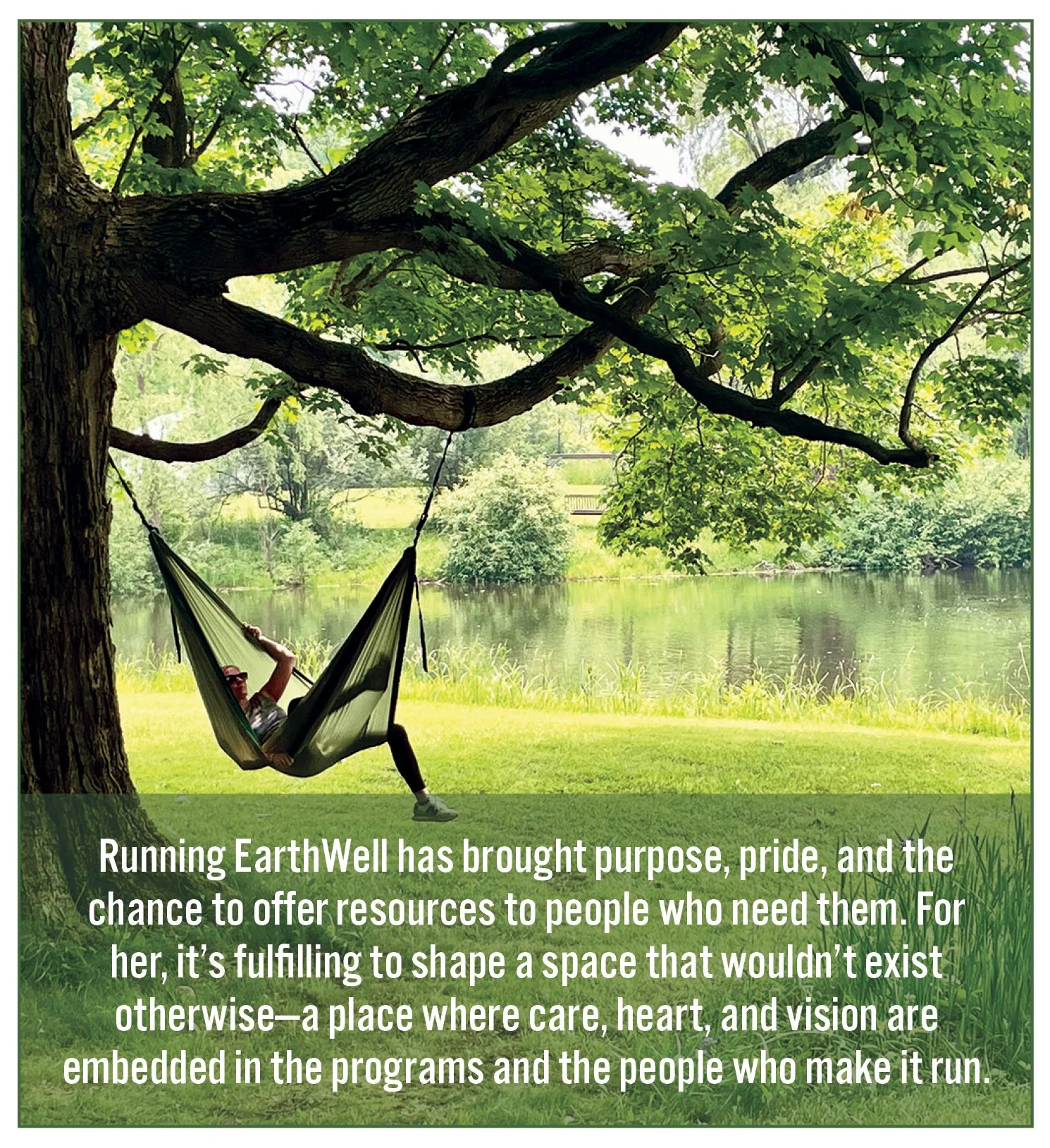
Still, in Adama’s opinion, the rewards are clear. Running EarthWell has brought purpose, pride, and the chance to offer resources to people who need them. For her, it’s fulfilling to shape a space that wouldn’t exist otherwise—a place where care, heart, and vision are embedded in the programs and the people who make it run.
It hasn’t been easy. Health and Building Department regulations, moving her family, financial uncertainty—there were moments when the weight of it all felt heavy. But perseverance, grounded in practical optimism and the wisdom of the Serenity Prayer, carried them through. “Serenity to accept what you cannot change, courage to change the things you can, and wisdom to know the difference,” Adama said. “It’s the kind of mantra that applies to both life and running a retreat center.”
Looking ahead, Adama said she is “content to grow slowly and sustainably in the meantime. No bigger projects are in the pipeline yet, and it would be more like a dream if I could bring them to fruition. In the meantime, our next five-year-plan is to keep growing retreat offerings, programming, and expand collaborations. For example, for programming, we would like to offer a weekly yoga class, an introduction to mindfulness meditation course, and a weekly series on practices to work with depression and anxiety.” Adama’s own journey is mirrored in the center itself: a space rooted in community, shaped by resilience, and always moving toward what’s next in service of healing.
“I’d like to get more people living on site so we can have a true community here,” Adama said. Though this would require working with the township and would be a longer project, perhaps a decade down the road, Adama still dreams of it. Long-term, the hope is for EarthWell to evolve into either a nonprofit or worker-owned venture, preserving the values it was built on for years to come.
For Adama, there’s a historical and spiritual need for refuge, places where people can step back from daily demands, reflect, and realign. Off-grid living, camping, mindful meditation, and genuine community sharing aren’t just perks, they’re vital antidotes to the overwhelm of modern life. “Being with nature, simply and with others, creates spaces to reconnect with our deepest selves,” she said.
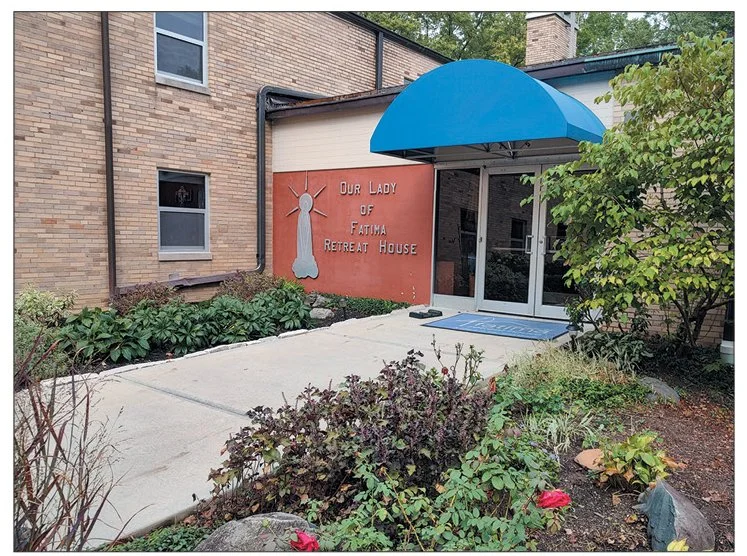
Retreats and spiritual centers, places like the Ann Arbor Zen Temple, have shaped Adama’s understanding of sanctuary. Visitors often arrive seeking clarity, relief from stress, or reconnection with their values. Many leave feeling grounded, what she described as “finding sanity or an authentic voice.” That transformative potential lives at the heart of EarthWell’s mission.
What EarthWell ultimately offers is not escape, but a different way of paying attention. In a culture that measures worth through productivity, speed, and constant output, the retreat center quietly insists on another value system. Here, nothing is earned by doing more. Rest is not a reward. It is the starting point.
That philosophy reshapes the way people experience themselves when they arrive. Without phones, schedules, or performance expectations, the nervous system begins to soften. Time stretches. Small sensations—the weight of a blanket, the sound of wind through leaves, the warmth of tea held in both hands—become noticeable again. These are not grand revelations, but they are foundational. They are the building blocks of feeling safe enough to be present.
Adama often speaks about mindfulness not as a technique, but as a relationship. It is the practice of being with what is here, rather than trying to make something else appear. On the land, that relationship becomes tangible. The forest does not rush. The pond does not apologize for being still. The trails do not demand improvement. People, placed gently into that rhythm, start to mirror it.
What surprises many visitors is how quickly that shift happens. People arrive braced, guarded, carrying invisible weight. Within hours, faces soften, bodies drop, conversation slows. Silence becomes less uncomfortable and more like a shared language. The land does not fix anyone, but it makes space for something subtler: the remembering of what it feels like to be whole without effort.
EarthWell also sits in a lineage much older than any single person. Long before retreat centers, humans sought out forests, rivers, and quiet places to grieve, pray, and recalibrate. Monasteries, hermitages, and pilgrimage sites grew where the land itself felt like a teacher. EarthWell, in its own modern way, carries that same impulse forward. It is not about ideology or doctrine but about creating conditions where insight can arise naturally.
For Adama, this continuity matters. EarthWell is not meant to be a destination that replaces everything else in someone’s life. It is a place people pass through, a pause in the story, a clearing where perspective can reset. Guests leave not with answers neatly packaged, but with something more durable: a felt sense of what it is like to inhabit their own bodies and lives with more gentleness.
That gentleness ripples through their lives. People return to families, jobs, grief, decisions, and life with a slightly wider internal space. Conflict can oftentimes feel less urgent. Burnout loosens its grip. Even small moments, once rushed past, gain texture and meaning. EarthWell does not promise transformation, but it reliably invites it.
The world, at times, has grown very loud and fractured. Having places like this, a space to be quiet, to observe, to be off a screen and in nature, have become essential. Not because they are perfect, but because they offer something increasingly rare: the chance to stop, to listen, and to feel held by something larger than oneself.
EarthWell exists because one woman once needed that kind of refuge. And after everything, the loans, the building codes, the loss of a house, the uncertainty of a pandemic, what remains is something quiet and steady.
“We’re here,” she said. “Everything is good. We’re just breathing for a moment.”
Visit EarthWell online at earthwellretreat.com or on Instagram @earthwellretreat and Facebook @EarthWellRetreatCenter. Check out the center in person at 18580 Grass Lake Road in Manchester. Look at their website for open hours, class schedules, and more.
Read Related Articles:
















































































































As far as the eye can see, there are acres and acres of a great nature preserve. Allow yourself to be consumed by it for a moment. Let it envelope you. Let it return you back to the beginning. Maple trees stretch far overhead--taller than any worry could ever be. Streams meander through the land—a burst of movement happening in this otherwise still place. There is a quiet, here, but a quiet that causes introspection. A quiet that feels intentional. A quiet that feels connected to something bigger if only one is willing to stop and listen.