
By Kaili Brooks
As children emerge from the cocoon of toddlerhood and begin their journey into the world, the 21st century parent must decide where and how their child should be educated. Public school is often the obvious choice, but other families may choose private, charter, or alternative schooling. A small number choose to homeschool. More wish they could, but find it unrealistic due to employment or other extenuating factors. In Washtenaw County we are blessed with a myriad of options. One such option, Ypsilanti’s Kindred Journey School (KJS), sits in the happy medium between private and homeschool. KJS is perfect for families who relish the individualized curriculum and close personal relationships that homeschooling offers but are unable to do so themselves. Serving Kindergarten through fourth grade and growing every year, KJS seeks to nurture the individual child and foster connection between peers, educators, and the local community.
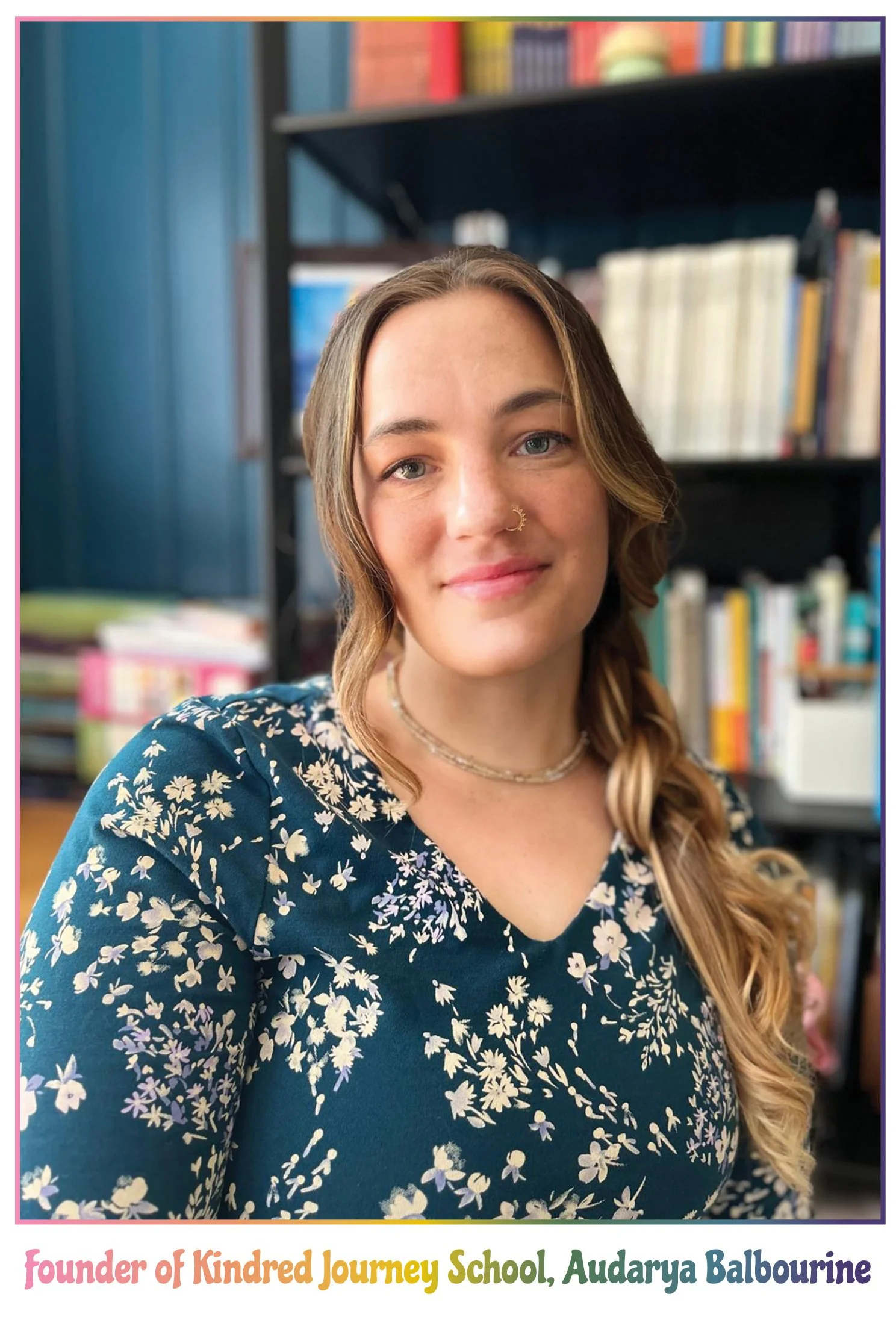
The school was founded by Audarya Balbourine, who currently holds a master’s degree in education and is pursuing her doctorate. Balbourine said, “Initially the school began with a group of parents from the Harmony Collective Meditation Center, but I wanted to offer something that was non-sectarian and for everybody.” Families of all kinds are welcome, and Balbourine encourages parents to involve themselves in the school community. The school itself operates much like a family, with children aged 16 months to nine years engaging in education and play together. Much like a traditional homeschool environment, the teachers’ children attend the school as well, though KJS is not currently authorized to enroll non-related children under kindergarten age. Alongside Balbourine, Sri Radha Copeland is employed as a co-teacher. Together, they ensure that every child has their needs, from educational to socio-emotional, recognized and fulfilled. Initially, KJS operated out of a home in Ypsilanti, but the school was blessed with the opportunity to rent space in the Baha’i Center of Washtenaw County. The new space boasts three fully functional learning spaces alongside a large dining area, stage, kitchen, garden beds, basketball court, playground, and plenty of green space for children to explore.
The children’s individualized learning plan combines different homeschool curriculums, including the renowned The Good and the Beautiful for mathematics. Describing the school’s educational philosophy, Balbourine stated, “The school follows the Emergent Learning method. It’s the answer to that tension between unschooling, following your children’s interests, but also educational subjects like literacy and math. It interweaves developmentally important and foundational aspects into their interests. Last year the children wanted to do a zoo project. We wove literacy problems into that, math problems into that, and they had a concession stand. They get the foundations, but in a way that sparks joy for them.”
To further extrapolate, the emergent curriculum positions the teacher as a researcher and facilitator, there to examine the children’s interests and passions and offer them opportunities for these interests to be integrated into the educational curriculum. The teacher, though still the leader of the classroom and guiding hand, does not assert that things have to be done in a rigid way. The Emergent Learning Method is intrinsically flexible: observe and document, offer opportunities and guidance, rework when necessary, and find success. When the desired outcomes are not reached, the student is not shamed or held back, but rather they are offered the chance to try again.
The rhythm of the school day allows space for students to foster their interests and engage in independent play—a fundamental aspect of childhood education often not adequately integrated into a conventional classroom. The day opens with a morning circle where students share their “rose and thorn” of the previous day and current morning and complete the day’s calendar. After this, books are read that touch on subjects students have expressed interest in. One such example from this school year was the question “how does flight work?” After this, students attend their individual lessons for the day with Balbourine, Copeland, and often a volunteer reading buddy. They complete their math and literacy lessons and move onto their chosen projects. Two students, aged 7, have begun work on a food chain project traversing the ocean floor and tropical jungle. The oldest student, aged 9, has chosen to create a school newspaper from the ground up, writing articles, taking pictures, and featuring art from other students. Once their work is complete, the children will take their lunch outside and engage in imaginative play on the Baha’i Center’s expansive greenspace which includes a playground and nature area.
Already this rhythm differs from the regimented day offered at a public school, something Balbourine has worked hard to achieve. “The traditional school model is very prescriptive. Even in the Waldorf school it’s like that. Each year there are specific things that are done. With emergent learning, each year is dependent on their interests and the local community, but all supported by developmentally specific pieces. It’s done differently from year to year and month to month; in that way it’s more adaptive and fluid to the children and the community we’re in. It’s true to life—in life we follow different passions and use our literacy and mathematical skills to pursue these. We have a multi-age group which is something you don’t typically find in a classroom.”
While completing her Masters in Alternative Education, Balbourine gained experience in both the Waldorf and Montessori method; she now weaves elements of both into the curriculum while eliminating the dogma that often arises from a strict adherence to one educational method. She said, “The unique thing about Kindred Journey School is that it already feels like life, so it sets a precedent for lifelong learning. What I see them leaving with is a strong sense of curiosity. When they find a passion, they feel confident following it because they’ve done it so much before. They plan, explore, manage their time, and allow their interests to grow into full projects. As someone currently pursuing a Doctoral program, these skills are very important to pursue a higher level of education. There’s not someone holding your hand throughout the whole process. You have to research. You’re studying and creating your own dissertation. It’s not something you’re exposed to early on in conventional education and [young] people may leave without feeling confident enough to forge their own path.”

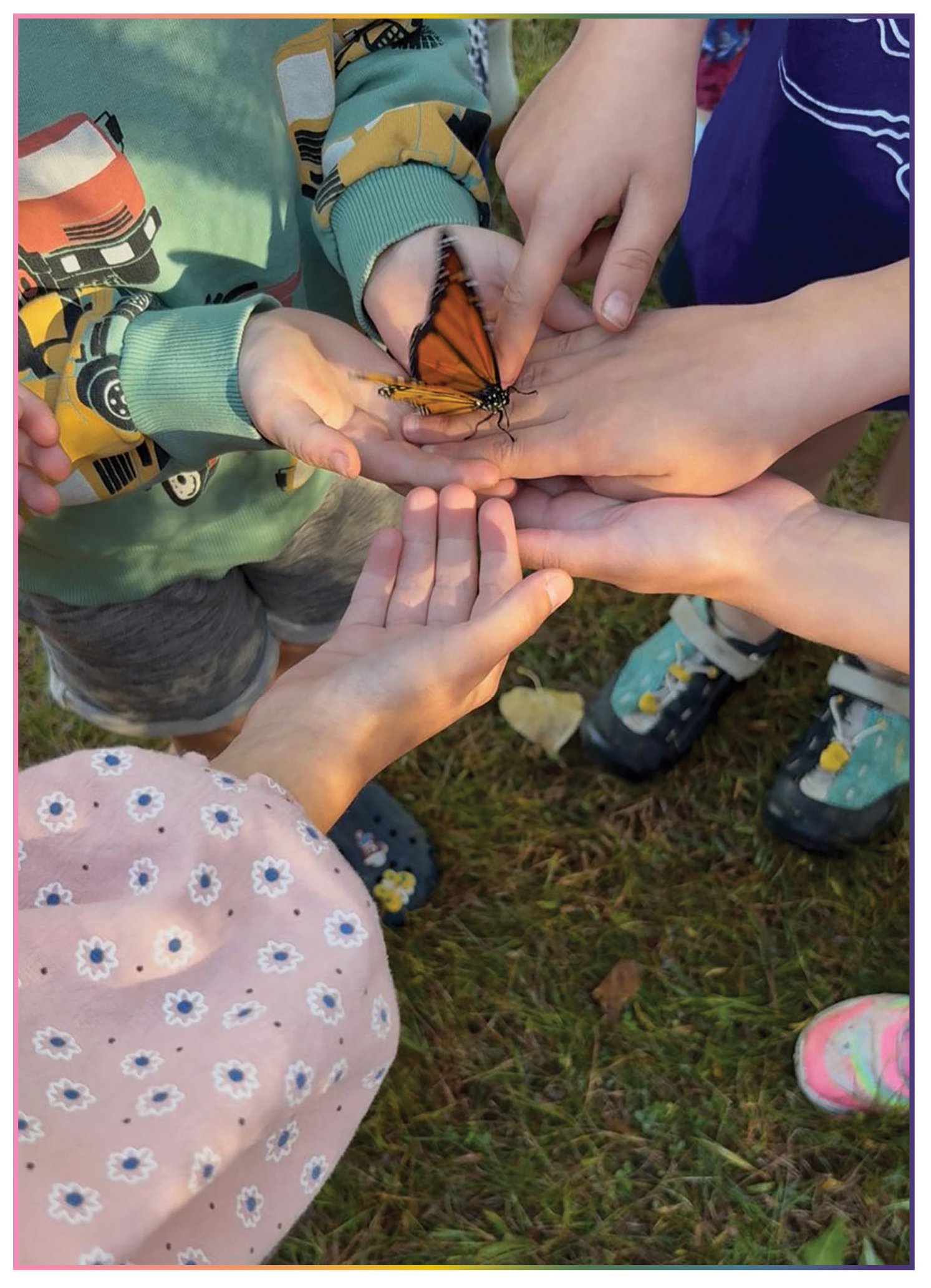
The last hour of the school day is reserved for something truly special: the Community Class. These are class offerings from local volunteers that introduce students to a wide variety of engaging subjects to which the students might not otherwise have access. The current course offerings are pottery and clay work with which students have worked hard to create sculptures and bowls. They work with wood to create bespoke birdhouses, and experience a mindfulness day where they practiced meditation and tai chi.
On how they decide what to offer in community class, Balbourine stated, “Sometimes they [the students] communicate an interest, and we find volunteers for that. They were very interested in clay, so we found a local potter. We’ve had Tae Kwon Do, and even a local microgreens farmer came in and taught about seed sprouting and anatomy. A woodworker came in, and they [the students] built their own mud kitchen. We find what’s local and alive in the community to allow them to connect with the people around them.”
Going forward in the year, the students will garden on the grounds, learn to grow their own food, master their physical strength in a children’s weightlifting class, and delve deep into their emotions and relationships with those around them, and more. By offering these opportunities to students (and community members alike), the children learn that they are not isolated in an educational bubble, but rather participants in a far grander web of knowledge and lifelong learning.
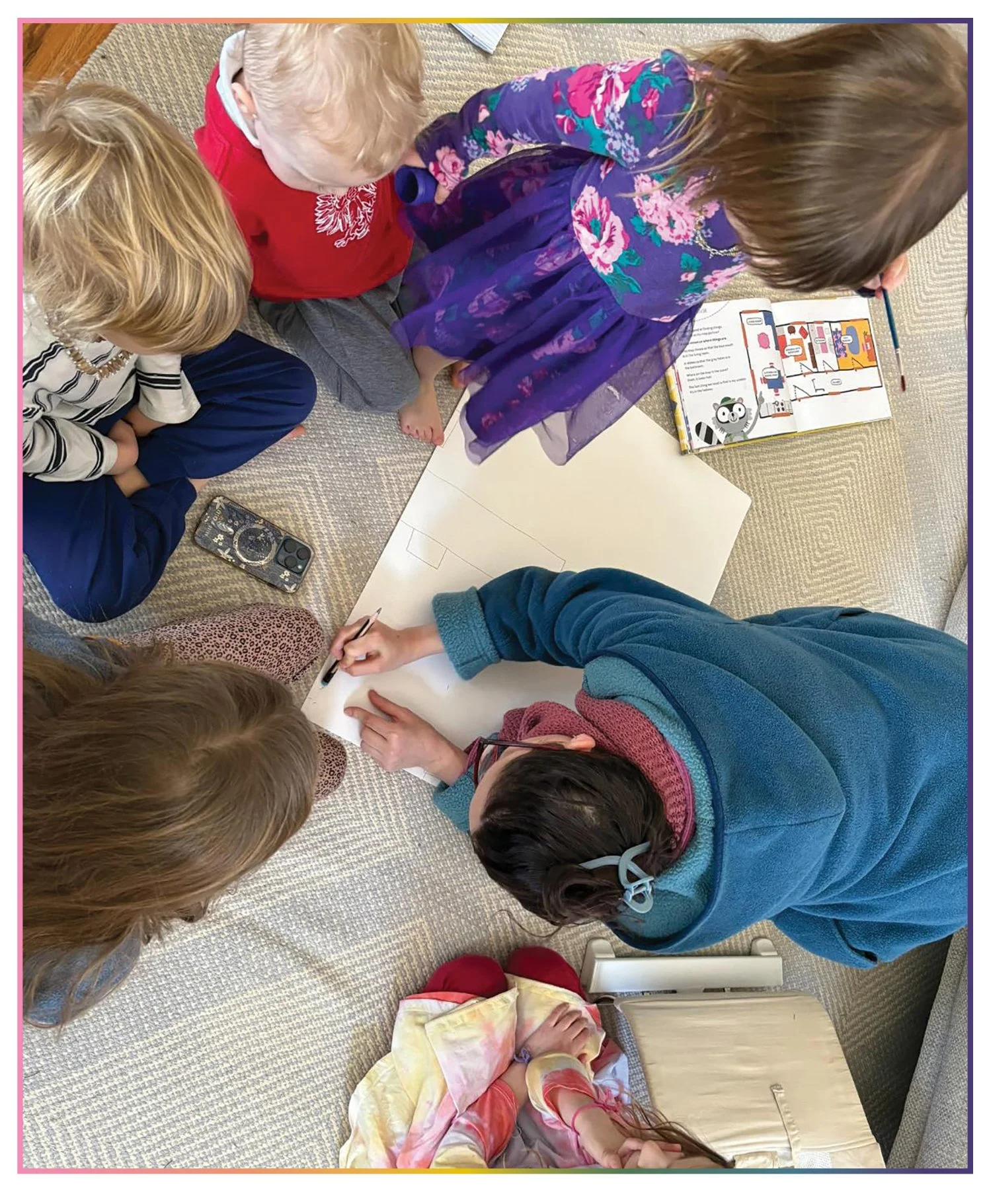
As of the publishing of this article, the school year will be half-over, but there is still so much more in store. The students will work toward their culminating project(s) and continue to learn and grow as a collective. KJS currently operates as a homeschool cooperative, but the school’s move to the Baha’i Center of Washtenaw County has allowed them to pursue a nonpublic school license. Pending small renovations at the center, Balbourine hopes to achieve this before the end of the calendar year and enter a new era. “I want there to be options for parents to participate in. I’d like to see different ways homeschoolers could engage as well as having children attend full-time. It’s important for me to offer choices to parents for how they educate their children, whether this be hybrid, full-time, or just for community class to allow them to build connections.” The school has already begun to welcome new faces into the afternoon Community Class and has its doors open to more. No matter how many new families find their way to Kindred Journey School, they will be welcomed with open arms. The message is clear: every child is unique and deserving of an education that respects their humanity, autonomy, and intelligence, and every parent deserves that for their child.
For more information on Kindred Journey School and to inquire about enrollment opportunities, KJS is available online at KindredJourneySchool.com. If you are a community member interested in volunteering for Community Class, please contact director@kindredjourneyschool.com. Kindred Journey School is located at 5550 Morgan Road in Ypsilanti.
Kaili Brooks is a mother, writer, calendar editor for The Crazy Wisdom Community Journal, and Kindred Journey School’s teaching assistant.
Read Related Articles:







































































As children emerge from the cocoon of toddlerhood and begin their journey into the world, the 21st century parent must decide where and how their child should be educated. Public school is often the obvious choice, but other families may choose private, charter, or alternative schooling. A small number choose to homeschool. More wish they could, but find it unrealistic due to employment or other extenuating factors. In Washtenaw County we are blessed with a myriad of options. One such option, Ypsilanti’s Kindred Journey School (KJS), sits in the happy medium between private and homeschool. KJS is perfect for families who relish the individualized curriculum and close personal relationships that homeschooling offers but are unable to do so themselves. Serving Kindergarten through fourth grade and growing every year, KJS seeks to nurture the individual child and foster connection between peers, educators, and the local community.