
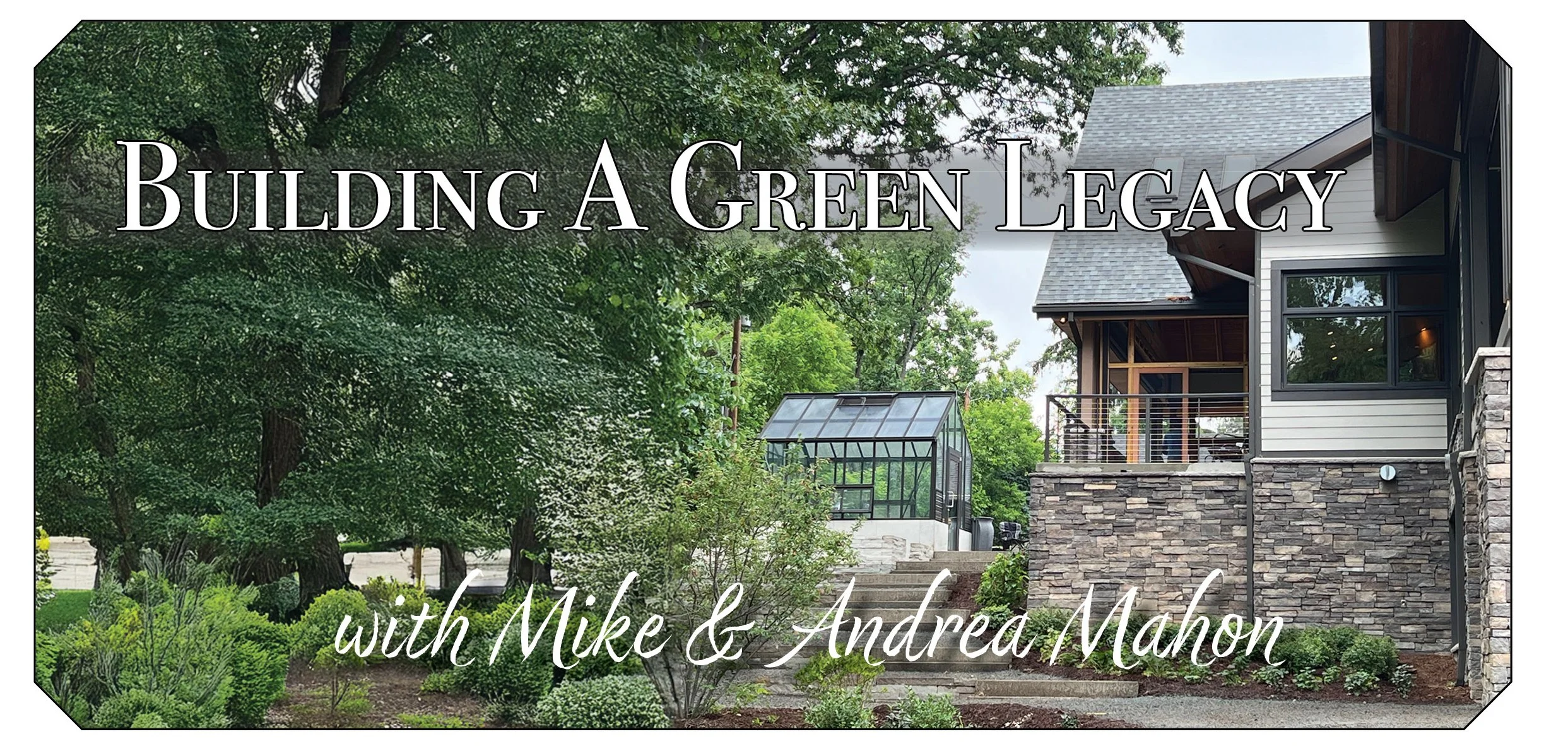
By Hilary Nichols
The Mahons don’t endeavor to build their client’s dream home. “We prefer to build their ‘legacy home’ to be passed down for generations,” said Andrea Mahon. The goal is anchored in something more tangible than today’s dreams. “We build homes to last, but more so, to matter,” Mike Mahon added. And that is what the Mahons work so hard toward. In 2006, Mike Mahon founded Adaptive Building Solutions (ABS) here in Ann Arbor to be part of the zeitgeist. “I knew it was the perfect place to start a business that focuses on sustainability.”
As he was getting ready to wrap up his youthful adventures, skiing in Telluride and driving his VW Bus around San Francisco, Mike Mahon saw the US Green Building Council’s presentation of San Francisco’s new library. He was struck. “I was fascinated with the concept of sustainable building practices to address climate concerns, before that notion was really commonplace.” He had dabbled in construction jobs over the summers and was ready to start a business. “Knowing that everything that ends up in Michigan starts in California and takes a couple of years to get here—I figured I had a head start.” When he returned to Michigan to finish college at EMU, Mike visited Ann Arbor and understood, “It is an educated community that was already oriented around an environmental mindset.”
Having graduated from MSU, Andrea chose Ann Arbor for its vibrancy. “I realized that I would want to raise children here because I loved how Ann Arbor supports diversity.” Mike’s lifelong friends were supposed to introduce Mike to Andrea DeLuca on a blind date, but they took too long to set it up. So, Mike jumped the gun and called her. Their first date was at Pacific Rim. It was not long after that they were planning their wedding at the Gandy Dancer and their life in Ann Arbor.
Mike took a job at a lumber yard to learn the local construction field. The first house he ever built was LEED Certified. “Yeah, it was quite ambitious for never having built a house before,” he laughed. “I had to do a deep dive to meet all the milestones to earn that certification.” It was the 2nd LEED home in Ann Arbor. “It put us on the map,” Mahon said.
Andrea officially joined the business a few years later. She had been working for GE health care, managing forty projects in three time zones, while she had two small children at home. Realizing something had to give, she asked herself, “What changes could I make to have a better work life balance?” Mike had been a one man show, and it was clear there was an opportunity there. “As a member of the family business, I was able to apply my skillset to bring more rigor and process to his building science world. And we could streamline two careers into one.” As a husband and wife team, Adaptive Building Solutions doubled in strength.
When Haiti was devastated by an earthquake in 2010, many of the Mahon family traveled to the island to volunteer with medical mission services. Mike knew that his talents as a builder were needed there as well. “We had to fly into the Dominican Republic and drive over the mountains to get in. The whole country was pretty terribly demolished. The work was endless,” he reminisced. “I ended up flying back every month to respond to the devastation. I was working on building orphanages, infrastructure projects, and fund raising.” But what he could do with his own two hands wasn’t enough. So, he and fellow builder Michael Rath of Denver, Colorado, came up with the idea for a nonprofit organization called the Haiti Orphan Rescue Program.
“The operation was designed for a double positive effect,” Mike said. “Our business model employed Haitians themselves to do the work with local materials, to quickly improve the conditions for orphans and caregivers as well as the local economy in a very tangible way.” It became a very personal project. “We didn’t just show up, do the make-over, and leave,” he said. “These people became our friends.” After his sister adopted her daughter from a Haitian orphanage, that sentiment became even more true. “Now,” he shared, “Haitian people are our family.”
Introducing green building techniques to the orphanage renovations just made sense to Mahon. “In a country that may always have energy insecurity, increasing sustainability elements can offer stability that counts.” That idea made him think, “I wonder if the USGBC [US Green Building Council] would be interested in promoting a project in Haiti?” Mike cold called Rick Fidrizzi, the CEO, and got a call back in 15 minutes. “How soon can you get to Washington DC?” was the response. The time was right. That collaboration birthed a major project that succeeded in building the William Jefferson Clinton Children’s Center and Orphanage. It was designed to be “net-zero” for critical independence from the unreliable power grid in Port au Prince.
The industry took notice and asked Mahon to present at their annual conference. It was while Mike was on stage in Toronto that fellow Ann Arborite, Michael Klement of Architectural Resource, recognized his colleague. When Mahon got back to Ann Arbor, Michael Klement reached out and suggested a collaboration. Since then, the two firms have shared a series of successful projects.
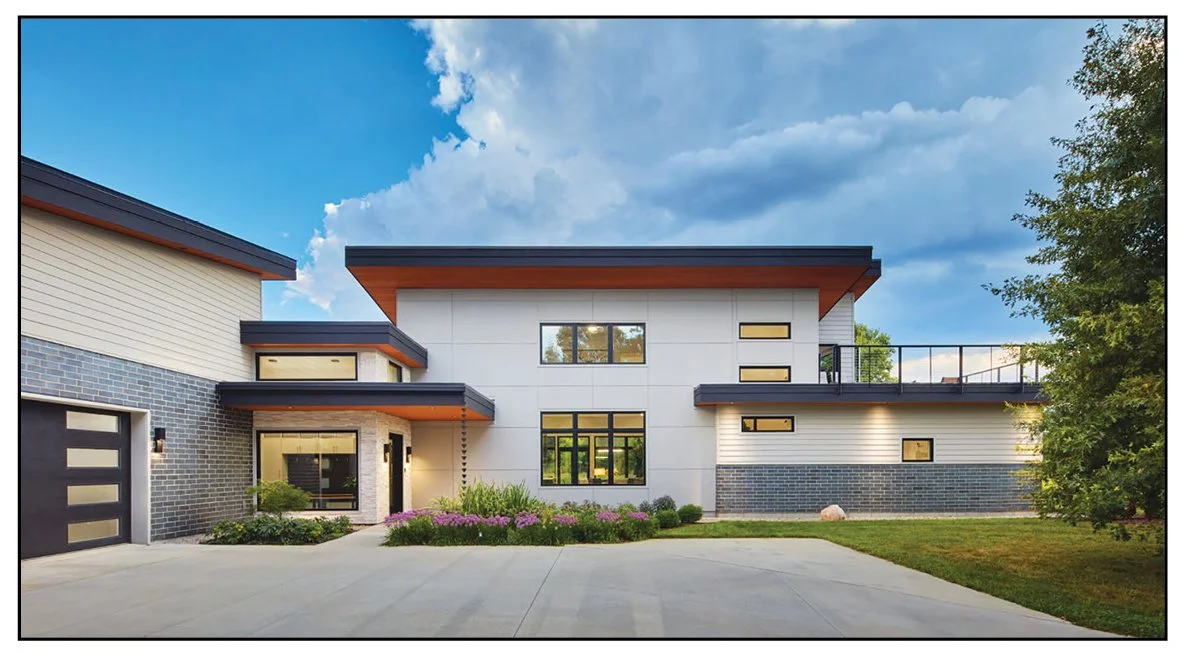
“We have collaborated on eight houses with Architectural Resource and all of them have received a sustainability certification,’” Mike Mahon shared. Five are LEED Certified, two are Passive House Certified and one is Net-Zero. The Preissner Passive home received the West Michigan USGBC’s Certified Green Home Award of 2019. And the Journey House won the 2023 USGBC’s LEED for Outstanding Single Family Projects of the Year which was one of only three single family projects recognized in the world.
“We put our whole heart into these projects. And it’s not just the two of us.” It is clear: a good cause is a great motivator. “If the builders are positive, all the tradesmen adopt that attitude and amplify the appreciation.” The Mahons are devoted to creating a fun and fulfilling work environment for the whole team. “We want the people that work with us to be happy on the jobsite,” Mike Mahon said, “Creating an example of sustainability? That is a story that we all can take home and feel proud of. There is a lot of love and purpose poured into this labor. In the end, we can feel the good karma built right into the home.” Their entire effort, from the beginning to the end, is a labor of love.
“When we begin a project with clients, we know that we are going to put years of labor into building something meaningful together,” said Mike Mahon. For that reason, they consider the interview process to be a two-way street. “We work with customers who want to invest in a project that is good for the planet.” Building code doesn’t require these standards. “But we want to build the ‘right way.’ And we think that is constructing the most sustainable, lasting, comfortable, and healthy home we can build.” Andrea added, “Our push isn’t for the simple solution it is for the lasting one. And that isn’t based on status. It truly is about centering care.”
The Mahons offered extra care to a client whose house needed a whole rebuild from the studs up. “Our client had steady employment, but she hadn’t tended to her credit score,” Mike said. Most builders won’t get involved until the loan is secured, but the Mahon’s tell a different story. “We worked with her to repair her credit score, with some creative solutions and simple fixes. It took a few months, but she improved her score so much, it changed her whole approach,” Mike said. It is that sort of care for the client that sets them apart. “Our clients know that they have an advocate in us.”
As stated on their website, Adaptive Building Solutions “elevates the home-building experience by embracing an integrated design approach. From day one, we bring every key player—architect, homeowners, builders, and even subcontractors—together to collaborate seamlessly.” Smarter, higher-performing, energy-efficient homes is the goal in mind. Custom crafting homes for the client’s specific request is at the heart. Mike shared an example, “The clients wanted an 80-foot long curved wall of windows. Because glass doesn’t bend we innovated an effect with 48-inch long segments, at a two and half degree tilt all the way around. The outcome is ideal for this space. We just had to figure out how to build it.” It is this devotion to their craft that counts. “Custom home building isn’t just what we do—it’s what we love,” Andrea affirmed.
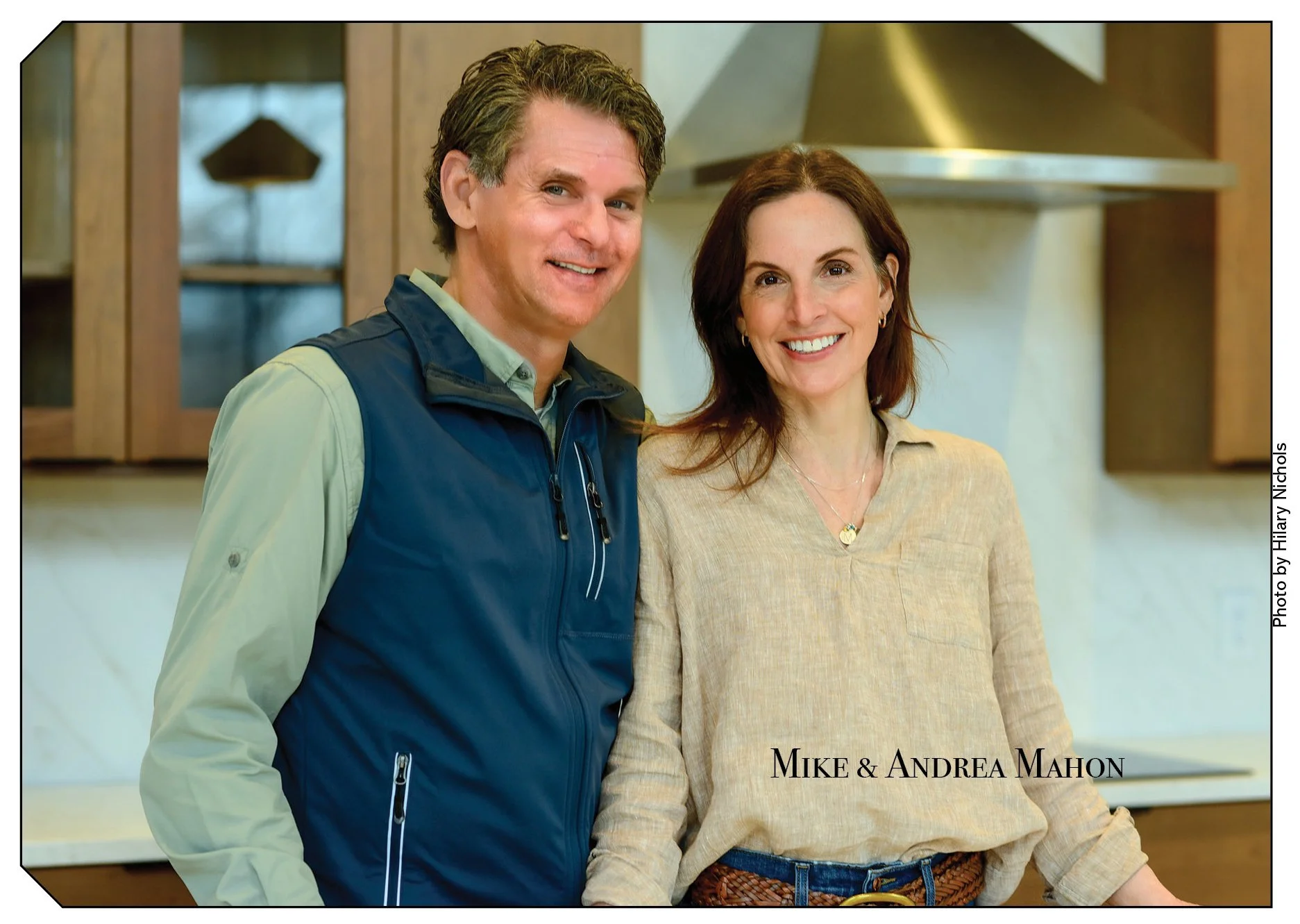
One of the most special examples is the Sanctuary at Hope Farm project. This Net-Zero, climate-responsive house incorporates many of the industry’s latest technologies. The Mahons worked closely with the owners, husband and wife Sandra Hauser and Jeff Parness. “We feel lucky to be part of such a creative expression with this project,” Andrea Mahon said. Parness echoed back the sentiment. “Andrea makes it look easy, while it’s like she was landing 40 planes at the same time.” Andrea appreciated that comment, adding, “I view my work like a symphony, conducting all of the trades, in a delicate balance, as one element completes, the next falls into place.” It is a complicated dance. But the outcome is worth it.
“Once the build is complete, we stand back and let the structure become so much more,” said Mike Mahon. “It isn’t just a building anymore, now it is a home—a legacy home.”
To learn more about the Mahons and see their company’s vision, visit their website at adaptivebuilding.com. For more information about working with them on a project email them at mike@adaptivebuilding.com or andrea@adaptivebuilding.com.
Read Related Articles:








































































The Mahons don’t endeavor to build their client’s dream home. “We prefer to build their ‘legacy home’ to be passed down for generations,” said Andrea Mahon. The goal is anchored in something more tangible than today’s dreams. “We build homes to last, but more so, to matter,” Mike Mahon added. And that is what the Mahons work so hard toward. In 2006, Mike Mahon founded Adaptive Building Solutions (ABS) here in Ann Arbor to be part of the zeitgeist. “I knew it was the perfect place to start a business that focuses on sustainability.”