

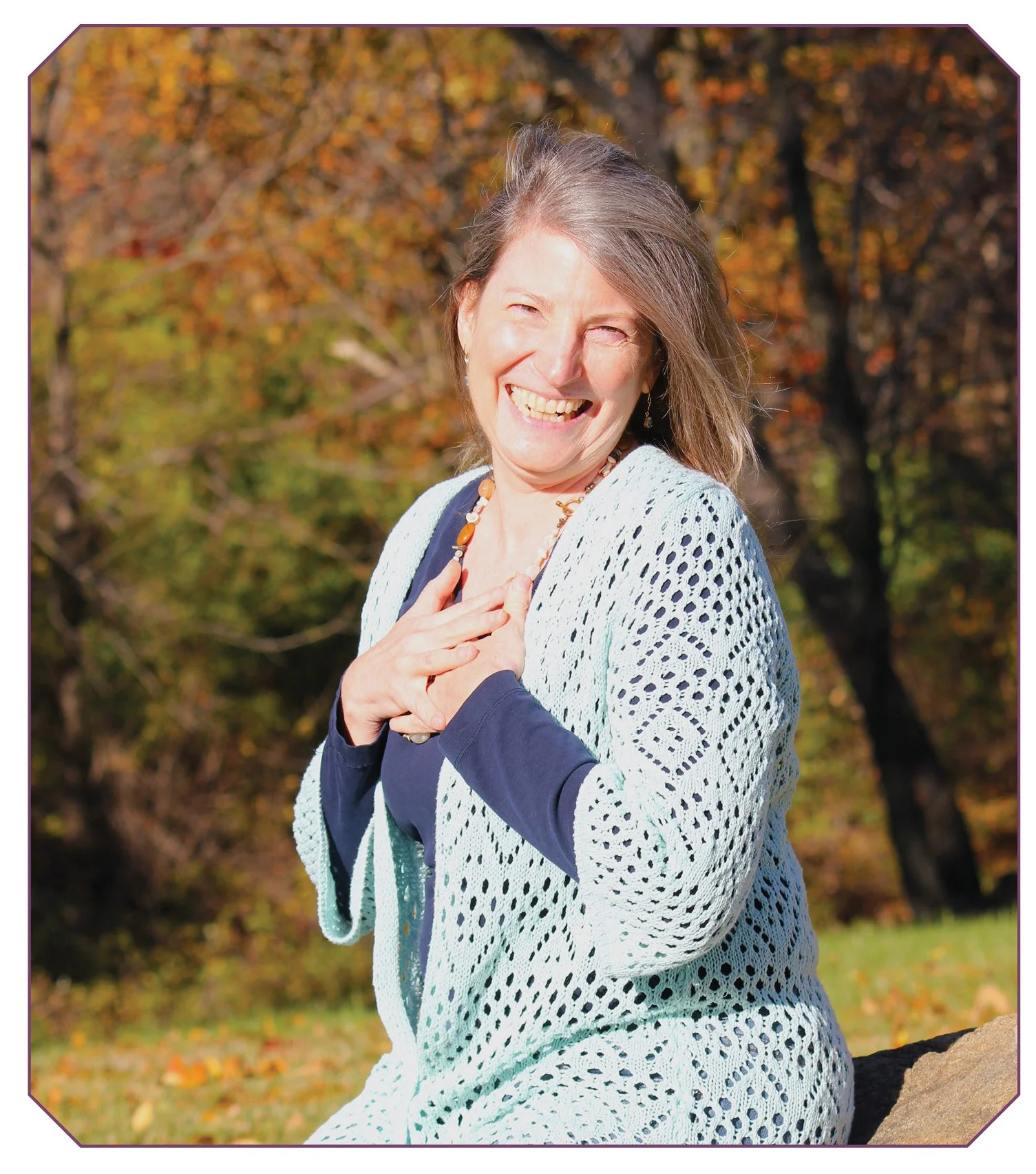
Jennifer Lee Stein, MA, LPC, is a psychotherapist and Enneagram coach in Ann Arbor, Michigan. She studied French and English at the University of Michigan, early childhood education at Waldorf Teacher Education Eugene, and received an M.A. in Transpersonal Counseling Psychology from Naropa University. She is passionate about blending the gifts of therapy and spirituality, and empowering others to heal and reach higher levels of awareness.
By Jennifer Lee Stein
I met my friend Leah when we moved into the same dorm our freshman year at the University of Michigan. One day, after yet another bleak lecture on French Existentialism, Leah, came up to me and asked if I wanted to walk around campus. Leah was intelligent, humorous, and inquisitive. We became fast friends, and eventually a wider circle of friends formed around us—we played frisbee at the Arb. We studied at the library or at Amer’s Cafe. There were lots of parties.

Leah and I bonded over digging into the deeper meaning of life. We loved analyzing and theorizing about psychological motivation and behavior, applying sociological theory to the throngs of students around us. One of our classmates told us we were like Angela from My So-Called Life—we were forever extracting meaning from anything and everything, amateur philosophers and psychologists. There were many late nights staying up playing off each other’s ideas, having revelations, and readying ourselves for the frontier of adulthood that was on the horizon. I felt really understood and appreciated by Leah, and whenever I find that in a friendship, I cherish it.
After graduation, we stayed in touch and visited each other when we both moved to other areas of the country. I was a bridesmaid in her wedding. She made the trek to see me in one of my plays. Then, after 13 years of friendship, I didn’t hear from her when I felt it was her move to reach out, and because I felt deeply insecure at the time, I didn’t want to initiate contact. I thought about confronting her. Texting her “Are you mad at me?” “Are you okay?” “I miss you.” But what if I had done something to hurt her? What if she just decided I was annoying or burdensome? Was there something wrong with me? I felt too uncertain and ashamed; so instead of investigating, I told myself it was her loss, and I moved on with my life.
Years passed. I taught at a Waldorf school in Vermont, then pursued an M.A. in Counseling Psychology at Naropa University in Boulder, Colorado. Right before the pandemic hit, I decided to move back to Michigan to start my career. During the days of quarantine, I had time and space to reflect on my life. I started to think about what was important to me—friends, family, what I wanted for my life, what I wanted to repair in it. I thought of Leah.
I began writing letters to Leah, but I never sent them. They collected in a drawer in my desk. I missed her, but I didn’t want to be the first one to reach out. If she declined to speak to me, the rejection would have stung. Even worse, it would alter the image I wanted to maintain as a strong, independent person. I didn’t want to be humiliated. I didn’t want to appear weak to myself or others.

I have spirituality and therapy to thank for the emotional evolution I have experienced. Through a combination of Vipassana meditation which I learned at Deep Spring Center in 2003 and IFS therapy which helped me access healing spiritual energy from within, I was able to become less reactive, create more spaciousness within my mind and heart, and heal past pain, shame, and trauma. I then learned about the Enneagram, an ancient system that describes cosmic patterns and natural processes and which has evolved into a profoundly accurate personality system. The Enneagram showed me my tendency as a Type Four towards self-loathing and a larger than average fear of rejection. My protective parts stave off rejection through causing me to preemptively leave anyone or any situation where abandonment feels imminent. They also shore up a superiority complex in order to defend against feeling inferior.
It was one thing to learn about these things, and quite another to really internalize them. As I kept circling around sending a letter to Leah, I started to think about the lessons I had learned in a new way. I saw that my pride was spilling in, and telling me, “Don’t reach out, that looks desperate and weak; that puts you on the inferior plane.”
But something was changing in me. I could now recognize what was happening, and I didn’t want my pride, my insecurity, my fear to control me anymore. These things that I clung to had caused me to lose a close friend. In order to step out of my comfort zone I needed to go to an undefended place and stand in vulnerability, knowing that whatever pain arose, and as uncomfortable as that would be, I would be okay. I realized that I would have Spirit carrying me always, and that I would be able to unconditionally love the parts of me that feel so inherently defective.
I made it through the pandemic, and still, the unsent letters to Leah sat there. Then I found out a friend of mine had died, and I grieved. A few months later, another acquaintance my age died. They were my age, and they were gone. I began a new letter.
. . . As I’ve been processing the death of two of my peers, one a year older, one a year younger, both beautiful, inspirational women, my mind keeps turning to our friendship. Perhaps, because not speaking with someone acts as a kind of death, but even more practically, one of us, though very unlikely, could die before speaking to each other again. The pandemic surfaced the pain around not being on speaking terms with you. It’s acted as some kind of cosmic sign-post—there has been a loss and perhaps it’s time to mend it, or even have a single talk to acknowledge each other. . . .
When I finished the letter, I put it down and picked up the phone and dialed but got voicemail. Leah quickly called me back, and finally, after ten years, we exclaimed “Hello! It’s been so long! How are you?!” We ended up talking for three hours that night. We reminisced, we updated each other, and at long last addressed why we had lost contact in the first place. We realized that there had been a big misunderstanding, and we resolved it through hearing each other’s perspectives. With that rupture healed, we were friends once again. We’ve talked every few months since then, and it has felt like old times—we laugh, we analyze, we explore interesting topics, but we also get to understand each other in this new phase of life. Now, I’m happy to say, when I think of Leah, I smile.
Related Content:








































The words were out of my mouth before I’d spent even a single second considering them. Appalled, I gazed, eyes wide, at the woman in front of me, a new acquaintance whom I knew to be highly intuitive, an accomplished spiritual healer. I couldn’t fathom where that statement had come from. It was almost as if the words had been spoken to me, as much as through me.