Posts filed under Local Practitioners

Ann Arbor Healers: Staunch Stress, Seal Serenity

By Marie Noelle Duquette

I hurt my leg in mid-September while running with my dog, Nala. The air was cool, autumn-fresh, and Nala and I were enjoying our evening walk. I felt so strong that I broke into a light jog, without stretching. I am 61 and not a runner. 

About 50 yards into the run, I felt a pull behind my left knee. I slowed to a walk, thinking to myself, “There is no way that itty bitty burst of energy caused anything as serious as a sprain or heaven-forbid tear.” Still, my skin behind my knee was hot, the pain was real, and I quasi-limped home.

After wearing a brace on my knee for weeks, icing it daily, stretching it carefully, and getting an ultra-sound to rule out more serious causes, the pain behind my knee persisted. While researching therapies for leg injuries near Ann Arbor, I stumbled upon the Neurofitness Center website. Their website was convincing. I made an appointment to try everything they offered: Neurofeedback, the Salt Room, the Float Tank, and Cryotherapy.

My partner and I first went to Neurofitness to experience a Neurofeedback session and the Salt Room. Jack  Lark greeted us upon arrival. Knowledgeable and engaging, he would help us navigate the different therapeutic experiences. Neurofeedback, he explained, was a therapy in which he would attach a couple of electrodes to my ear lobes and one at my temple. Next, I would put on a comfortable pair of headphones—the kind with soft padding that cover one’s entire ears. Then I would sit in a comfy chair and listen to a recording of meditative music infused with nature sounds such as birdsong, steady rain, and wind rustling through trees. The recording was enchanting. It was easy to close my eyes and give my mind over to what I was hearing. Periodically, the music would skip, like a less-annoying skip of a record that self-corrects and lasts only a second. The ambient recording draws one’s auditory focus—the skips are triggered anytime one’s mind wanders beyond the music and birdsong. At first, the skips happened frequently. Soon, my focus on the audio became steadier and the skips were less frequent. The Neurofeedback session was like yearning to hear a beloved, melodic voice that is almost beyond one’s hearing. I stilled my body and leaned into the strings, rain sticks, flute, waterfall, and windchimes. By the time the session ended, I was ready to book a weekly session, my relaxation was so complete. Lark told me that Neurofeedback was a form of practicing mindfulness in a way that required less effort and more receptivity. As one who struggles with keeping my attention in the here and now, it succeeded beyond my hopes. 

If the Neurofeedback session was like yearning to hear a beloved, melodic voice the Salt Room was akin to sitting on a beach, inhaling fresh air. The Salt Room at Neurofitness is lit by infrared lights and is big enough for two people to sit in comfortably. The Himalayan salt is so deep on the floor that it looks like a remote beach of fine sand you can dig your toes into. Salt bricks are laid into the walls and a PVC pipe in the corner emits a burst of fine salt spray into the room every eleven seconds. Upon entering, I removed my shoes, pushed back in one of the zero-gravity chairs, and closed my eyes to focus on my breathing. I quickly fell into a meditative state and the half-hour session slipped away unnoticed.

The next day we returned to float. We had both enjoyed float tanks in the past and were familiar with the drill: enter the room, shower, enter the float tank, and either close the lid, if you are in the egg or turn out the lights if you are in the non-covered tank. Music plays if you are in the open tank, or you can float in absolute silence in the egg. In both tanks, you float in darkness that envelops you so completely that you cannot see the walls, the water, or your own wrist in front of your face. The complete lack of visual stimulation enhances one’s sense of touch so that the salt water, which holds you up without effort, feels like a cradle, the warm water giving a sense of being in a womb—a protected space created for your own nourishment and rest. A gentle recorded voice interrupts your reverie when the hour is drawing to an end. After floating, the colors and lights and sounds outside are more vivid and distinct. There is a newness to the world as if your very eyes have been cleansed—your senses reset. 

On Monday, I returned to Neurofitness for the scariest offering: Cryotherapy: standing, with minimal protective outerwear, in a sub-zero chamber for three minutes. Cryotherapy has been used for decades in Europe and Asia to promote athletic recovery. From the Neurofitness website, I read, “The use of liquid nitrogen in a safe and controlled environment provides a gentle but significant amount of cold exposure. The extreme cold stimulates the skin’s temperature receptors to activate the nervous, immune, and endocrine systems, leading to a reduction in inflammation and pain (hey athletes—this means quicker recovery!), elevating mood, and increasing energy. Clients often tell us they feel relief of symptoms including muscle soreness, arthritis, chronic pain, and inflammation.”

Lark, our guide at Neurofitness, was particularly helpful for my Cryotherapy session. He explained that the sub-zero temperatures would not feel quite as cold as I might expect, because it was a dry cold, not the wet cold that we know from Michigan winters. The Cryotherapy chamber looks a bit like a blue hexagon-shaped phone booth. The floor of the chamber is adjustable by adding soft, uniform pads that fit perfectly in the chamber’s footprint, so that no matter your height, your head is not enclosed in the chamber. Lark gave me special socks, shoes, gloves, and a robe and excused himself until I was ready. When he returned, he assured me that I was in control. Once in the chamber I could opt to remove the robe and at any time, or I could ask him to let me out. Still, he urged me to embrace the experience and try not to focus on how cold I felt. “That way, you’ll get the most out of doing it,” he said.

Once inside the chamber, I was not brave enough to drop my robe. The cold was not as sharp as I expected, but neither was it as comfortable as the other therapies had been. I endured the entire three minutes, trying to focus on the benefits. I emerged feeling like a victor. Immediately after Cryotherapy, I felt hungry, and then tired. As the evening wore on, and the new day dawned, I noticed that the pain in my leg was considerably subdued. I could still feel a dull ache where the sharp pain had been, but that continued to lessen in the days ahead. It has been two weeks since I braved the sub-zero Cryochamber and my leg has yet to hurt at the level of pain I endured before the experience. In fact, I’ve not worn my knee brace once since the big freeze. I’m going back for another session today, to continue the full healing of my leg, and to see if Cryotherapy will help heal two toes that I bruised badly yesterday when I wrapped them around a square, wooden chair leg. 

Neurofitness is an extremely clean facility. Lark is a helpful guide whose sense of optimism and wonder is infectious. The entire environment underscores that restorative healing and stress-relief is more than a nice occasional treat. It is something we need as much as medications, fresh food, and deep sleep. The therapies offered at Neurofitness act like boosters that enhance other healing practices. They helped me find a place beyond the trauma of life in which restoration of my body, mind, and spirit, is both inviting and efficient. 

In my first visit, I commented to Lark that I was pleased that Health Savings Account and Flexible Savings Account dollars offered by many insurance companies could be used for all their therapies. He said, “Of course! We are a health care center.” Indeed. 

Neurofitness is located at 6360 Jackson Road Suite A in Ann Arbor. To learn more or make an appointment, call (734) 206-2012 or visit them online at https://neurofitcenter.com.

Related Content:

Planting the Seeds of Healing and Growth--Living Grateful

Upon stepping into the Living Grateful Behavioral Health Services’ soothingly sun-drenched office, you find yourself met with an array of beautifully assorted plants as if they have been waiting for you. Owner Bill Mure explains, “They create a sense of the peace and calm I feel.” He goes on to say, “I also use them as a metaphor for your healing. I tell my clients ‘In session is where we plant the seed of growth. Out in the world is where the seeds go to be nurtured. When you grow a garden, you have to water it, tend to it, and nurture it. Sometimes we must trim off the pieces that no longer serve us, so we can facilitate more growth.”

Are You Sabotaging Your Self-Care?

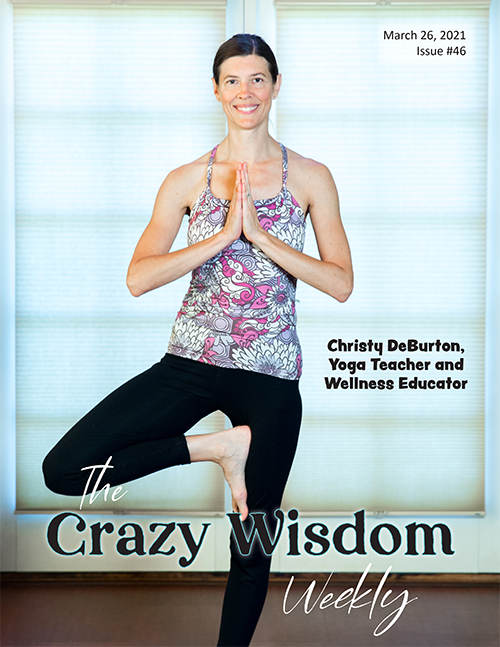
By Christy DeBurton

What comes to mind when you think of the term ‘self-care?’ Many people think self-care involves a lot of time or money. Others believe that self-care is selfish. These ideas are completely false. Simply put, self-care is essential for you to be the best version of yourself. It isn’t about getting weekly massages or taking candle-lit bubble baths (though these can be part of it if you choose). It isn’t about neglecting your responsibilities or ignoring the needs of others. The real essence of self-care is being true to who you are, so you are living the life that you want to live, and not the life other people want you to live. It’s about making choices from a place of love and connection rather than guilt and obligation. But that love has to start with loving yourself first—and not all of us are so good at doing that—so we end up sabotaging our self-care. A while back, I went on my own self-care journey, examining the obstacles that were getting in the way of taking better care of myself. Here are some things I learned along the way. 

Give yourself permission to take time for self-care. Let’s face it, no one else will. We all want someone else to say to us, “You’ve been working so hard. You’ve been under a lot of stress. Why don’t you take the day off and just relax?” Most likely, this is never going to happen. Even if you do have someone like this in your life, ultimately you have to be the one who gives yourself permission to take time for self-care. So why do we have such a hard time doing this? Because we’ve been raised in a society that tells us we always need to be more, do more, and have more. Because we’ve been raised in families that pass down conscious and subconscious beliefs that we are not worthy, that we don’t deserve what we really desire, and that we need to take care of other people’s needs before our own. Take a moment to examine this in your own life. Do you feel obligated by certain people to do things that you really don’t want to do? Do you tell yourself you don’t have time for self-care because you just don’t feel like you deserve to take time for yourself? Or are you worried about what other people will think if you do? What kinds of messages are you telling yourself about your worthiness as a human being? Examining those conscious and subconscious beliefs is the first step. Once you’ve done that, try putting into practice either or both of these helpful techniques:

“Who says so?” Any time you catch yourself thinking that you don’t have time to relax or do yoga or some other form of self-care because you have to check off one more thing on your never-ending to-do list, question that ‘voice in your head’ by asking yourself, “Who says so?” I guarantee you will be amazed at what other voices besides your own (maybe it’s the voice of perfection, or guilt, or your mother!) you are listening to. Is listening to those voices in your best interest? What if you listened to your own voice instead? Once you’ve asked yourself this question, or separately on their own, you could ask the following two questions.

“How do I feel right now?” and “What do I need to do to take care of myself?” In my work with clients, I have come to realize that most people are not good at checking in with themselves to see how they’re feeling throughout the day. We can’t take better care of ourselves unless we take the time to contemplate how we’re feeling and what we need. Getting into the habit of asking myself these two questions has made a huge difference in my life, and I am confident it can in yours, too. I encourage you to write these questions on some sticky notes and put them in places where you’ll see them—like on your bathroom mirror, work desk, or car dashboard—throughout the day. Then, every time you see them, take a moment to pause and ask yourself how you’re feeling and what you need to do to take care of yourself. The trick is that you need to pause long enough to really ‘hear’ the answers, and then go do what you need—without apology!

I had to work at it for quite a while to get to the point where I felt comfortable making time for self-care every day, so let me be the first to say it won’t be easy. You’ll most likely get resistance from those close to you who have certain expectations. But those who truly love you and want what is best for you will understand. And those who give you a hard time? You might want to examine why you want people like that in your life.

Because I benefited so greatly from taking my own self-care journey and learning to implement techniques like the ones above, I created a compact but powerful online course, Stop Sabotaging Your Self-Care, to help others who are ready to make self-care a priority. In this course I guide you on a journey of self-discovery to examine the obstacles that stand in the way of you taking better care of yourself and teach you tools like the ones above to help you cultivate greater awareness around your self-care needs. I’ve included thought-provoking exercises, journal prompts, weekly meditation and yoga practices, and more. You can find out more about this course at yogaroomannarbor.com/online-courses-self-care.

Finally, because I found it helpful to have some supportive people tell me that I did, in fact, deserve to make time for my own self-care, let me pass that support on to you. The world needs your gifts. But you will only be able to shine if you take good care of yourself first. It doesn’t have to be anything elaborate: even taking a 15 minute walk every day can make a world of difference. I promise if you do, you will feel so much better and those around you will also receive the benefits of your new-found sense of well-being, too. You absolutely deserve it, so give yourself some time for self-care today.

Christy DeBurton is a Holistic Yoga and Wellness Educator with 25 years of experience. She helps people feel better inside and out through yoga, meditation, wellness retreats, online courses, and more. She can be reached at info@christydeburton.com.

Related Content:

Posted on January 1, 2023 and filed under Health, Issue #82, Local Practitioners, Personal Growth, Wellness.

Compassionate Depossession and Curse Unraveling

Over the years, whenever something began showing up in my work with clients, I always looked for more information to address the issue in a knowledgeable, grounded way. That’s how I got into animal communication; that’s also what brought me to Betsy Bergstrom, a shamanic expert who has developed unique training in curse unraveling and compassionate depossession. A part of the training includes psychopomp, psycho from the Greek for “spirit” and pomp meaning “to accompany.” Basically, helping a person or animal to prepare for the transition to have a good death and a good crossing over.

Body Wisdom from Our Ancestors—Combining Trauma Informed Movement and Art Therapy

Awareness of the universal impacts of trauma on the mind, body, and society—large and small—has been growing over the past few decades. Fortunately, this awareness has promoted understanding of what type of approaches might help support healing as well. Some of these approaches were known by our earliest ancestors, including creating images, movement, dance, music, and singing. Today we call these expressive arts therapies.

IFS Therapy: More Than the Sum of Our Parts
Psychotherapy has undergone massive shifts and transformations since its inception in the early 20th century. By the 1980s, modalities such as cognitive, psychodynamic, and dialectical behavioral therapies were firmly planted as the gold-standard of the field.

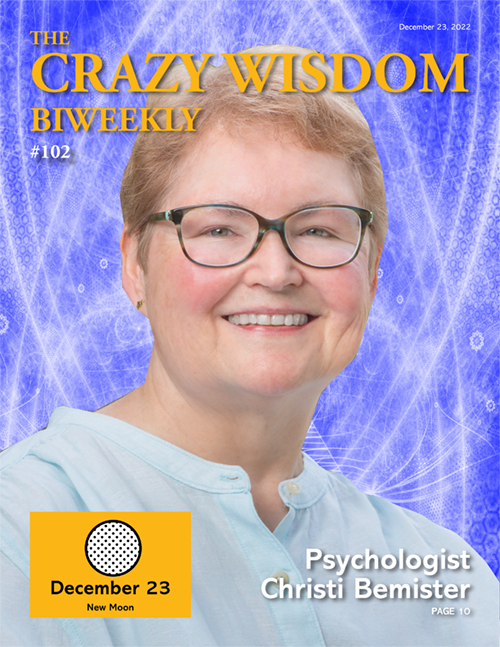
Healers of Ann Arbor: Psychologist Christi Bemister—Healing Trauma and Chronic Pain

“I don’t think I’ve ever seen someone in chronic pain, myself, who doesn’t have a history with trauma,” Christi Bemister said as she opened up a weekend retreat on trauma and chronic pain. The retreat covered the work of healing the mind and body together through the Realization Process created by Judith Blackstone. “They’re very intricately related, because chronic pain is actually a brain issue versus simply a physiological one. It’s a very complex issue,” she added.

Out of My Comfort Zone: Living Outside My Comfort Zone

Upon reflecting on “a single time” that I have moved outside of my zone of comfort, I am somewhat stumped. I realized while considering this topic that I virtually live outside of my comfort zone. My life is what I call “living on a prayer.” I work in the healing industry and have been a self-employed woman for well over 20 years of my 23 years of healing service.

Staying the Course: Committing to Love for Life

The world we live in today is filled is so many uncertainties. Social and civil unrest, uncontrolled gun violence, and the never-ending saga called the Coronavirus, are all changing the lives we knew. All these factors are changing nearly every day—sometimes, by the minute. One thing we can guarantee won’t change is love. No matter who your love partner is, knowing how to love and who to love is very important. More important than that is knowing how to stay committed to the one you love.

Sick of This — Understanding Long Covid and Local Resources for Recovery

Nearly three years after SARS-COV2 emerged, we are coming to realize that acute Covid-19 disease is, for many, only the first phase of an ongoing health challenge. For a large percentage of people who have had Covid, fatigue and other symptoms last for months or even years after the initial infection. Officially known as “Post-Acute Sequelae of Covid-19 (PASC)” or “Post-Covid Conditions (PCC),” this constellation of lingering symptoms is commonly known as “Long Covid.”

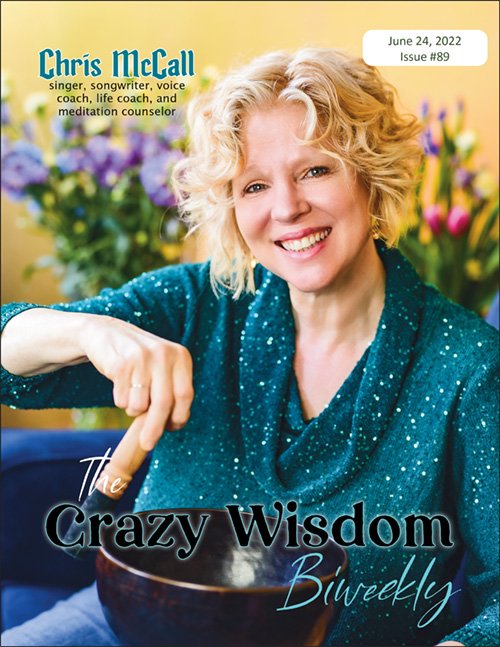
Chris McCall--Beyond the Voice Box

Chris McCall was born and raised in Detroit. She grew up in a large, musical family where everyone sang at family events. Today, at 54, she is a professional singer, songwriter, voice coach, life coach, and meditation counselor. She still lives in the Detroit area, in a cheerful, green bungalow in Redford Township, with her three rescued cats, Monkey, Kosmo, and Eilley. Over decades, she has helped hundreds of students find, free, and use their voice in all its fullness and depth. Her unique approach goes beyond the voice box and focuses on the whole body. Through mediation and other techniques, she helps students release long held emotions that cause contractions in the body that restrict the voice

Unsiiciyapi, Wawoohola, Cantognake: Humility, Respect, Love-- Healing through Service

What do you get when you merge a life called to support adolescents, spiritual awakening that all are one, and an ongoing relationship with the Lakota people? Omega Commons and a staff that lives to serve in higher truth and humility.

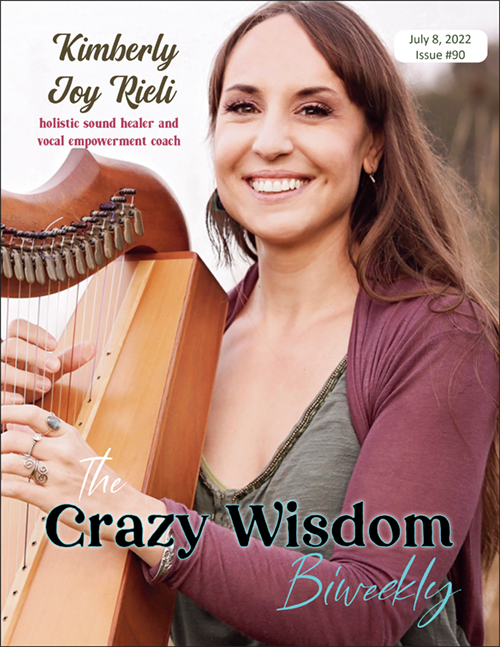
The Sound of Healing with Kimberly Joy Rieli

When you first see Kimberly Joy Rieli, you may be smitten with her fairy queen appearance. The long flowing hair, her lithe frame, and doe-eyes only add to the emanating aura of kindness and peace. Yet to limit your understanding to just the visual sense would sorely miss the depth of her very real healing gifts.

Out of My Comfort Zone: The Paradox of Dying

I will never forget the moment when I walked into the hospice home for the first time to see my dad. A palliative care doctor recommended hospice care the day before and he was transferred to this hospice home from a rehabilitation facility. I had been his primary caretaker throughout his rapid decline—navigating the hospital scene, confronting doctors, and aggressively advocating for his care. This situation was without a doubt my comfort zone—having concrete things to fix and fixing them. I was confident in my abilities, and due to an extensive history of trauma, seemingly thrived in the chaos and intensity of the situation.

Sustainable Health: Bacteria and Viruses — Essential to Human Life

Bacteria and viruses have always gotten a bad reputation in our modern society, but these microscopic microorganisms are essential to human life and can quite literally be a key aspect to our optimal health. In fact, trillions of bacteria, viruses, fungi, and other microbes live all over our bodies, with the largest concentration in our intestines.

The Science of Sound Therapy

I am lying on the floor of a friend’s apartment as she sets up her singing bowls. The bowls—made variously of metal and crystal, ranging in size from soup bowls to witches’ cauldrons—emit specific frequencies of sound when vibrated. I close my eyes. Daniella begins to play. In my mind’s eye, I see the sounds as colors—slow circles of ink spreading out around and through me from where each bowl plays. I am immersed in sound and color.

Healer of Ann Arbor: When is a Massage Not a Massage?

Lisa Teets is a local Bowenwork healer, Tai Chi instructor, and fan of wellness modalities in general. I met her in a local Tai Chi class several years ago, and we hit it off. As many of us struggle with stress into year three of the pandemic, I wanted to learn more about her primary modality—Bowenwork—to ask what makes it different from a massage and how people might know if they would benefit from trying it.

Wonder-twinning™: Activating Healing Through Faith and Energy

In 2017, Vicky Lovell and Danielle Groth crossed paths for the first time. They met during milestone transitions in both of their lives. Lovell was graduating from seminary and answering her first call into ordained ministry and Groth was recovering from breast cancer and in the midst of her own healing. It was a friendship, built on the foundation of their faith, that took time to grow.