

By Leif Laufeyjarsen
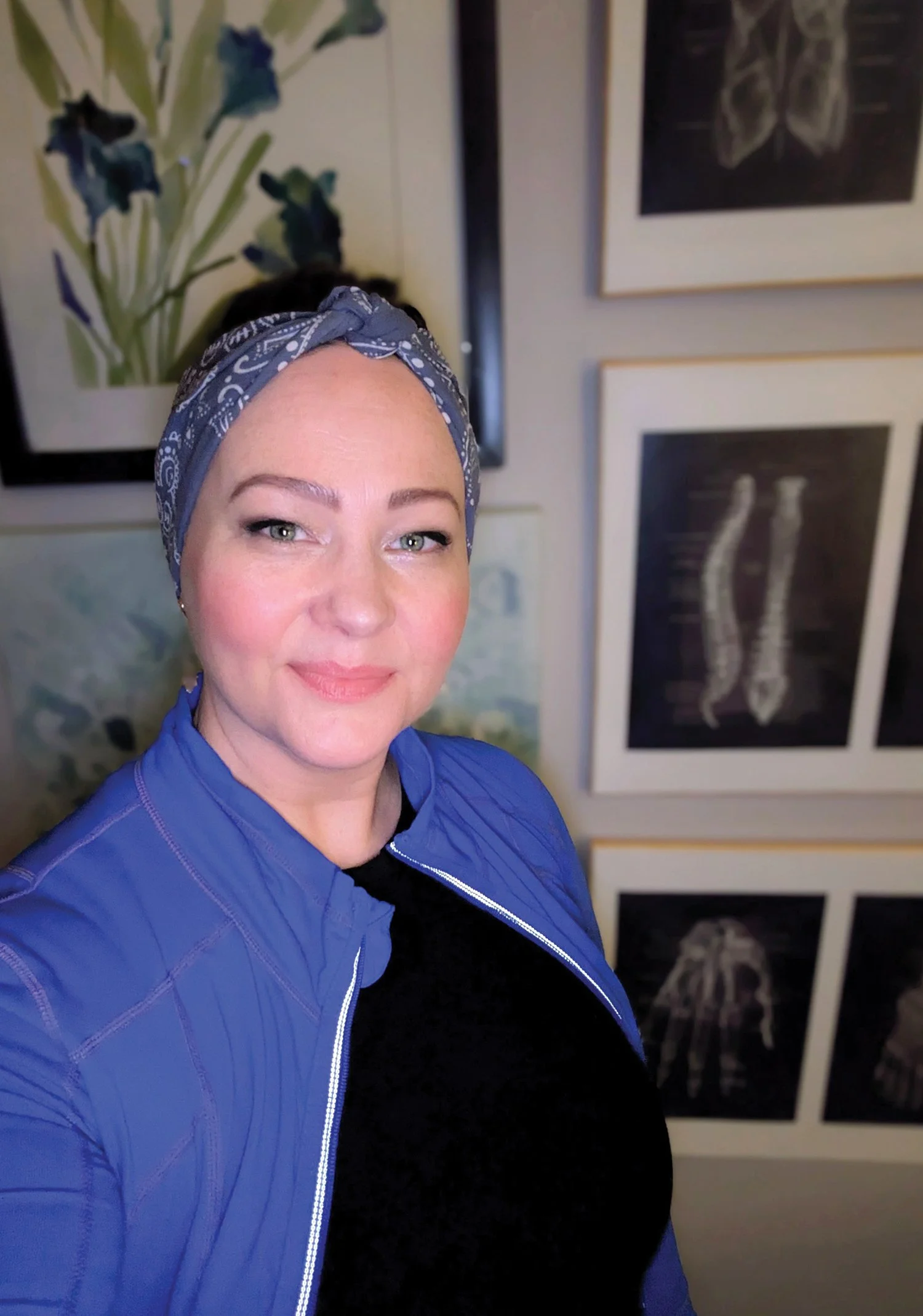
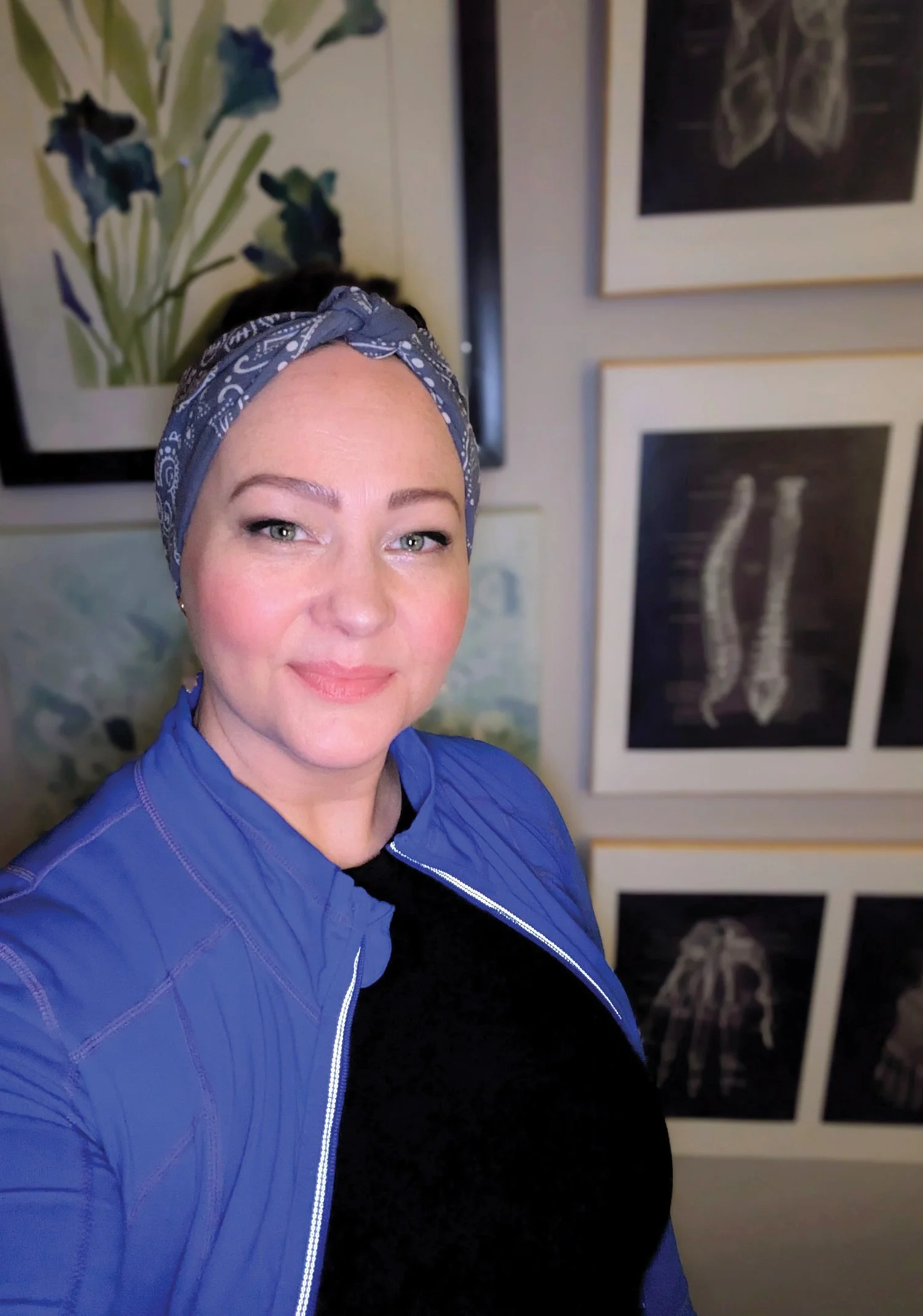
It has long been proven that one’s mental and spiritual wellness have a huge impact on one’s bodily health. With 22 years of training in multiple traditional disciplines such as neuroscience and kinesiology as well as holistic disciplines such as yoga and aromatherapy, Stephanie Olson treats the whole person. From start to finish, in all aspects of her treatments she expresses loving empathy. Given time, a wildflower will break down a stone wall. Slowly, gently, and lovingly, the wall will turn into fertile soil. Stephanie Olson is such a flower.
Originally from the rural Dakota prairies, Stephanie studied in California and Nevada. She and her husband moved to Michigan in 2022 where she finds the trees and people welcoming.
Leif Laufeyjarsen: You call everyone “Dear.” What is the intention behind this? Has it ever been misunderstood?
Stephanie Olson: That’s a great question. I think this just naturally evolved, and it’s become a way to recognize and verbalize that we often need more gentleness and care as we speak to one another. When I say, “Hello Dear Ones,” I suppose my hope is that it meets folks like a kind letter in the mail addressed with a genuine love. But I can definitely appreciate the second part of this question. Language is powerful, and not every scenario or every person needs or desires a term of endearment (myself included sometimes!), so I try to listen to the energy of a situation to guide me.
Leif Laufeyjarsen: The first time you directly addressed me, you supported me in my vulnerability. Do you believe vulnerability can make us stronger?
Stephanie Olson: I’m grateful for what you shared that day, thank you. I believe that acknowledging our vulnerability is one of the most meaningful ways we can connect as human beings. It really feels like an incredible honor when someone shares those tender moments and memories—the painful experiences, the grief, the trauma, the sorrows, even the joys. The details can be very personal and unique, but shared vulnerability is a medium through which we can recognize ourselves. When we stop to really listen and witness one another, we meet more of our own humanity. And when we navigate our lives with that awareness—that we’re mortal, that we’re often more alike than different, that we need community care as much as self-care—yes, that’s an incredible strength.
One of my most treasured gifts of getting to work with clients is that we hold space for the vulnerabilities—the struggles, the challenges, the frailties. That’s also why we often have longer sessions (typically 2–3+ hours together); we offer space and time for the body, mind, and spirit to be witnessed. That authenticity and integration is where the magic really gets to happen. I think we need more of that.
Leif Laufeyjarsen: Can you share a moment from your life or work where vulnerability led to growth or strength?
Stephanie Olson: Well, vulnerability shows up every day. I’m a highly sensitive person, and I navigate many of my own health challenges. These traits and experiences have given me the perpetual opportunity for self-compassion and compassion for others. I get to experience the world at a high volume which allows me to understand the need for quiet.
Leif Laufeyjarsen: I have experienced your massages more than once. Though labeled a “massage,” your touch was gentle, made me cry, and felt like a huge weight lifted. Was this your intention? Do other clients experience this too?
Stephanie Olson: I am really grateful to know how transformative those experiences have been for you. Life can be heavy, and we need relationships that can support us through it. I also really appreciate how every practitioner and every session can be different. Massage, bodywork, and somatic practices can be so many things, but as you experienced, the “deeper” work can actually be very gentle.
When I’m working, my intention is to invite a conversation with the body as a whole; it’s amazing how much it can say and will ask us to move. Sometimes that’s energy, sometimes it’s myofacial, musculoskeletal, or lymphatic; sometimes it’s deep visceral or nervous system work, and sometimes it’s all of those and more. And yes, I do often hear how surprised folks are when they thought they needed “painful, deep tissue massage,” but a gentler approach actually made them feel so much lighter, calmer, and more at ease well beyond the session.
Leif Laufeyjarsen: What do you feel is the emotional or spiritual role of your massage practice alongside the physical? In your practice, how do you balance elements some might call “woo” with science? Do these aspects work together or conflict?
Stephanie Olson: You know, I really do love science and will gladly get nerdy about the brain and body, but there are also so many magical, messy, immeasurable factors that show up in this work that my degrees and trainings can’t explain. The layers are sometimes distinct but often interwoven. Grief and trauma, for example, can cause excruciating pain and exhaust us physically, as much as physical ailments can be mentally and emotionally exhausting. All of these aspects can influence how we’re able to navigate our daily lives, so in our therapy space, we really do look through a holistic lens. We’re not just assessing and treating your sore neck or shoulders; we’re welcoming you as a whole person in the context of your life and experience.
Leif Laufeyjarsen: We talked about how many people, especially mothers, neglect their self-care while giving to others. You seem to mother everyone you meet. How do you care for yourself? What advice do you have for those who give so much to others?
Stephanie Olson: Oof. There are so many intersections and layers of care, and I think we are justifiably tired given the world as it is right now. I’ve journeyed alongside folks in many phases, from prenatal to end-of-life, and dualities are what seem to deplete us most: the either/or, the all or none. The self-neglect often comes from conditioning that praises self-sacrifice: circumstances that tie our value to productivity, a title, or identity—mother, caregiver, old, young, healthy, unwell, etc.
It can be tricky to dissolve or unravel those pressures, just as weaving meaningful self-care into everyday life can require mindful practice. I’ve needed to learn these lessons too, but even small shifts can create ripple effects in our quality of life—whether it’s time with nature, taking a nap, having a good meal, using a tool or movement or technique that we practiced in session, enjoying some art, or letting ourselves be truly cared for by someone else.
I’m a fan of resting when I need to rest and encourage folks to do the same; that’s how we’re fueled to show up with renewed capacity to care for our communities. Taking good care has a profound impact on what it means to live well: to help the world be a bit gentler, a bit kinder, maybe even a bit more badass. We need to take good care of ourselves and of one another.
Leif Laufeyjarsen: What do you hope clients take away from your work, beyond the immediate session?
Stephanie Olson: You deserve to feel safe and at ease in your body, however that may look in this chapter of life. I’m here, grateful to support you, and always cheering for you.
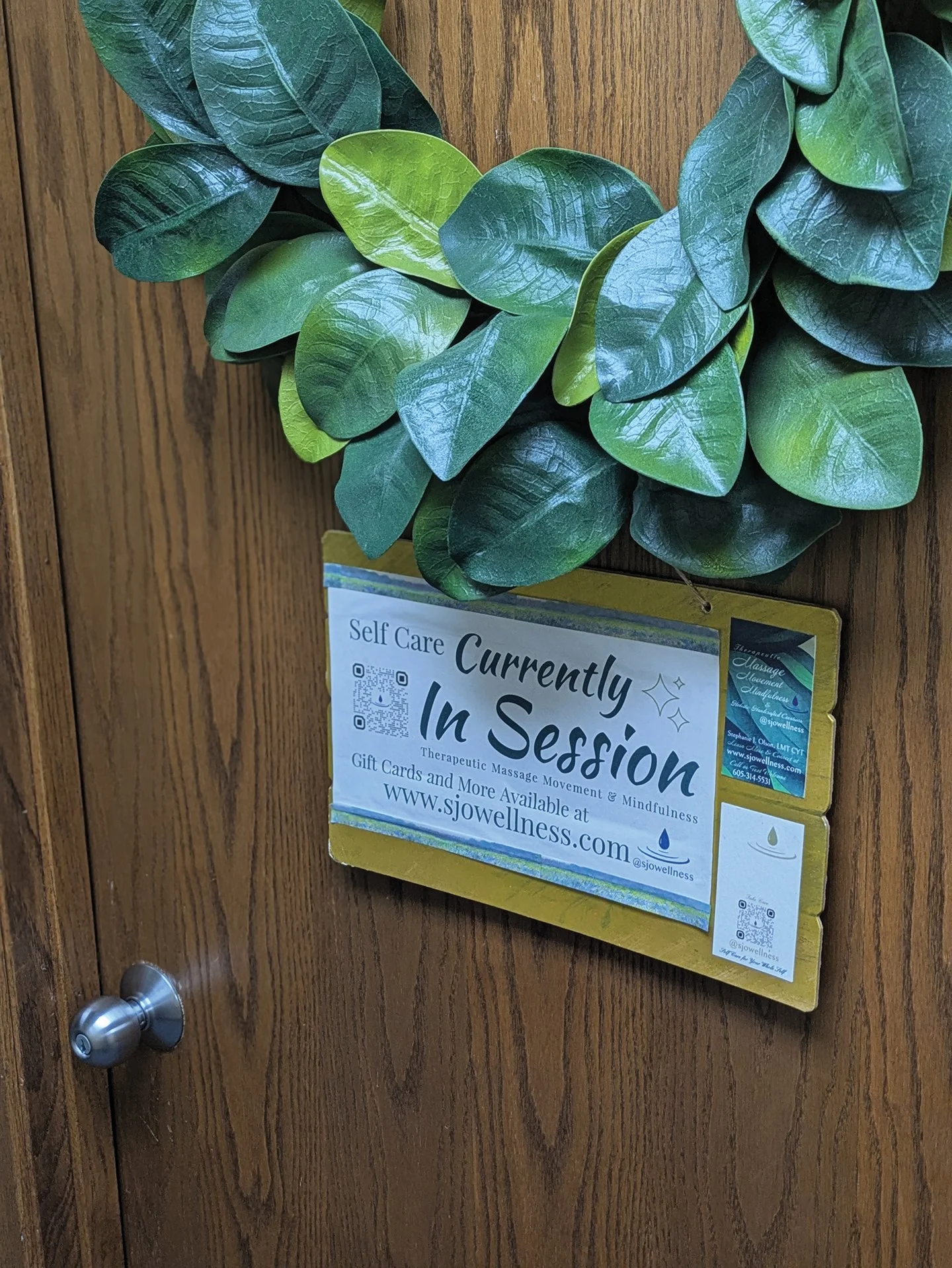
To learn more about Stephanie, her services, and her products visit her online at sjowellness.com.
Read Related Articles:





















































At Peaceful Minds Counseling Services and Care2Cure Physical Therapy in Dexter, Michigan, we have come together to conduct a research study focused on helping individuals with PTSD improve trauma processing and healing. Through this collaboration, we are exploring the effects of using Eye Movement Desensitization and Reprocessing therapy (EMDR) in a mental health setting followed immediately with Dry Needling in a physical therapy setting.