
By Christine MacIntyre
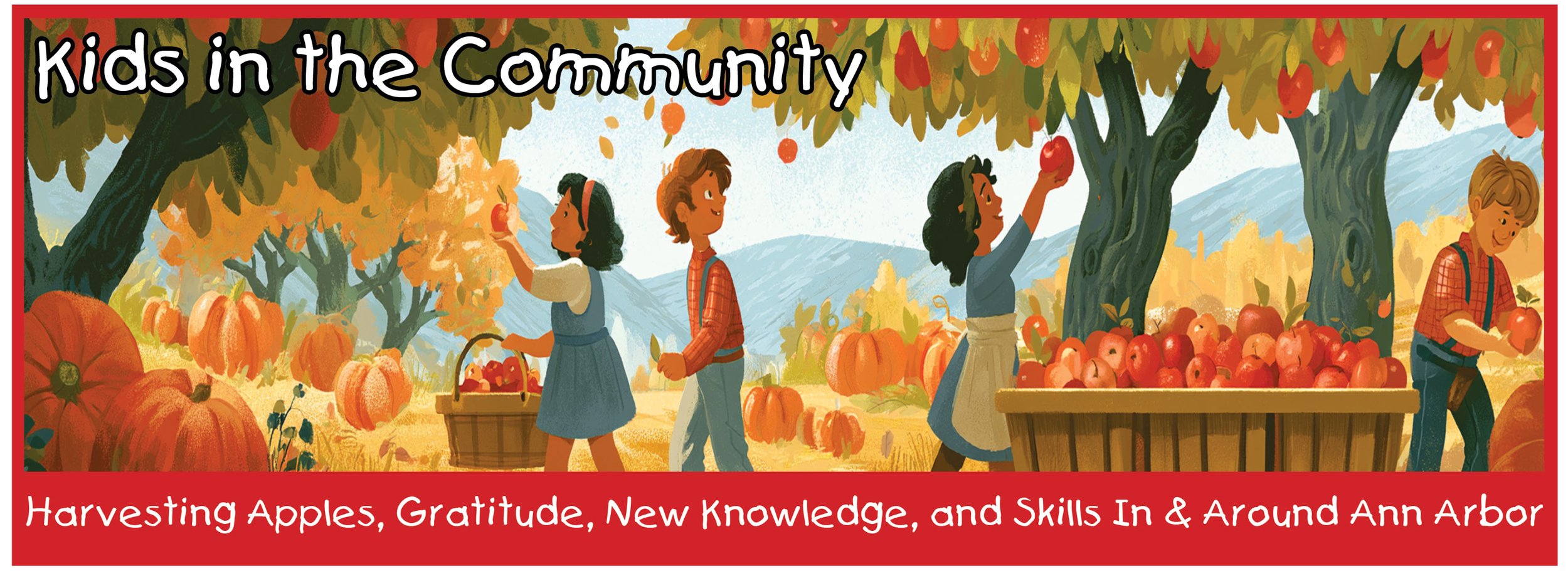
Every fall, children head into orchards with baskets in hand reaching for apples that are finally ready to be picked. They search pumpkin patches for the perfect pumpkin. They fill bags at farmers’ markets with late-season vegetables and jars of honey.
Harvest season teaches us to notice what has grown, but the most important harvests aren’t always found in orchards or pumpkin patches.
Just as gardens spend months quietly growing beneath the surface, children spend the year growing in ways that are not always easy to see. A child who was nervous to raise their hand in class may have found their voice. A new friendship may have taken root. A challenge that once felt impossible may now feel manageable. Growth often happens so gradually that we don’t notice it until we stop and look back. Sometimes the things we’ve grown the most are the very things no one else can see.
Fall offers the perfect opportunity to harvest what has been quietly growing.
As fields are harvested and trees give up their fruit, this season invites us to reflect on our own harvests. What have we learned? What have we accomplished? What moments made us proud? What kindnesses did we give or receive? While farmers gather the results of months of hard work, children can gather something just as valuable: the memories, lessons, and experiences that have helped shape who they are becoming.
Harvest Your Senses
Before you can harvest gratitude, memories, or new experiences, you first have to notice them. Fall is one of the easiest seasons to slow down because it invites us to pay attention. Cooler air, colorful trees, and crisp mornings remind us that the world is changing all around us. Sometimes the greatest discoveries happen when we simply stop long enough to look, listen, smell, and explore.
This fall, challenge yourself, and your children, to harvest your senses.
Ask, what can you see? Together, count how many shades of red, orange, yellow, and brown you can find on a single walk. Watch squirrels gathering acorns, geese flying south in a V formation, or spider webs sparkling with morning dew. Notice the tiny details, like the veins on a leaf or the patterns in tree bark.
Ask, what can you hear? Close your eyes for one minute and listen. Can you hear leaves rustling in the wind? Birds calling overhead? Crunching footsteps? The distant hum of a tractor harvesting a nearby field? Every season has its own soundtrack.
Ask, what can you smell? Autumn is filled with familiar scents—fresh apples, cinnamon, campfires, damp leaves after a rain, and cool morning air. Which smells remind you of your favorite fall memories?
Ask, what can you touch? Feel the rough bark of a tree, the smooth shell of an acorn, the prickly surface of a pinecone, or the cool skin of a pumpkin. Nature is full of textures waiting to be explored.
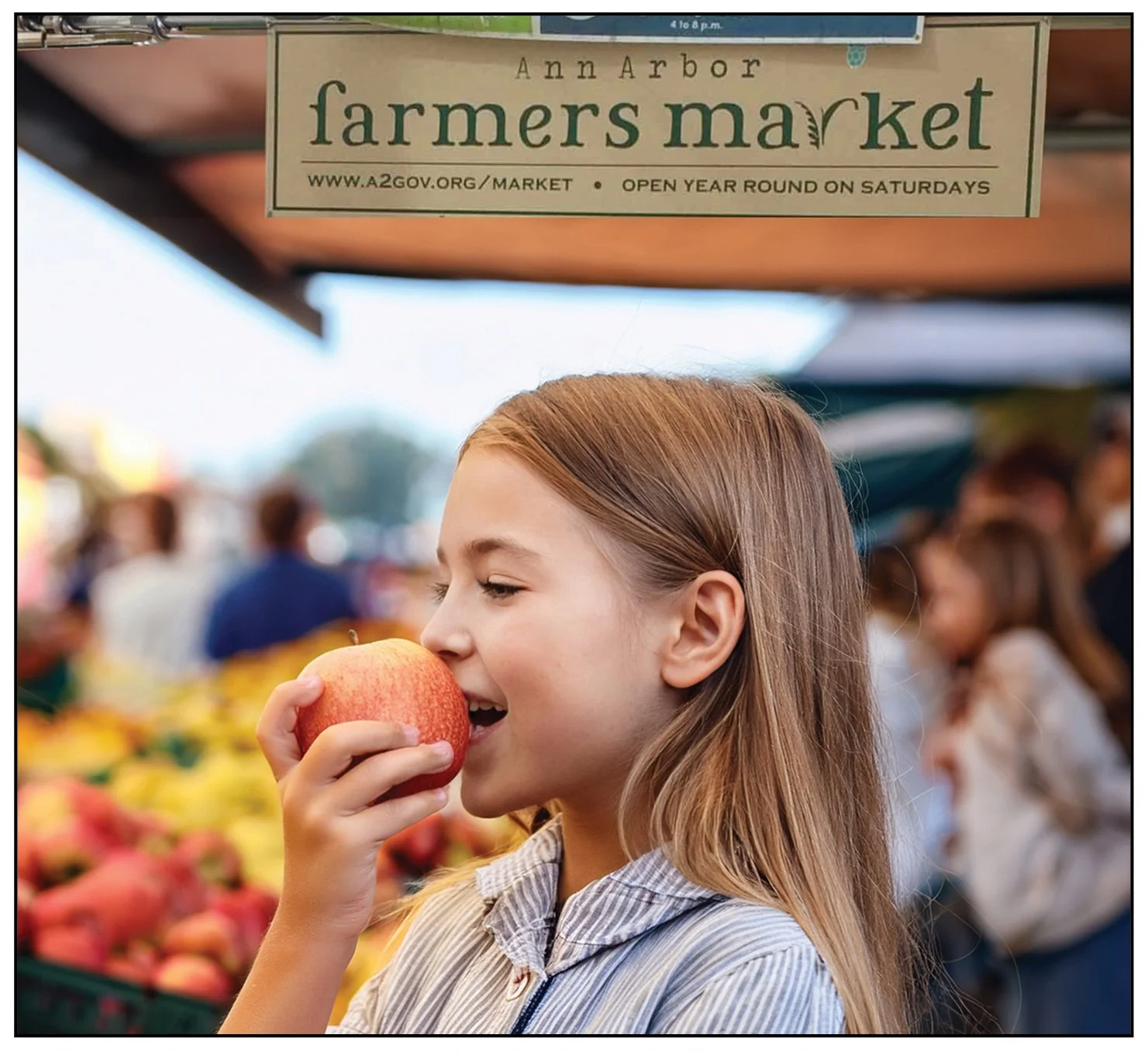
Ask, what can you taste? Visit a farmers’ market or orchard and try something you’ve never eaten before. Sample a new variety of apple, local honey, squash, pears, or homemade cider. Every bite tells a story about the people and the land that helped it grow.
The more closely you pay attention, the more you’ll discover that fall has gifts hidden everywhere. Curiosity grows when we ask questions. Gratitude grows when we notice the little things. And sometimes the most meaningful harvest isn’t something we carry home in a basket—it’s the wonder we gather simply by paying attention.
Harvest, in a Literal Sense
“I hope children get excited at the market from seeing all the different fruits, vegetables, plants, and products our vendors are selling,” said Ann Arbor Farmers’ Market Manager Stefanie Stauffer. “Maybe they even leave inspired to start their own gardens or make their own products.”
Sometimes children leave carrying something you can’t fit in a basket: curiosity, confidence, or an idea that continues growing long after the visit ends.
Harvest season isn’t just something we can reflect on at home. Visiting an orchard or farmers’ market offers children a chance to see growth happening all around them. Attending a farmers’ market or harvest festival offers an opportunity for kids to learn about Michigan agriculture as well.
“We see hundreds of children weekly during our school group tours,” said Mary Ellen Vago, Wasem Orchard’s farm store manager. “They learn about the farm, growing and raising apples, picking apples, and other apple facts. By the end of their experience, we hope they gain an appreciation for where their food comes from.”
Every apple begins as a blossom, cared for over months before it’s ready to be picked. Children grow in much the same way. Confidence isn’t built overnight. Kindness takes practice. Courage grows one small brave moment at a time. Like an orchard, much of the growing happens long before anyone notices the harvest.
The Ann Arbor Farmers Market is located at 315 Detroit Street in Ann Arbor. For more information, call (734) 794-6255 or visit a2gov.org/market.
Wasem Orchard is located at 6580 Judd Road in Milan. To learn more, call (734) 482-2342 or visit wasemfruitfarm.com.
Harvest Conversations
One of the easiest ways to discover how much your child has grown doesn’t require a notebook or a trip to the orchard. Sometimes all it takes is a good conversation.
As families become busy with school, sports, homework, and activities, it’s easy for parents to spend more time talking about schedules than stories. Harvest season offers a chance to slow down and reconnect. Whether you’re sharing cider around a campfire, driving home from the pumpkin patch, or eating dinner together, ask questions that help everyone look back on the year with fresh eyes.
Instead of asking, “How was your day?” try asking questions that invite reflection:
What is something you can do now that you couldn’t do last fall?
When did you feel especially brave this year?
What challenge taught you the most?
Who helped you grow this year, and how?
What is something kind you did for someone else?
What is one mistake that ended up teaching you something important?
What made you laugh the hardest this year?
What are you most proud of that no one else may have noticed?
If you could thank one person for helping you grow, who would it be?
What do you hope you’ll be able to add to your Harvest List next year?
Remember, grown-ups should answer these questions, too.
Children often think adults have already figured everything out, but one of the greatest gifts we can give them is showing that we’re still growing ourselves. Share a new skill you’ve learned, a fear you’ve faced, a mistake you’ve made, or a goal you’re still working toward. Let your children see that learning doesn’t stop when school ends or when we become adults.
You might even make Harvest Conversations a new family tradition. Keep a jar on the table during the month of October filled with conversation starters. Each evening, have one family member draw a question for everyone to answer. By the end of the month, you’ll have gathered more than stories—you’ll have harvested laughter, gratitude, encouragement, and a deeper understanding of one another.
Sometimes the richest harvest isn’t found in a field at all. It’s found around a table, where families pause long enough to listen, share, and celebrate how far they’ve come together.
As children reflect on their own harvests, it’s important to remember that some of the most meaningful growth can’t be measured.
“Harvest season reminds kids that good things take time,” said Kami Cornelio, an educator and reading specialist at Empower Your Mind Tutoring in Livonia. “Just like a seed doesn’t grow overnight, learning to read, ride a bike, make a friend, or overcome a fear all happen little by little.”
Cornelio encourages children to look beyond traditional accomplishments. A Harvest List might include a new friendship, a fear they were brave enough to face, a skill they practiced until it became easier, a moment they helped someone without being asked, or even a mistake they learned from. “As an educator, some of the greatest “harvests” I see aren’t grades—they’re confidence, resilience, curiosity, and the willingness to keep trying after making mistakes.”
Create Your Own Harvest List.
Have your children grab a sheet of paper and divide it into three sections or “baskets.” Grownups, you should do this along with your children!
Basket 1 - Gratitude: What are you thankful for? What made you smile? Who helped you grow?
Basket 2 - Growth: What can you do now that you couldn’t last fall? When were you brave? What challenge did you overcome?
Basket 3 - Giving Back: How did you help someone? How were you kind? What difference did you make?
This activity mirrors what happens at a farmers’ market or orchard: people gather baskets full of good things. As you and your child create lists, you both might be surprised by how much you’ve harvested. Creating a Harvest List isn’t just about remembering the year: it’s about recognizing how much has grown, even if you didn’t notice it at the time.
Looking for more ways to celebrate the season? Try one (or all!) of these harvest-inspired activities.
Try These Harvest Activities
Keep a Gratitude Journal.
Instead of writing a gratitude list all at once, have your child spend the month of October adding one thing you’re thankful for each day. By Halloween, you’ll have harvested a month’s worth of happy memories.
Harvest Creativity from Nature.
One of the best things about fall is that nature provides endless art supplies—all you have to do is step outside. Take a walk through your neighborhood, a local park, or a nature preserve and gather colorful leaves, acorns, pinecones, seed pods, interesting rocks, or other natural treasures that have already fallen to the ground. As you explore, challenge yourself to notice the small details: the patterns on a leaf, the texture of tree bark, or the surprising colors hidden among the fallen leaves.
When you get home, try one (or several!) of these creative activities:
Preserve your findings. Place colorful leaves or flowers between the pages of a heavy book for a week or two. Once they’re dry, use them to decorate bookmarks, greeting cards, picture frames, or a seasonal journal. You can even frame your favorite leaf as a reminder of your autumn adventure.
Make leaf rubbings by placing a leaf under a piece of paper and gently rub the side of a crayon or colored pencil across the top. Watch the leaf’s veins and intricate details magically appear. Compare different types of leaves and see how each one creates a unique design.
Create nature art. Arrange your collection into woodland animals, funny faces, insects, flowers, mandalas, or colorful collages. Before taking it apart, snap a photo so you can remember your creation.

Sketch your favorite discoveries in a nature journal—write about where you found them, and record what made each one special. You might even identify the trees your leaves came from or write a short poem inspired by your walk.
Build a tiny nature world by using pinecones, acorns, sticks, leaves, and stones to create miniature fairy gardens, woodland homes, or habitats for imaginary forest creatures. Let your imagination decide who might live there!
Make a gratitude garland by writing one thing you’re thankful for on each pressed leaf using a fine-tip marker. String the leaves together with twine and hang your garland across a mantel, doorway, or bedroom wall as a colorful reminder of the people, experiences, and moments you’ve “harvested” this year.
Become a nature detective. Challenge yourself to find five different leaf shapes, three kinds of seeds, or signs that animals have been preparing for winter. Bring along a field guide or borrow a nature book from your local library to learn more about what you discover.
As you create, remember that you’re harvesting more than leaves and pinecones. You’re collecting curiosity, creativity, patience, and memories—treasures that will last long after the colors of autumn have faded.
Interview Someone Older. Ask a grandparent, neighbor, or teacher: What are you most proud of this year? What have you learned recently? What are you grateful for? You might discover adults are still growing, too.
Thank a Grower. After visiting a farm or farmers’ market, write a thank-you note or draw a picture for a farmer. Let them know what you enjoyed learning and that you appreciate all their hard work
Plant Something for Next Year. Harvest reminds us that every ending is also a beginning. Farmers gather this year’s crops while already thinking about what they’ll plant next. Our children can do the same. Tuck spring flower bulbs into the soil, plant garlic for next summer’s harvest, or grow herbs on a sunny windowsill. As you help your child water and care for their plant, remind them that the best things in life take time to grow.
Not every seed comes in a packet. This fall, you can help your child think about what they’d like to plant in themselves. Maybe it’s the courage to try a new art class, the confidence to join a sports team or martial arts program, or the curiosity to learn how to bake, sew, play an instrument, or identify birds in your neighborhood. Perhaps they’ll challenge themselves to learn to swim, write stories, keep a sketchbook, or create their own Halloween costume from scratch. Maybe they’ll plant a habit of reading for 20 minutes each night or make a goal to perform one act of kindness every day.
Every new hobby, skill, friendship, or dream begins as a tiny seed. With patience, practice, and a little courage, those seeds can grow into something amazing by the time next fall arrives.
As harvest season comes to an end, celebrate everything your child has gathered this year—but don’t forget to help them think about what they’d like to grow next.
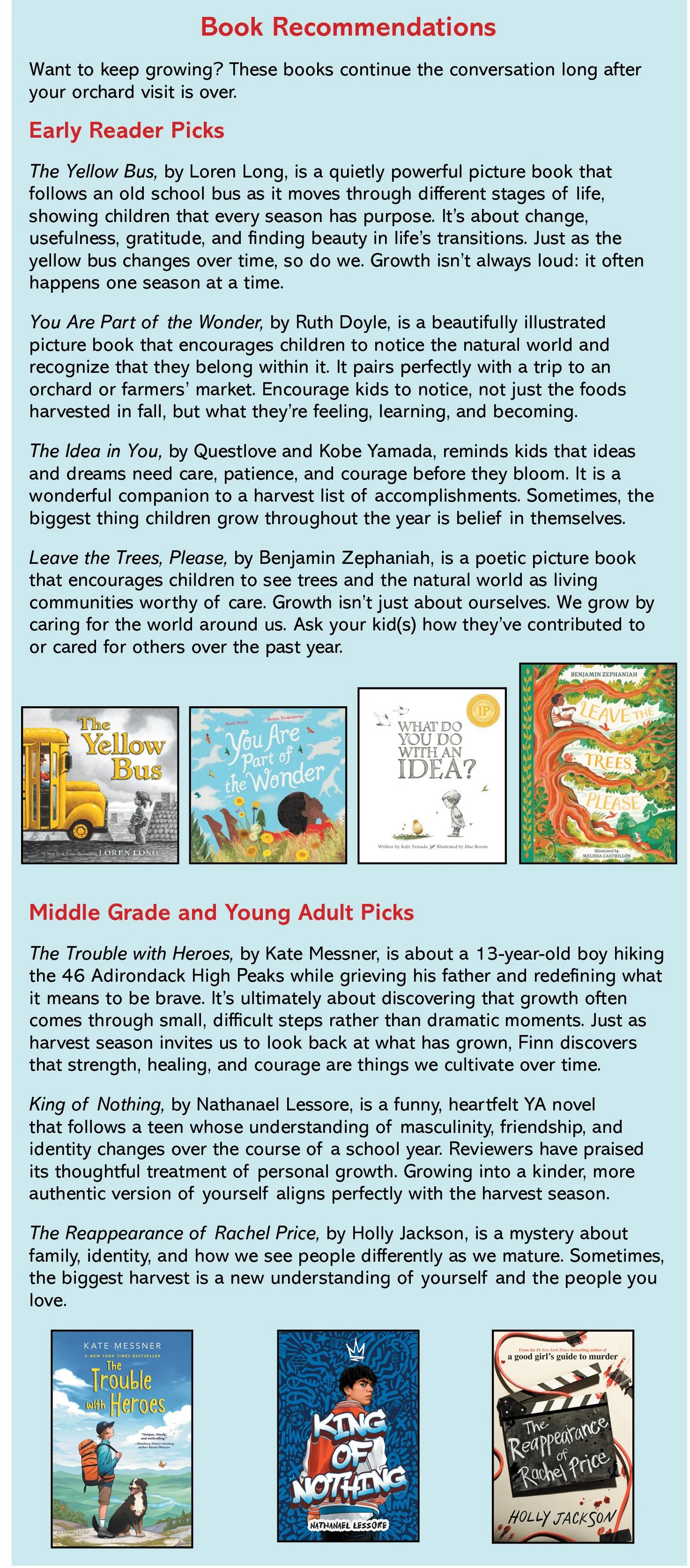
Harvest New Skills & Knowledge
Harvest season isn’t only a time to look back—it’s also the perfect time to plant seeds for what’s next. Every fall adventure is also an opportunity to gather something less visible: new skills, fresh ideas, and experiences that shape who are children are becoming. Sometimes the things they learn become the seeds that grow into lifelong hobbies, interests and passions.
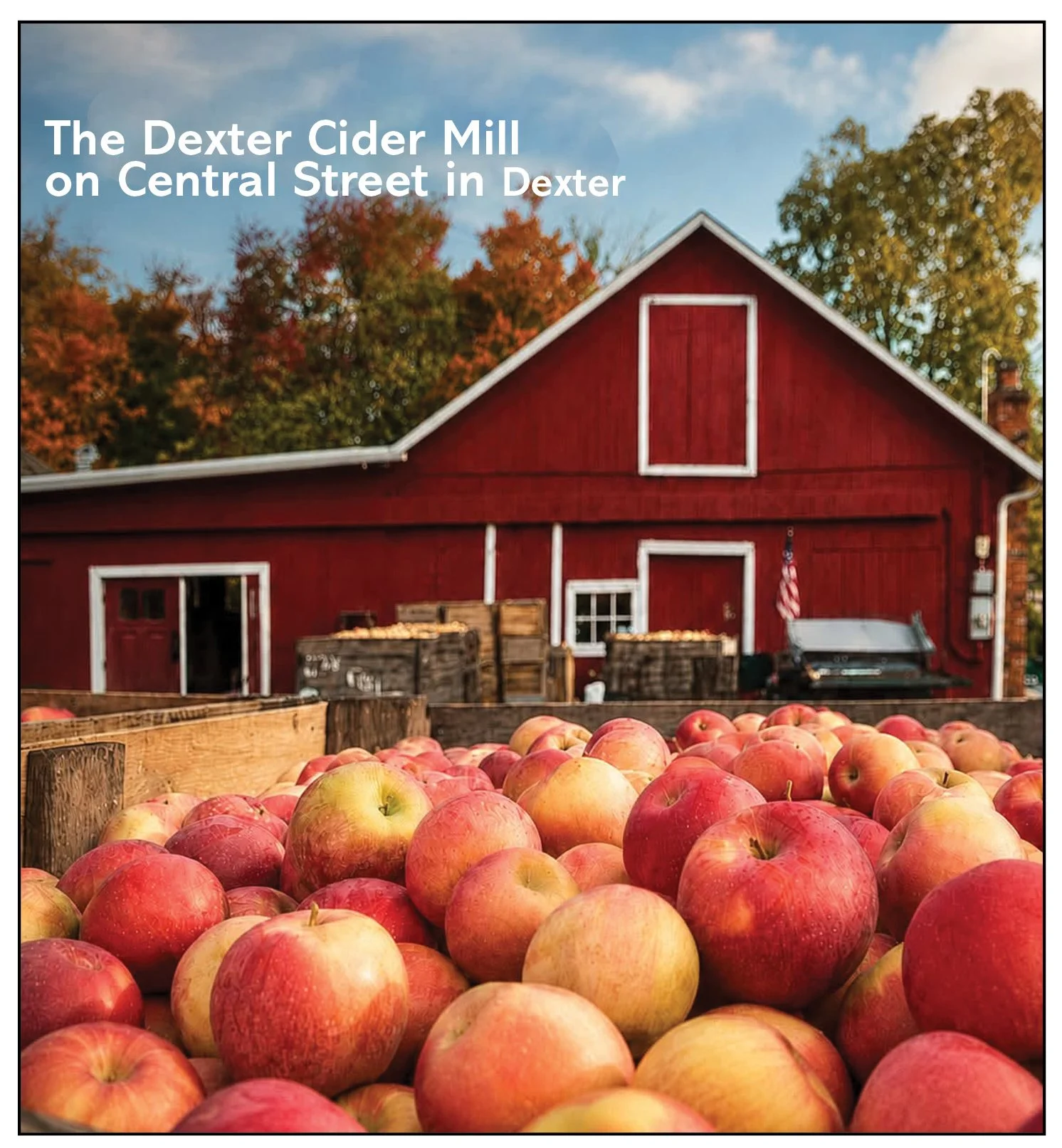
Visiting a farm, orchard, nature center, or community festival is a wonderful way for families to harvest new knowledge. Learn how cider is made at the Dexter Cider Mill, experiment with baking an apple pie using apples you picked at Alber Orchard in Manchester, or discover why apples ripen just as cooler weather settles in. As your children learn about the journey from blossom to harvest, help them think about the ways they’ve been growing all year, too.
Attend the Fall Mushroom Hunt at the Eddy Discovery Center to learn how experts identify mushrooms or join the Fall Tree ID Walk at Oakwoods Nature Area to discover why leaves change color and how to identify the trees around your own neighborhood. As trees let go of their leaves, ask your child what they might let go of this season—a worry, a fear or even a mistake—and what they’ll carry with them instead.
Your family can challenge yourselves physically by running a race like the Spooky Sprint at Rolling Hills Waterpark in Ypsilanti. Whether you finish first or last, crossing the finish line is a chance to celebrate perseverance. You could also embark on a beginner-friendly horseback ride through the wooded trails at Storm Breaker Stables in Milan. While you’re there, learn how animals prepare for winter by gathering food and building shelters. Then ask your kids: What are you gathering for own future? Knowledge? Friendships? Courage? Memories?
Fall also offers countless opportunities to discover how the natural world prepares for change and how those lessons can inspire our own growth. Learn about monarch butterflies during the Leslie Science & Nature Center’s Monarch Migration Festival. There, your family can meet animals, talk with experts, and discover how pollinators help gardens grow. The monarch’s long migration is a reminder that growing often means venturing into new places—and trusting yourself along the way.
If your family prefers to take a step back in time, the Chippewa Nature Center’s annual Fall Harvest Festival in Midland might make a great day trip. Families can experience traditional harvest activities such as apple pressing, cider tasting, candle dipping, beekeeping demonstrations, and rope making. It’s a chance to discover how people celebrated the harvest long before grocery stores and modern conveniences. As you learn these historic skills, talk about the traditions your own family has passed down and what traditions you hope to harvest and carry into the future.
Of course, learning can happen at celebrations, too. The Sugarloaf Lake Harvest Festival at Waterloo Recreation Area’s Sugarloaf Lake Campground offers Halloween-themed fun, candy harvesting, costume parades, and plenty of opportunities to make lasting family memories.
Harvest season is also a great time to grow in ways that don’t involve learning a new hobby. Encourage your kids to introduce themselves to someone new at school, help a younger sibling learn a skill they’ve already mastered, or write a thank-you note to a teacher, coach, or neighbor who helped them grow this year. You can also inspire them to read a book that’s a little more challenging than their last pick, learn the names of the birds that visit your backyard, or see if they can identify the trees on your daily walk.
Even small moments of curiosity can grow into lifelong interests. Growth doesn’t always look like mastering something new. Sometimes it looks like your child becoming a little kinder, a little braver, or a little more curious than they were last year.
The wonderful thing about learning is that every new experience plants a seed. Some seeds grow quickly, while others take months, or even years, before your child realizes how much they’ve changed. By next fall, your child may look back and discover they’ve harvested not only new knowledge, but also confidence, creativity, kindness, and the courage to keep trying something new.
To learn more about the Eddy Discovery Center, call (734) 475-3170 or visit michigan.gov/dnr. They are located at 17030 Bush Road in Chelsea.
The Dexter Cider Mill is located at 3685 Central Street in Dexter. For more information, call (734) 426-8531 or visit dextercidermill.com.
Alber Orchard is located at 13011 Bethel Church Road in Manchester. To learn more, call (734) 428-9310 or visit alberorchard.com.
To learn more about the Oakwoods Nature Area, call (734) 794-6230 or visit a2gov.org. They are located at 3100 Barclay Way in Ann Arbor.
Rolling Hills Waterpark is located at 7660 Stony Creek Road in Ypsilanti. For more information, call (734) 484-9676 or visit washtenaw.gov.
Storm Breaker Stables is located at 11340 Darling Road in Milan. Call (308) 249-6971 or visit stormbreakerstables.com.
For more information about Sugarloaf Lake Campground, call (734) 475-8307 or visit michigandnr.com/parksandtrails. They are located at 8200 Loveland Road in Chelsea.
The Leslie Science & Nature Center is located at 1831 Traver Road in Ann Arbor. To learn more, call (734) 997-1553 or visit discoverscienceandnature.org.
Chippewa Nature Center is located at 400 South Badour Road in Midland. To learn more about the Fall Harvest Festival and other seasonal events, call (989) 631-0830 or visit chippewanaturecenter.org.
Read Related Articles:
























































































































































Every fall, children head into orchards with baskets in hand reaching for apples that are finally ready to be picked. They search pumpkin patches for the perfect pumpkin. They fill bags at farmers’ markets with late-season vegetables and jars of honey. Harvest season teaches us to notice what has grown, but the most important harvests aren’t always found in orchards or pumpkin patches.