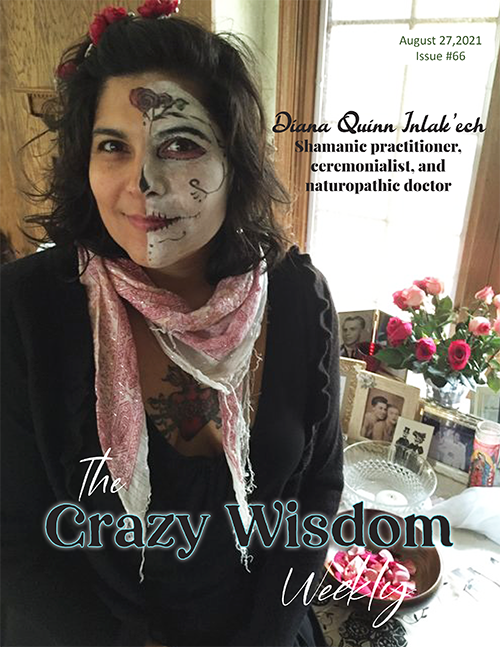
By Diana Quinn Inlak’ech, ND
In traditional cultures worldwide, the honoring of ancestors has existed in some form throughout human history. Traditional cultures wove cosmologies around relationship with their ancestors, the natural world, and cycles of life and death. In the span of human evolution it is only in the relatively recent period that ancestor worship has become less widespread. In the West, this shift is intertwined with cultural fear of and avoidance of death and poor cultural competency with processing grief. However, in recent years, the human need to connect with our ancestors has found a new outlet through modern developments in science and technology. These advancements offer new insights to interconnection with our ancestors for contemporary Westerners who are often skeptical of the non-material and unscientific.
Who are the ancestors? They are the people in our family trees who are remembered and whose names are known from the previous generations. The ancestors are also those to whom we have been joined through chosen family, adoption, and deep heartfelt connection. In addition, they are the unnamed distant relatives in those family lineages from beyond recorded history. Our deep ancestry connects us all from the beginnings of humankind through our shared origins on the African continent with "mitochondrial Eve." Ancestral awareness connects us to all of those who have gone before.
The call to deepen my own ancestral practice grew alongside my study of the clinical application of epigenetic science. The emergent field of epigenetics has settled the debate for once and for all: human development is shaped by both nature AND nurture. The term epigenetics means "above the genome", and is the study of how genes interact with the environment to determine their expression. Epigenetic research reveals that aspects of lived experience are heritable, influencing genetic expression by turning genes "on" or "off." This revelation has tremendous clinical value because we understand that genes are not one’s destiny, but rather, gene expression can be modified. It has become quite accessible to test one’s DNA via kits ordered on the internet and then use the raw data in analysis for epigenetic markers and single nucleotide polymorphisms (SNPs). Single nucleotide polymorphisms are the most common type of genetic variation among humans. These epigenetic factors determine genetic expression and many can be influenced by modifiable lifestyle factors like diet and exercise. In my clinical practice I often assess epigenetic variables to formulate an individualized health plan with patients in order to optimize wellness and minimize disease risk.
Epigenetic factors are also shaped by stressful experiences, emotions, and even more subtle factors that influence our lives. As Tolstoy wrote, "All happy families are alike; every unhappy family is unhappy in its own way." Family shadows such as divorce, addiction, and abuse generate adverse childhood experiences (ACEs) and are known to produce epigenetic changes that impact future health outcomes. The results of the CDC-Kaiser ACE Study revealed not only the correlation of adverse childhood experiences with poorer health later in life, but also the widespread prevalence of the continuation of adverse childhood experiences in the following generations. Of the 17,000 people who were interviewed for the original study, 64% reported that they had experienced at least one ACE. Traumatic ancestral experiences affect the health and happiness of future generations. In studies of descendants of Holocaust survivors and survivors of the Dutch famine, researchers discovered physiologic changes which occurred as the result of trauma experienced generations before. According to Dr. Rachel Yehuda, principle investigator of epigenetic research on intergenerational trauma, rather than interpreting the findings with resignation, the data can be empowering. The fluidity of genetic expression revealed through epigenetic research also highlights the potential of therapeutic modalities to shift health outcomes.
In the United States, there is a profound legacy of intergenerational trauma from colonialism, Native genocide, and slavery, which informs contemporary systems of oppression. In our current shifting political climate, the surfacing of these wounds—which have always existed, but were previously marginalized by the dominant culture—invites an opportunity for healing. We live in a world of disconnection and division by race, gender, class, religion, and national borders, all of which are human constructs. What are the ways that our ancestral lineages embodied these experiences? How were they harmed, or how did they uphold these constructs? Ancestral healing work is an invitation to take responsibility for our lineage. Through examination of our ancestral inheritance, we can interrogate, provide redress on behalf of, and ultimately forgive our ancestors for their shortcomings. We can see the ways in which they contributed to the present day "dream of life" that is out of balance, so that we can appropriately correct course. Ancestral work is social justice work, and we each have a role to play. Acknowledging and healing our collective cultural and historical trauma is a critical form of social justice activism. We do this work in our lifetime to transmute unresolved ancestral and cultural baggage so it is not carried forward, so we can dream a better dream for future generations.










































My sister’s death continues to be one of those events my life that frustrates me. I’ll never have the answers that I need to “move on” or “accept” the massive cave of despair her absence has created. It has, however, made me realize that despite the pain of not having her in my life, I have a responsibility and a need to be present for the people that I love, and I will continue to strive to be the best possible wife, mother, daughter, sister, friend, and therapist that I can be. My conversation with my cousin reminded me of the important and incredibly impactful moment I had with a client shortly after my sister’s death.