
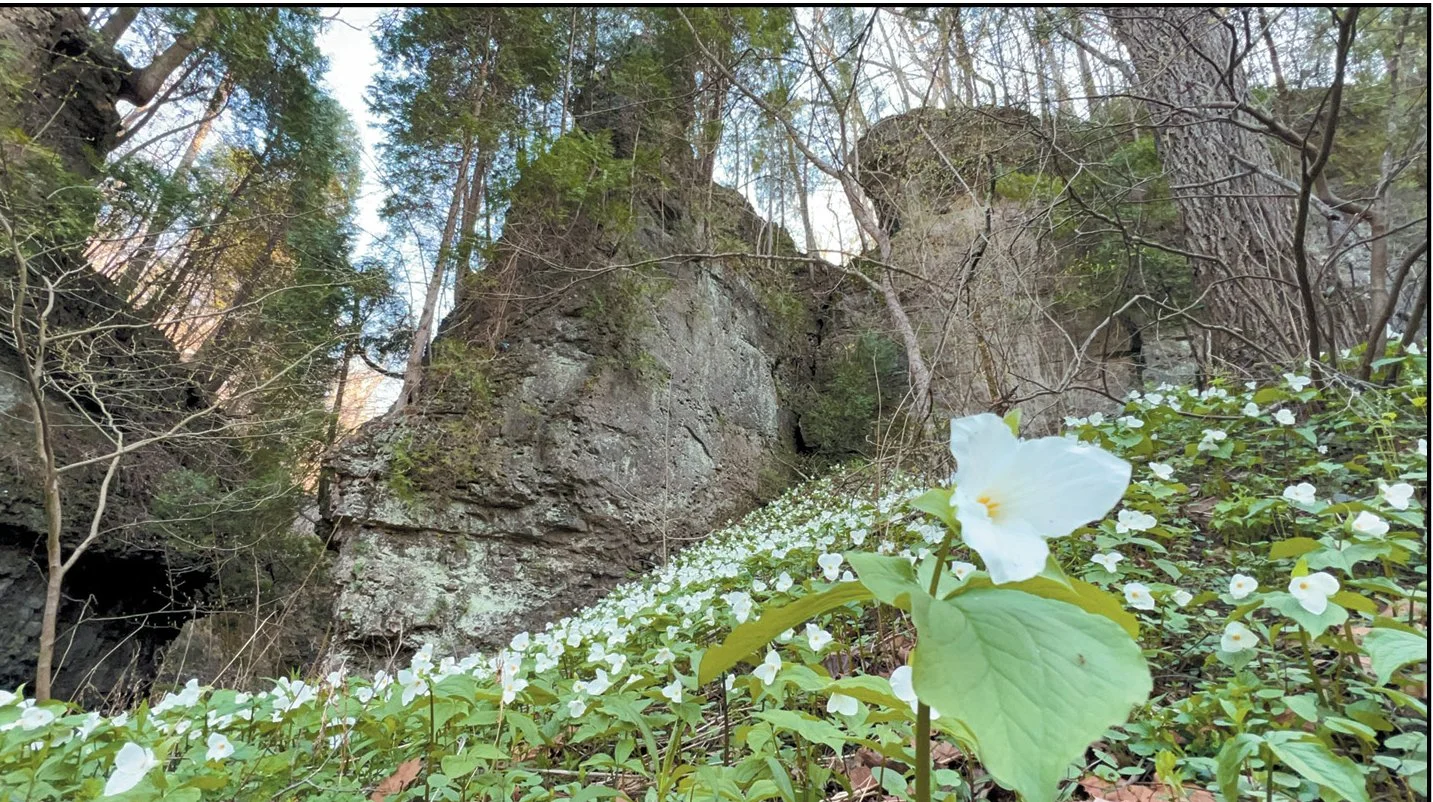
Most Ann Arborites know the Leslie Science & Nature Center (LSNC) off Traver Road is free and open to the public. When was the last time you visited? Maybe you played around on the lawn, in the woods, or in the unique, tunneled playground on a school field trip. Or maybe you showed up for the Annual Earth Day Event or October’s Animal Haunts. The property is still there, better than ever, with a friendly crew to help you when you desire it. Some day you might just want to wander around, or let your mind relax on the Black Pond Woods nature trail.
Posts tagged #nature
Out of My Comfort Zone: Three Scary Statements
The words were out of my mouth before I’d spent even a single second considering them. Appalled, I gazed, eyes wide, at the woman in front of me, a new acquaintance whom I knew to be highly intuitive, an accomplished spiritual healer. I couldn’t fathom where that statement had come from. It was almost as if the words had been spoken to me, as much as through me.
Pollinator Hotels Part 2: Welcome Back, Bees!

By Karen Quinn
After a long, bitter cold winter, it’s time to welcome our bees and other pollinator friends back after their much needed, and well deserved, hibernation.
If you built pollinator hotels and overwintered them last fall (see my article in issue #90 of The Crazy Wisdom Community Journal for building directions), you can put them back out in your yard when the mid-day temperature reaches a consistent 55 degrees, and the overnights are above 35 degrees. In Southeast Michigan, that puts us around late March to mid-April, on average. However, we natives know that Michigan weather is hardly consistent, so use your best judgment.
Here are a few tips to help the flying friends as they come out of hibernation. First, I will suggest creating something called an “Emergence Box.” This can be a plastic bin or heavy-duty cardboard box that your hotel will fit inside. On one of the sides of the box/bin, cut a single ½ inch diameter hole. As our little buddies wake up, they will follow the light of the hole and leave the box. I went the plastic bin route, since I can use it year after year, and I don’t have to worry about it if it gets wet. If you choose to go this route, I suggest using a non-clear bin to make it easier for the groggy bees to find their way out. However, my first few years I did use heavy duty cardboard boxes. If you decide to take this route, just keep it up off the ground and under cover to keep it from getting soggy during spring rains.

There are a few reasons why this is a good practice. One reason is it keeps the pollinator hotel dry and free from most rodents and predators. The only stinkers you have to keep an eye out for are mice. If you find mice are making their way in and out of the emergence hole, you can cover it with a mesh screen. I use old potato or onion bags to cover the hole. The second reason is that a nesting female won’t see that as a safe place to return to lay her eggs.
Be sure to monitor the hotel in the emergence box often for unwanted visitors as well as keeping track of when it’s empty. You will know that a tube nest or the wooden block holes are empty when the plug at the end of the tunnel is broken. If you used pinecones, straw, or sticks, a cursory look for anyone sleeping among the debris is your best bet. Another important thing to watch for is moisture. This could be due to rain, or leaks in the wood. Access it to see if you need to weatherproof the seams, extend the roof, or adjust the placement of the hotel. Keeping the hotel dry, safe, and warm is of the upmost importance as our buzzing buddies wake back up.
Once the hotel is empty of occupants, it’s time to clean it up and get it ready for the next use. Start by removing all the nesting materials. Then, give it a good sanitizing scrub with a diluted bleach mixture. MSU suggests a ½ cup of bleach to a gallon of water for this process. This is a very necessary step to keep your local population of pollinators healthy. It is imperative to remove any parasites or pathogens that can cause diseases from the nesting areas. If you are reusing your tubes, clean them out with a pipe cleaner or straw cleaning brush to remove any debris, then soak them in the bleach solution and allow them to air dry. If you are using the drilled block method, you can use the same size drill bits to rebore out the holes if you wish, then soak the wood in the bleach solution, and allow it to air dry completely. You can use the natural tubes and wooden blocks for two years before they need to be replaced. Be sure to wash the box of the hotel completely as well and make any necessary repairs to rotten wood. Once it’s all cleaned and dried, you can place it back out in your garden or store it and use it next year.
Now, if you want to help your nesting female friends out all summer (and I highly recommend you do!) Simply place a new, clean, bee hotel, identical to the one you put out in the fall, near the emergence box in your garden. Now, it doesn’t have to be “new,” it can also be the nesting box you just cleaned or one you stored from the previous year. Make sure it is in a protected, covered space, facing southeast so it receives direct sunlight in the mornings. It is best to put the new hotel up about 4’-5’ on a post, building, or tree as close to your garden as possible. Then simply leave it all summer, and when the temperatures drop again in late October, your hotel is full of pollinators and ready to be put in a safe place!
If you place a new bee hotel out, continue to monitor it throughout to garden season. When you see tubes or drilled holes capped with mud or leaves, that is a sign of mason or leafcutter bee nests. You might even find cocoons of moths or butterflies in your straw and sticks, which are oh so much fun to watch. But aside from “wanted activity,” you should also watch for unwanted events as well
Next, watch out for ants! They will gladly use your hotel as a bee larvae diner and destroy your bees’ nests. There are many pollinator safe remedies out there. Diatomaceous Earth (or DE) around the base of the post or in the bottom of the nesting box can be a good preventative as well as deterrent. I’ve also heard other gardeners have success using ant bait and sticky spray to deter an active invasion. The last thing I watch for is an excess of spiderwebs. Now, if some enterprising genius arachnid sets up shop on my bee box, I’m not above moving a spider away from my hotel, but a lot of webs is an indication that it might be in a little too shady of a spot.
Finally, be sure to add more native blooms and natural habitat around your garden to encourage even more bees, flies, beetles, moths, birds, and butterflies to stay. Be the oasis these little creatures are dreaming of, and they will pay you back tenfold by simply being themselves, and making your garden more beautiful than you knew it could be.
Karen Quinn is a writer and artist who homesteads on a rural urban farm in Livonia, Michigan with her husband, son, and a menagerie of animals. Her favorite things are reading, exploring, and drinking tea.
Read Related Articles:
Featured


Balance Chakras to Build Confidence in Kids
The subtle energy system has always been integral to humanity’s weave of existence. Though the media tends to focus on seven major chakras in the Hindu/yogic tradition, there is commonality across Cherokee, Incan, Pueblo, Tibetan Buddhist, and Sufi Muslim mysticism beliefs to name just a few. That being understood, there are major and minor chakras throughout the body—at every joint, nerve bundle, palms of the hands, souls of the feet, nipples, and more.
The Buzz on Protecting Pollinators Through the Winter
During the spring and summer there is always a lot of buzz around pollinators, their habitats, and how to support them. But did you know you can continue to support your backyard friends in the fall and winter as well? Through a few simple steps you can continue to provide for your local pollinators as the weather turns cold. By offering them housing during the snowy winter months you can guarantee they’ll return to your gardens the following year. It’s a win for everyone!
Book Review: Nature’s Symphony: The Spirit of Scientific Pantheism by Martin Docherty
In Nature’s Symphony, Martin Docherty presents a refreshing and deeply thoughtful perspective on our relationship with the natural world—one that blends science, philosophy, and spirituality in a way that feels both intellectually satisfying and emotionally grounding. This book is neither your typical science read nor a standard spiritual guide. It’s something more layered: a meditation on the sacredness of the universe, grounded not in supernatural beliefs, but in the elegant truths of science itself.
Wild Wellness at Mother Bear Sanctuary and Retreat Center
Barbra White, co-founder of Mother Bear Sanctuary and Retreat Center, believes that all living beings are deeply interconnected. “It’s kismet,” she explained, that just as she was longing to spread the word about her retreat center, which opened in 2018, The Crazy Wisdom Journal came calling for an interview. “I feel like I’ve been in a cooking pot for 30 years in this work, but here, specifically with Mother Bear Sanctuary for the last eight years, I feel like I’m saying to the universe, ‘I’m ready. I’m ready.’ So when [the Journal] called, I thought, ‘kismet.’”
The Enchantment of Lympha: Ancient Spirit of Pure Water
Inside mossy sunken walls, a bronze nymph pours out splashing streams from cupped palms, arms outstretched to make an offering in a little-known garden I visit.
Water calmed as the goddess raised her face from the pool.
Sprinkling her forehead with crystalline drops,
she drew moist tresses over her shoulder,
and began her story…
Autumn Foraging
There is something romantic and melancholy about the Earth Mother closing out the heat of summer and preparing herself for the cold winter’s embrace. We instinctively feel the shift and are compelled to engage with the natural world, seeking to bask in the cascades of warm yellows, reds, and oranges in the trees and almost methodically find our way to apple orchards, pumpkin patches, and forests to take in the beauty and bounty of the season.
Goddess of Borderland, Mistress of Crossroads--Pokeweed-Hekate
Having watched the moon set with the sun’s rising, the ancient lunar goddess Hekate is on my mind. And near the Huron river path this morning, a pokeweed plant reaches upward offering a message and posing a hieroglyphic sign as she raises her arms in slender scarlet sleeves. Fresh green pendants nestle beside fully ripe ink-purple fruit on her supple limbs where she drapes luxurious flowing tresses, trailing glossy clusters from slender stems. Wildly flowering, the goddess and plant step from forest edge as one to emerge into the waking world. Hekate dances within her chosen ally pokeweed, just as ancient Greeks thought nymphs ensouled their trees in mutual lifelong union.
Weedy Wisdom for the Curious Forager: Common Wild Plants to Nourish Your Body & Soul by Rebecca Randall Gilbert
Weedy Wisdom for the Curious Forager is a delightful exploration into the world of foraging, offering readers a unique and insightful perspective on the often-overlooked treasures found in nature’s backyard. Authored by Rebecca Randall Gilbert, the book is a comprehensive guide that helps beginner and advanced foragers embrace the bounty of wild plants and discover the hidden gems under their noses.
Sustainable Health-- Take a Mindful Hike
Are you looking for easy ways to unwind and relax even the middle of your busy days? Do you find yourself feeling worried about yet another disheartening news cycle or overwhelmed with work or personal stress, and yet uncertain about how you will find the peace and calm you long for?
Hedgewitching
In high school, I’d been set free to take French classes at the university. Waiting in the library to be picked up, I wandered and read. On a physical level I was hungry for more than stories. I didn’t eat much breakfast and found the atmosphere at school non-conducive to lunch. Like many students locked into what seemed an alien rhythm, I existed in a tattered state.
Quietly Noticing
I stood about twenty feet away from my two-year-old waiting to push her on a swing or do a count down while she hyped herself up to glide down a slide. I had just gotten done with a three-mile run with her in a stroller at the loop at Hudson Mills. The only way we get through these runs is a lot of snacks and the promise of playground time, and I was ready for the playground time. To me, playground time is a time that I don’t have to keep my brain on high alert. Rinoa would play and I would catch my breath and not have to figure out how to run, push, grab, and unwrap a snack all at once as I had been doing for thirty minutes prior.
A Walk in North Bay Park in Ypsilanti
I stood near the entrance to a boardwalk watching an egret do very little. It was nearly motionless amid a cluster of pond lilies that covered the water’s surface. Its shape—long, slender neck, bulbous body—reminded me of the glass beakers we used to mix potions in high school chemistry, it’s white plumage radiant in the afternoon sun.
Tying the Knot in Nature
Infusing a wedding with nature adds a sense of lighthearted whimsy and charm through elements such as fresh air, natural lighting, vibrant flowers, and wildlife. Several local venues bring the ceremony to nature's doorstep by offering outdoor ceremony sites, while others bring nature indoors. Some Crazy Wisdom favorites include botanical gardens, riverside views, sprawling fields, and vineyards. Each of the following venues is unique, but all of them offer nature's aesthetic beauty and are perfect options for a nature-inspired wedding.
Learning From Our Year Round Birds
Whether you enjoy watching birds flit about casually, are a dedicated birder, or keep a bird feeder going, it is likely some of our beautiful year-round birds have caught your eye on more than one occasion. For centuries, humans have observed birds for signs and omens (called augury or ornithomancy) as well as told stories illuminating the lessons birds carry. Birds have a wealth of wisdom to share with us, and this article highlights several of our year-round winged teachers who can be called on at any time in our hearts and, with some bribing, in our yards. These Michigan loyalists are the Black-Capped Chickadee, the Blue Jay, and the Northern Cardinal.
Roadside Marsh
The westbound traffic on Interstate 94 is at a crawl this morning and I couldn’t be happier. It’s a Wednesday and brilliant sunshine glints in my rear view mirror.
Raptors to the Rescue! Wildlife Ambassadors Teach Lessons in Conservation
Like many people I know, if you told me in the summer of 2020 that the pandemic would probably drag on for two years or more, I would not have believed you. In fact, I would have thought you were a negative, defeatist person, and I would have avoided you like—well, the plague.
Bringing Nature Back to Our Yard: Trading In Harmful Landscaping Habits for Healthy Sustainability
Late winter is the time we may start dreaming about the color green, about flowers, imagining new vistas as we look out our windows or walk around our frozen yard. This is a wonderful time to explore a fresh outlook on our little piece of earth. As new life emerges from dormancy, we may ask ourselves, “What is the purpose of my yard?” There are many possible answers: enjoying beauty and colorful flowers, complying with homeowners’ association regulations, conforming to the neighborhood, impressing neighbors and friends, creating a safe space for the kids to play, or wanting to help save our planet.


























































































































































































In the living room of a farmstead outside Dexter, Michigan, a willow casket stands upright against the wall. It holds books for now, but eventually it will hold the woman who wove it. That woman is Michael Marie Schofield, a “fiber and funerary artisan.” Schofield weaves conventional basketry and dye work as well as teaches around Southeast Michigan. “But I also do funerary vessels,” she said. “I craft handmade caskets and burial trays and urns and plant dyed shrouds for use in more sustainable end of life options.”