
By Dr. Anna C. Gersh
As long as I can remember, I’ve had a great sensitivity to music. I can remember being moved to tears as an elementary student when we sang the Latin round “Dona Nobis Pachem” and later, when our son was in elementary school, when the music teacher sang “The Star Spangled Banner” each June, and the first time I saw Irma Thomas sing “Good To Me.” Something about certain progressions of notes, tempos, and tones connected with me somewhere deep in my heart and struck an emotional chord that moved me in a profound way. Throughout my life, as I have intentionally surrounded myself with music, I have been curious about the many different ways humans have found to engage with, be influenced by, enlightened and outraged by music and what that means for musicians and music venues in our communities.
Both my parents loved music and they listened in the house every day—it was a big part of my childhood and it worked into all kinds of activities. The first time I ever thought of music as powerful was when Dee Snider, famed freak frontman for the popular 80s metal band Twisted Sister, testified before Congress in 1985 in response to accusations by the Parents Music Resource Center (PMRC—led by Tipper Gore) that the lyrics of their songs contained language that advocated violence in general and specifically towards women. In one example, Snider, having shared printed copies of the lyrics, reveals that lyrics in one of the more concerning tunes were actually about the singer’s own fear of surgery. He goes on to suggest that people often find what they are looking for when they experience art. It was a revelation among my high school cohort that the artists we had made our near constant companions in teenage mental martyrdom near the back doors of Pioneer High School were influential enough to warrant special attention by the U.S. government.

Their hilarious take down by Snider’s surprisingly sober and extremely well-prepared testimony was a model for persecuted artists everywhere—do your homework, stay on message, and eventually, as my mother used to say, “The truth will out!”
Art has always been vulnerable to public concerns, stemming from its ability to raise complicated feelings. Music is especially targeted because it’s everywhere. A 2021 Harris Poll found that among American adults under 30, 72% reported listening to music by choice and among those, 77% reported choosing music listening as a daily activity.
Censoring the Universal Language
Music is a universal language and that makes it the most influential language in the world, so it’s no wonder that it’s so often been the target of censorship.
America’s first brush with music censorship came in 1735, prior to the writing of our first amendment, when John Peter Zenger, who also owned America’s first printing press, wrote satirical songs that lambasted British Politicians. You can imagine their popularity with early Americans many of whom still depended on onerous business arrangements attached to England. The one that eventually got the attention of the authorities had the catchy title of “A Song Made Upon the Election of New Magistrates To the City.” He was acquitted when his lawyer argued that he should not be punished for “printing the truth.”
The 19th century violinist Nicolo Paganini played with such singular technique that he was popularly known as the “Demon Violinist”—his astonishing fluency is now attributed to a rare and hereditary joint affliction resulting in hyperflexibility called Marfan’s Disease—but at the time people just believed he’d made a deal with the devil. This was a great advantage for a while, as his extremely difficult compositions combined with his radical stage show (dark theatre, capes and wild hair loose and flying), call to mind a modern-day metal performance. He packed theatres all over Victorian Europe. It was his overwhelming popularity that captured the attention of the moral movements of the day. Before he died, he was forced to produce letters from his mother to attest to his human parentage and despite his ability to do so, he was still denied a Christian burial by the Roman Catholic Church.

In 1939, Colombia Records refused to record Billie Holiday’s “Strange fruit.” She recorded it anyway at Commodore Records, a small label housed in the back of a New York City record store, popular with musicians. Radio stations all over the country banned the record and despite losing many work opportunities because of it, she continued to perform it wherever she was allowed to play. To this day, it stands out as a chilling, and boldly accurate, description of race murder in Jim Crow America.
In 1975 Country radio attempted to ban Loretta Lynn’s song “The Pill,” but Lynn stood by the song insisting it told a story that many women would relate to. Women made it a hit, and its popularity opened up opportunities in Country music for many more women to tell their stories.
These censors knew that music’s universality makes it an effective tool to transmit ideas and further, to move people to action. From 1909 to 1995 the International Workers of the World produced 30 editions of its Little Red Songbook which included selections of pro-union songs intended to be sung to the tunes of popular songs of the day. “John Golden and the Lawrence Strike” was penned by the legendary union songwriter Joe Hill and sung to the tune of “A Little Talk with Jesus” and the definitive union anthem, “Solidarity Forever,” written by Ralph Chaplain, was sung to the tune of “John Brown’s Body.” Everyone knew these tunes and this made it possible for large groups of collected strangers drawn by their shared labor issues to raise an enthusiastic and unified chorus simply by passing out a lyrics sheet.
Personal & Primitive
But for all of our collective concern about music’s influence as a group level phenomenon, it is actually a very personal experience. Musician and Art Therapist, Wendy Case, explained why she doesn’t use it in her therapeutic work:
“Music is so powerful that it can distract individuals from the work or bring on mood disturbance. Music is extremely personal. What is helpful or pleasurable to one person may be totally antagonizing to another.”
Some researchers have described music as a “primitive” listening environment. Multiple sounds interacting in harmony and competition, in tension and release, require the brain to be highly attentive in order to make sense of the sounds. It has to parse them and make determinations about the nature of each aural idea. This complex listening environment mimics the complex listening environment of the world, where our sense of hearing is meant to identify threats. Case described it in this way:
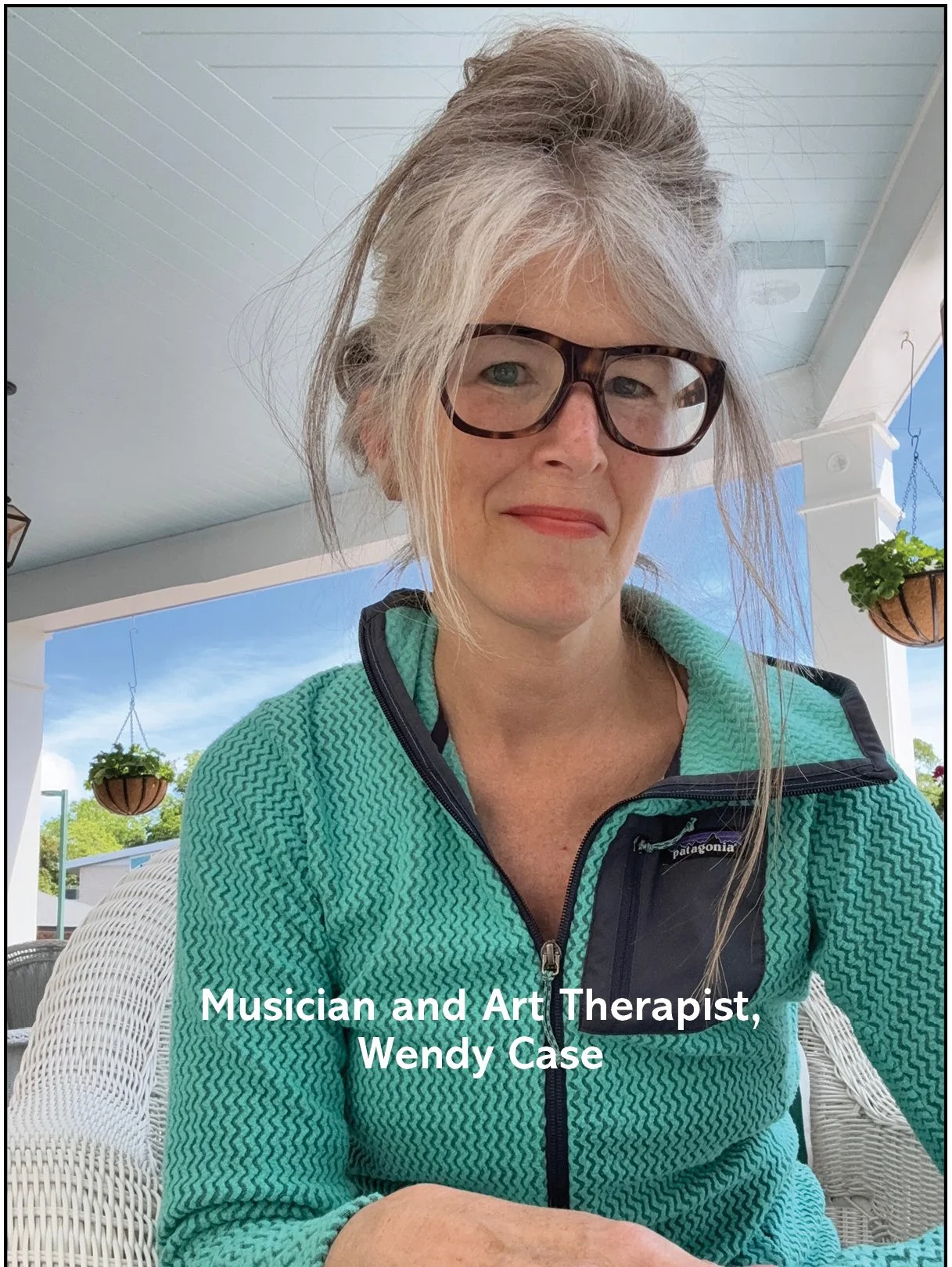
“...Just like the crescendo of an approaching predator [these cues] travel through the ear and into the temporal lobe, which parses the soundscape, identifies sounds, and tags their components as familiar or unfamiliar. The salience of these sounds—whether a person responds to them emotionally and motivationally—influences the autonomic nervous system, a network that controls certain involuntary processes like breathing and heart rate.”
Its ability to trigger emotional experience in this way has led some researchers to look at music’s therapeutic value for several specific neurological conditions including epilepsy, Alzheimer’s and most recently OCD. With OCD the mind gets trapped in loops of worry (tension) that are temporarily relieved with the compulsive act (release). For example, repeatedly confirming the stove is off—you feel better right after you check it (release) and just before you start worrying that you’ve left it on again (tension).
Acoustic cues are provided in music to help us predict what will happen in the musical narrative. Are we expecting danger or a pleasant resolution around the next corner? Musical cues trigger primal responses which helps explain why many of us are so moved by certain music and also how it might be useful in all kinds of healing processes.
Emotional Regulation
Just as music is effective at getting us worked up, it can also be used effectively to calm and gently manage our behavior. A whole new generation of listeners have warmly embraced the idea of background music in the form of LoFi and Chill LoFi, this Modem Muzak© equivalent is everywhere now and liberally used for work, study, supported shopping environments, and classroom management.
Therapist Case explained, “LowFi is good for vagal regulation in the same way that reggae [or a lot of blues music] is—the body can attune to it because it’s revving at a frequency that is consistent with a stable human heartbeat.”
Youtube is awash in specific Hz-targeted music that purports to manage cortisol levels toward increased focus and improved wellbeing. The possibilities associated with AI have radically expanded the variety and availability of this genre. There are subcategories to fit every taste. Consider AI takes on Indian Music, Iranian Music, African Music—the aural equivalent of a million lava lamps.
This is where sound bowls and kirtan come in. They are all on the wellness continuum driven by the logic that a relaxed and peaceful consciousness is the most expansive consciousness of all. And I wouldn’t say exactly that I disagree, it’s more of a “Yes, and….” Musician and University of Michigan Chair of Jazz & Contemporary Improvisation Studies Andrew Bishop makes an argument for music’s broader value:
“For myself, music brings every side of the spectrum of the human spirit to one place: it is a simultaneously pure and abstract aesthetic state that allows us to express the range of human emotions and feelings. For me though, it is also a place to examine the puzzles of the world through textual analysis (score study), modeling analysis through logical musical systems, historical context, and even explore scientific principles of the physics of sound.”
He is not alone. Most people prior to the 20th century believed that it was the main job of art to illustrate and illuminate the human condition. Per G.W. Allport in “Becoming: Basic Considerations for a Psychology of Personality” (which was published by Yale University Press in Volume 20 in 1955) the influential early psychologist, Gordon Allport, acknowledged the primacy of the arts in the explanation of human behavior- But music’s fluency and human impact extends even further. Musical literacy has long been associated with higher achievement in math. A 2020 Canadian study by M. Guhn, S.D. Emerson, and P. Gouzouasis of over 11,000 high school students found that participation in music education was correlated with higher academic achievement in math as well as science and English It was a population-level analysis of associations between school music participation and academic achievement pubished in the Journal of Educational Psychology.
It is the practice of pattern recognition that is honed in repeated exposures to music, and pattern recognition is one of those highly desirable and endlessly refinable skill sets that transcends disciplines—it’s great for everything from learning to read to maintaining brain health as we age.
Music & Community
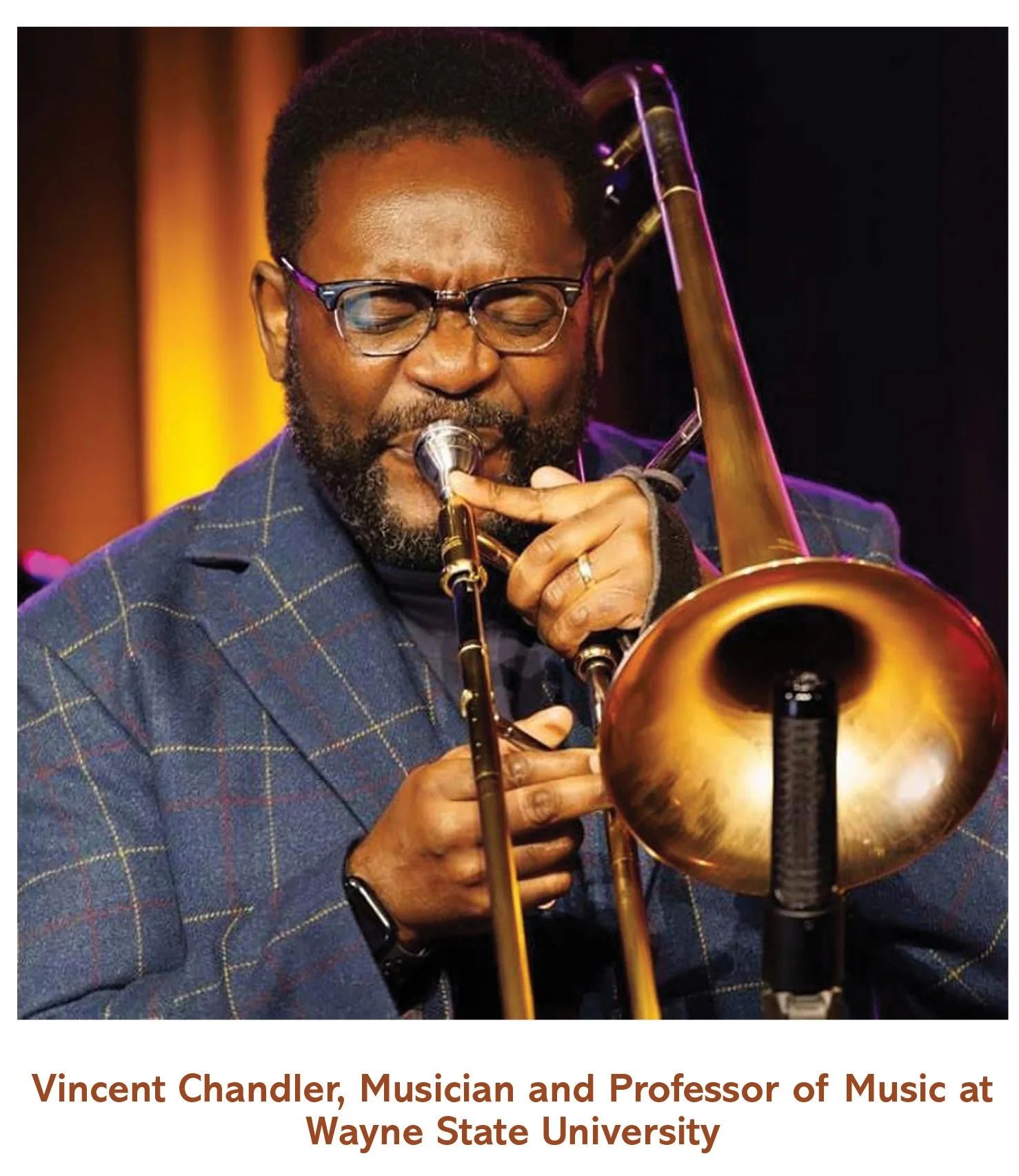
The experience of seeing music played live is the very best way to understand how all these pieces work together. Vincent Chandler, Musician and Professor of Music at Wayne State University described being on tour with Don Was:
“[Live] Music can be a positive distraction, which has a healing effect. With Don Was we cover the music of the Grateful Dead and people all over the country are moved to tears because that music has had such a big impact on their lives. So, another healing aspect of music is its ability to summon our own life experiences, to fulfill a need or satisfy a need we didn’t know we had.”
Was continued, “It’s important to go out and see live music because there is a circle of humanity being fulfilled that is a God-given necessity for our wellbeing. The circle includes the performers, patrons, venues, bartenders, servers, chefs, sound engineers—at every level there is a tangible contribution to community: skills are being honed and presented; resources are being distributed; money is being earned; artistic pursuits are being culminated.”
Preschool Teacher Charlie Sutherland, at the U School in Ann Arbor, can’t host a live band in his classroom, but he regularly plays all kinds of music to support his young friends and their developing community:

“There is no better teacher than a crowded dance floor. In my classroom, dance parties break out all the time. We have repertoires of songs and dances that we love to move to, and ways that we love to move. And when it gets crowded and there’s a dozen or more children in the limited dancing space, you really have to tune your awareness to what’s going on with the people around you. And depending on the kind of dancing you’re doing, it might encourage you to connect and coordinate with them in time and motion. For young children, who are learning how to approach each other and start playing with each other, music as a shared space for movement turns out to be extremely powerful for their social and emotional development.”
It is clear that music is an incredibly useful tool to support all kinds of human activities. I won’t call it a human innovation, because one solo walk in a healthy forest will show you how music has always been everywhere and is much more akin to a human discovery than anything we might have made. The most thrilling thing of all is that there are so many opportunities to engage with it! Take the opportunity to check out live music opportunities near you! Support businesses that support live music because live music supports health, wellbeing, and most importantly, our healthy communities!
Anna Gersh is the Administrative Director at A2 JAZZ FEST, Founder and Director at One Love Symposium, Board President of Groundcover News, and a lifelong Ann Arbor resident.
Read Related Articles:
















































Art has always been vulnerable to public concerns, stemming from its ability to raise complicated feelings. Music is especially targeted because it’s everywhere. A 2021 Harris Poll found that among American adults under 30, 72% reported listening to music by choice and among those, 77% reported choosing music listening as a daily activity.