
In the living room of a farmstead outside Dexter, Michigan, a willow casket stands upright against the wall. It holds books for now, but eventually it will hold the woman who wove it. That woman is Michael Marie Schofield, a “fiber and funerary artisan.” Schofield weaves conventional basketry and dye work as well as teaches around Southeast Michigan. “But I also do funerary vessels,” she said. “I craft handmade caskets and burial trays and urns and plant dyed shrouds for use in more sustainable end of life options.”
Posts filed under Nature
Back to the Future A Visit to Leslie Science & Nature Center and the Ann Arbor Hands-On Museum
Most Ann Arborites know the Leslie Science & Nature Center (LSNC) off Traver Road is free and open to the public. When was the last time you visited? Maybe you played around on the lawn, in the woods, or in the unique, tunneled playground on a school field trip. Or maybe you showed up for the Annual Earth Day Event or October’s Animal Haunts. The property is still there, better than ever, with a friendly crew to help you when you desire it. Some day you might just want to wander around, or let your mind relax on the Black Pond Woods nature trail.
Weekend Getaway: The Arc of Appalachia: A Steward's Quest
Soon after arriving in Bainbridge (between Dayton and Columbus), I had my first revelation–The Arc wasn’t a guesthouse or retreat facility per se: it was a conservation non-profit dedicated to preserving and restoring the wildscapes of the Appalachian region within southern Ohio, West Virginia, and eastern Kentucky.
A Place to Breathe: How Emily Adama Found Herself at EarthWell Retreat Center
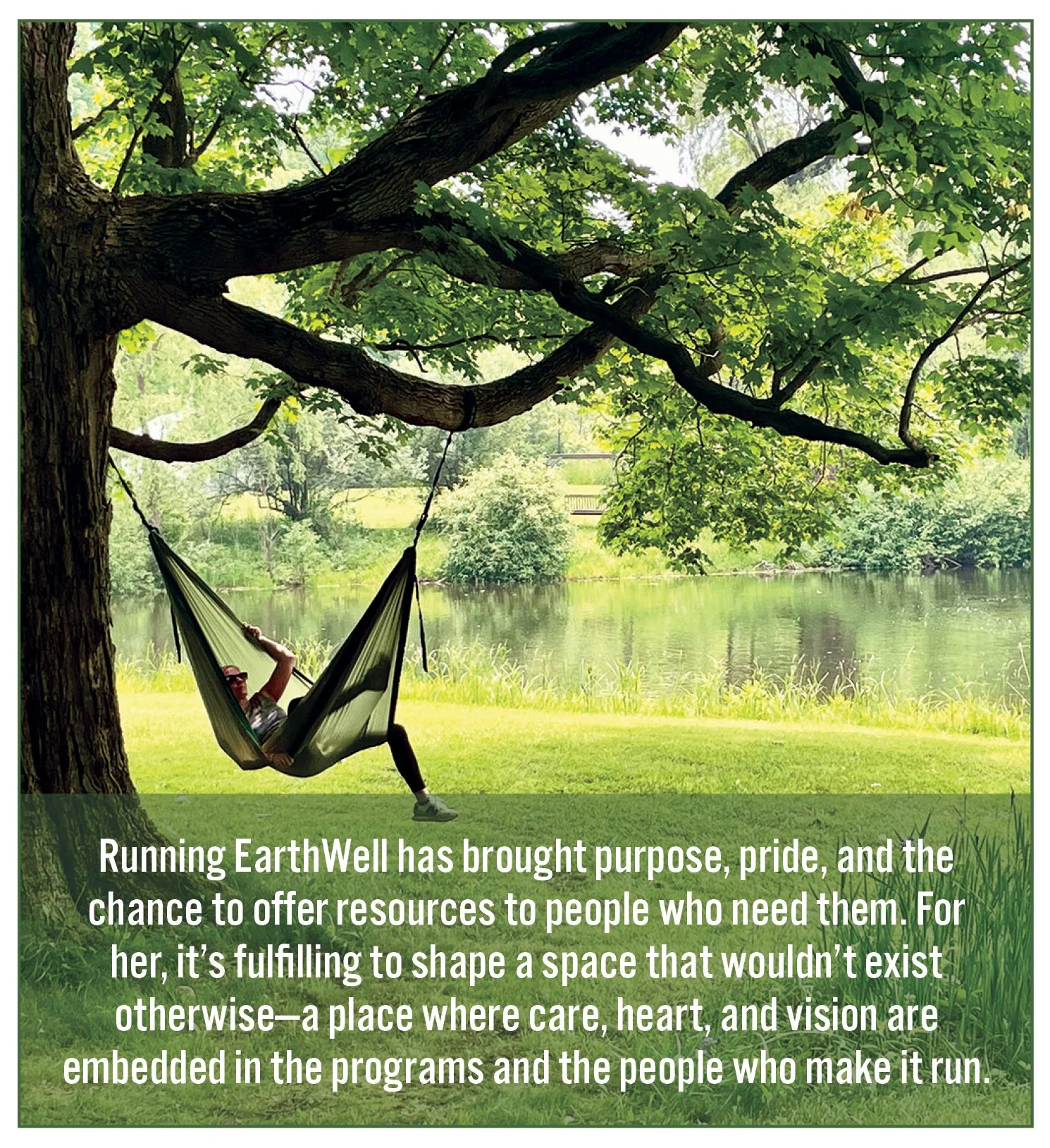
As far as the eye can see, there are acres and acres of a great nature preserve. Allow yourself to be consumed by it for a moment. Let it envelope you. Let it return you back to the beginning. Maple trees stretch far overhead--taller than any worry could ever be. Streams meander through the land—a burst of movement happening in this otherwise still place. There is a quiet, here, but a quiet that causes introspection. A quiet that feels intentional. A quiet that feels connected to something bigger if only one is willing to stop and listen.
Book Review: Life on a Little Known Planet ~ by Elizabeth Kolbert
Elizabeth Kolbert has spent decades reporting from the fault lines of our planet—melting glaciers, vanishing species, rising seas, shifting microbial worlds. In Life on a Little-Known Planet: Dispatches from a Changing World, she gathers essays that feel at once intimate and planetary, investigative and philosophical. The title itself is telling. For all our satellite imagery and data modeling, Kolbert suggests we are still strangers here.
Out of My Comfort Zone: Three Scary Statements
The words were out of my mouth before I’d spent even a single second considering them. Appalled, I gazed, eyes wide, at the woman in front of me, a new acquaintance whom I knew to be highly intuitive, an accomplished spiritual healer. I couldn’t fathom where that statement had come from. It was almost as if the words had been spoken to me, as much as through me.
Crazy Wisdom Kids: Experiencing Spring Through the Senses
Before the calendar changes, before the jackets disappear, before adults agree that winter is finally over, kids start pointing things out. The light looks different. The sidewalk feels warmer. The air smells like wet dirt, not cold metal. Something has shifted, even if no one can quite name it yet. In Ann Arbor and surrounding areas, spring reveals itself in small, almost secret ways—and those clues teach kids something important about the world and about themselves.
A Dive Into The Universe Stuff: A Q&A with Renata Portes
Meet Renata Portes, creator of The Universe Stuff; a holistic, creative brand of candles, teas, Reiki, tarot, and more. Originally from Brazil with a background in law, Portes found herself drawn to bring light and healing to people during her transition to life in the United States.
Pollinator Hotels Part 2: Welcome Back, Bees!

By Karen Quinn
After a long, bitter cold winter, it’s time to welcome our bees and other pollinator friends back after their much needed, and well deserved, hibernation.
If you built pollinator hotels and overwintered them last fall (see my article in issue #90 of The Crazy Wisdom Community Journal for building directions), you can put them back out in your yard when the mid-day temperature reaches a consistent 55 degrees, and the overnights are above 35 degrees. In Southeast Michigan, that puts us around late March to mid-April, on average. However, we natives know that Michigan weather is hardly consistent, so use your best judgment.
Here are a few tips to help the flying friends as they come out of hibernation. First, I will suggest creating something called an “Emergence Box.” This can be a plastic bin or heavy-duty cardboard box that your hotel will fit inside. On one of the sides of the box/bin, cut a single ½ inch diameter hole. As our little buddies wake up, they will follow the light of the hole and leave the box. I went the plastic bin route, since I can use it year after year, and I don’t have to worry about it if it gets wet. If you choose to go this route, I suggest using a non-clear bin to make it easier for the groggy bees to find their way out. However, my first few years I did use heavy duty cardboard boxes. If you decide to take this route, just keep it up off the ground and under cover to keep it from getting soggy during spring rains.

There are a few reasons why this is a good practice. One reason is it keeps the pollinator hotel dry and free from most rodents and predators. The only stinkers you have to keep an eye out for are mice. If you find mice are making their way in and out of the emergence hole, you can cover it with a mesh screen. I use old potato or onion bags to cover the hole. The second reason is that a nesting female won’t see that as a safe place to return to lay her eggs.
Be sure to monitor the hotel in the emergence box often for unwanted visitors as well as keeping track of when it’s empty. You will know that a tube nest or the wooden block holes are empty when the plug at the end of the tunnel is broken. If you used pinecones, straw, or sticks, a cursory look for anyone sleeping among the debris is your best bet. Another important thing to watch for is moisture. This could be due to rain, or leaks in the wood. Access it to see if you need to weatherproof the seams, extend the roof, or adjust the placement of the hotel. Keeping the hotel dry, safe, and warm is of the upmost importance as our buzzing buddies wake back up.
Once the hotel is empty of occupants, it’s time to clean it up and get it ready for the next use. Start by removing all the nesting materials. Then, give it a good sanitizing scrub with a diluted bleach mixture. MSU suggests a ½ cup of bleach to a gallon of water for this process. This is a very necessary step to keep your local population of pollinators healthy. It is imperative to remove any parasites or pathogens that can cause diseases from the nesting areas. If you are reusing your tubes, clean them out with a pipe cleaner or straw cleaning brush to remove any debris, then soak them in the bleach solution and allow them to air dry. If you are using the drilled block method, you can use the same size drill bits to rebore out the holes if you wish, then soak the wood in the bleach solution, and allow it to air dry completely. You can use the natural tubes and wooden blocks for two years before they need to be replaced. Be sure to wash the box of the hotel completely as well and make any necessary repairs to rotten wood. Once it’s all cleaned and dried, you can place it back out in your garden or store it and use it next year.

Now, if you want to help your nesting female friends out all summer (and I highly recommend you do!) Simply place a new, clean, bee hotel, identical to the one you put out in the fall, near the emergence box in your garden. Now, it doesn’t have to be “new,” it can also be the nesting box you just cleaned or one you stored from the previous year. Make sure it is in a protected, covered space, facing southeast so it receives direct sunlight in the mornings. It is best to put the new hotel up about 4’-5’ on a post, building, or tree as close to your garden as possible. Then simply leave it all summer, and when the temperatures drop again in late October, your hotel is full of pollinators and ready to be put in a safe place!
If you place a new bee hotel out, continue to monitor it throughout to garden season. When you see tubes or drilled holes capped with mud or leaves, that is a sign of mason or leafcutter bee nests. You might even find cocoons of moths or butterflies in your straw and sticks, which are oh so much fun to watch. But aside from “wanted activity,” you should also watch for unwanted events as well
Next, watch out for ants! They will gladly use your hotel as a bee larvae diner and destroy your bees’ nests. There are many pollinator safe remedies out there. Diatomaceous Earth (or DE) around the base of the post or in the bottom of the nesting box can be a good preventative as well as deterrent. I’ve also heard other gardeners have success using ant bait and sticky spray to deter an active invasion. The last thing I watch for is an excess of spiderwebs. Now, if some enterprising genius arachnid sets up shop on my bee box, I’m not above moving a spider away from my hotel, but a lot of webs is an indication that it might be in a little too shady of a spot.
Finally, be sure to add more native blooms and natural habitat around your garden to encourage even more bees, flies, beetles, moths, birds, and butterflies to stay. Be the oasis these little creatures are dreaming of, and they will pay you back tenfold by simply being themselves, and making your garden more beautiful than you knew it could be.
Karen Quinn is a writer and artist who homesteads on a rural urban farm in Livonia, Michigan with her husband, son, and a menagerie of animals. Her favorite things are reading, exploring, and drinking tea.
Read Related Articles:
Featured


Herbs for Your Garden: Growing the California Poppy
In Michigan, California Poppy is grown as a self-seeding annual. The entire plant (roots, leaves, and flowers) can be harvested in late summer when the plant is flowering. Preserve the fresh, finely chopped roots in 40% alcohol to make a tincture that will last for years. Flowers and leaves can be carefully dried to make tea. Use one or two teaspoons of dried herb in eight ounces hot water and steep for 45 minutes. To collect seeds, watch for the plants to form long, thin seed pods and wait until the pods begin to turn brown and dry. Collect intact pods into a brown paper bag and allow them to dry. The pods may burst open on their own, or you can gently roll them between your fingers to extract the small, black, round seeds.
Spilled Rooibos to Ecological Art: Natural Pigments, Herbal Prints & Earth-Centered Creativity
Discover how a spilled rooibos tea stain sparked a journey into ecological art using natural plant pigments and herbal prints. Rooted in indigenous wisdom, reciprocity with the Earth, ancestral connections, and Organic Intelligence® practices (informed by polyvagal theory), this personal story explores sensory creativity, multispecies kinship, and art as a path to planetary gratitude and healing.
Weekend Getaways: Heading Down South: Our Lady of Fatima Retreat House
Discover Our Lady of Fatima Retreat House in Indianapolis: a peaceful urban oasis on 13 wooded acres with trails, labyrinth, and sacred spaces for spiritual renewal. Read my personal retreat experience—perfect for private reflection, all faiths welcome. Location, contact & tips inside.
Winter Food Preserving: Turn Frozen Produce into Jams and Sauces
Beat the winter blues by turning your frozen summer harvest into delicious preserves! Learn tips on canning tomatoes, making zucchini bread, berry jams, and pumpkin soup with our expert guide and recipes.
Catalpa Flowers and Steadfast Branches
This night, I climbed through the dark of my confusion to somewhere near the top quarter of the tree. I braced myself to sit on one branch, hooked my foot, and hugged the main trunk. It was solid but I could just make out a slight sway. I relinquished my human decision-making to a simple “just hold on”—something I’d later find out was a common moment (or phase) for most of humanity.
Crazy Wisdom Kids: The Moon & Me
The moon has a way of catching a child’s eye. It lingers above treetops, follows the car home, disappears for a few nights, then returns—quiet, steady, familiar. For parents, it’s a reminder to pause, to notice, and to reconnect with something simple yet deeply grounding: the rhythm of nature itself.
Balance Chakras to Build Confidence in Kids
The subtle energy system has always been integral to humanity’s weave of existence. Though the media tends to focus on seven major chakras in the Hindu/yogic tradition, there is commonality across Cherokee, Incan, Pueblo, Tibetan Buddhist, and Sufi Muslim mysticism beliefs to name just a few. That being understood, there are major and minor chakras throughout the body—at every joint, nerve bundle, palms of the hands, souls of the feet, nipples, and more.
The Buzz on Protecting Pollinators Through the Winter
During the spring and summer there is always a lot of buzz around pollinators, their habitats, and how to support them. But did you know you can continue to support your backyard friends in the fall and winter as well? Through a few simple steps you can continue to provide for your local pollinators as the weather turns cold. By offering them housing during the snowy winter months you can guarantee they’ll return to your gardens the following year. It’s a win for everyone!
Book Review: Nature’s Symphony: The Spirit of Scientific Pantheism by Martin Docherty
In Nature’s Symphony, Martin Docherty presents a refreshing and deeply thoughtful perspective on our relationship with the natural world—one that blends science, philosophy, and spirituality in a way that feels both intellectually satisfying and emotionally grounding. This book is neither your typical science read nor a standard spiritual guide. It’s something more layered: a meditation on the sacredness of the universe, grounded not in supernatural beliefs, but in the elegant truths of science itself.
Wild Wellness at Mother Bear Sanctuary and Retreat Center
Barbra White, co-founder of Mother Bear Sanctuary and Retreat Center, believes that all living beings are deeply interconnected. “It’s kismet,” she explained, that just as she was longing to spread the word about her retreat center, which opened in 2018, The Crazy Wisdom Journal came calling for an interview. “I feel like I’ve been in a cooking pot for 30 years in this work, but here, specifically with Mother Bear Sanctuary for the last eight years, I feel like I’m saying to the universe, ‘I’m ready. I’m ready.’ So when [the Journal] called, I thought, ‘kismet.’”
Ode to the Arb
When you step through the wrought iron gates along Geddes Boulevard into the hushed shady entrance of Nichols Arboretum, between a wide pea-stone path to the left and a thin deer trail to the right, sits the first bench to welcome you. Benches are placed along the river side, on overlooks, in meadows, along trails, in the Peony gardens, and in countless shaded areas throughout this 128-acre preserve, inviting anyone to rest and take in the grand expanse of nature.































































































































































































In the living room of a farmstead outside Dexter, Michigan, a willow casket stands upright against the wall. It holds books for now, but eventually it will hold the woman who wove it. That woman is Michael Marie Schofield, a “fiber and funerary artisan.” Schofield weaves conventional basketry and dye work as well as teaches around Southeast Michigan. “But I also do funerary vessels,” she said. “I craft handmade caskets and burial trays and urns and plant dyed shrouds for use in more sustainable end of life options.”