
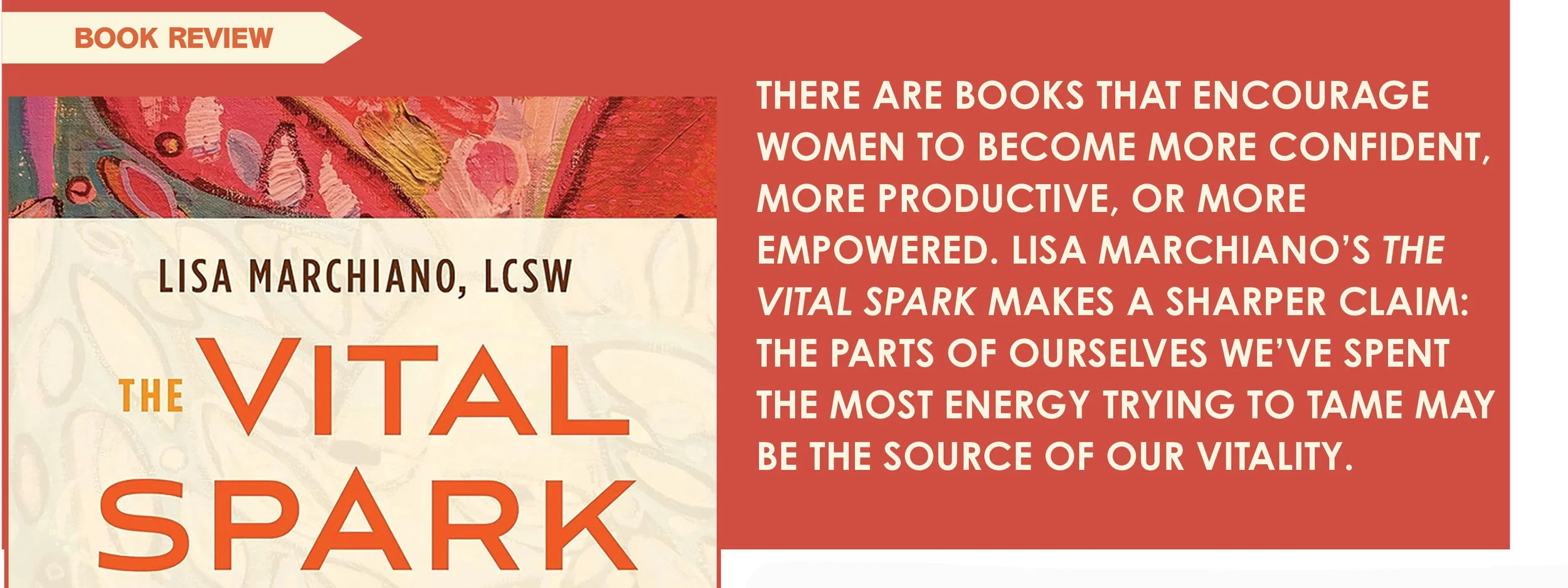
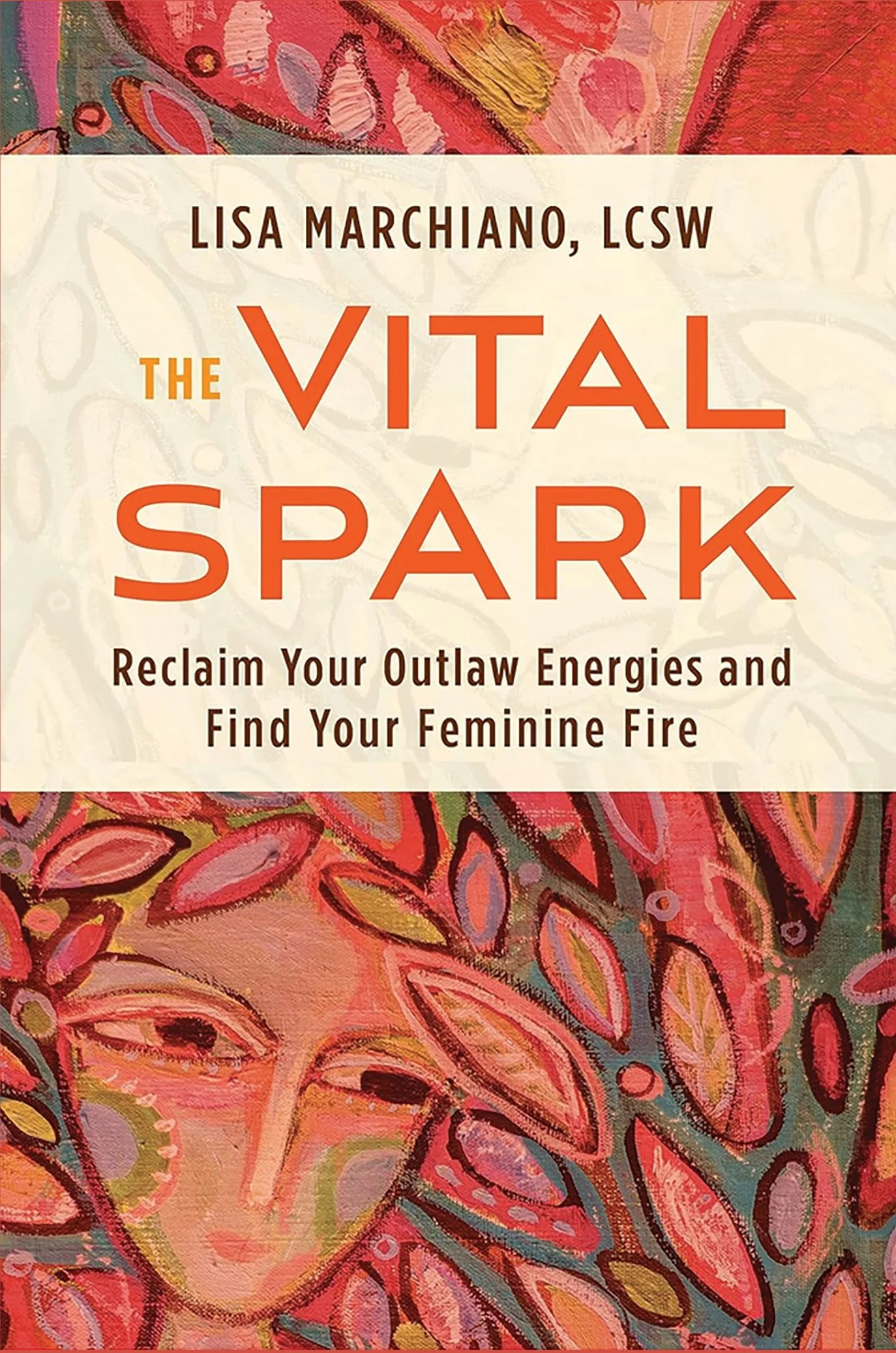
Book Review by Christine MacIntyre
Drawing on Jungian psychology, mythology, fairy tales, and years of clinical practice, Marchiano argues that women have long been taught to suppress what she calls their “outlaw energies”—qualities such as anger, ambition, sexuality, creativity, competitiveness, and fierce independence. Rather than viewing these impulses as flaws to be corrected, she suggests they are essential psychological forces that, when acknowledged and integrated, allow women to live with greater authenticity and purpose.
It’s a compelling premise, and one Marchiano explores in depth.
The book’s greatest strength lies in its refusal to offer simplistic empowerment slogans. Instead of encouraging readers to simply “embrace your power,” Marchiano carefully examines why so many women feel disconnected from it in the first place. She traces this estrangement through cultural expectations, family systems, personal history, and the unconscious, revealing how easily women learn to trade authenticity for approval.

Throughout the book, she returns to the Jungian idea of the shadow—the hidden aspects of personality that are rejected as unacceptable. For many women, those shadow qualities include not only rage or aggression, but confidence, authority, healthy selfishness, and even joy. What has been buried does not disappear, Marchiano reminds us. It simply finds other ways to emerge, often through anxiety, resentment, depression, or a persistent feeling that something essential is missing.
Rather than treating those emotions as problems to eliminate, she invites readers to become curious about them. That shift—from judgment to curiosity—is one of the book’s most valuable contributions.
Marchiano writes with the confidence of an experienced analyst but never slips into inaccessible academic language. Psychological concepts are woven naturally into stories from mythology, literature, and her clinical work, creating a narrative that feels thoughtful rather than instructional. Fairy tales become maps of the psyche. Ancient goddesses illuminate modern dilemmas. Patient stories ground abstract theory in everyday life without becoming voyeuristic or sensationalized.
One of the book’s recurring themes is that genuine transformation rarely feels comfortable. Reclaiming outlaw energy often means disappointing people, confronting long-held beliefs, or tolerating the anxiety that accompanies change. Marchiano doesn’t romanticize this process. She acknowledges that becoming psychologically whole frequently requires stepping outside familiar identities—the accommodating daughter, the endlessly capable mother, the agreeable employee, the woman who never makes anyone uncomfortable.
That honesty gives the book unusual credibility.
Perhaps most refreshing is Marchiano’s willingness to complicate contemporary conversations about femininity. Rather than defining feminine strength as simply becoming more assertive or more successful, she argues for psychological wholeness: an integration of apparent opposites such as tenderness and ferocity, receptivity and action, compassion and boundaries. The goal is not to become someone different, but to recover aspects of oneself that have been abandoned.
The result feels less like a self-help manual and more like an invitation into serious self-examination.
Readers looking for step-by-step exercises or quick behavioral strategies may find the pace slower than expected. The Vital Spark unfolds through reflection rather than prescription. It asks readers to sit with symbols, dreams, memories, and emotional reactions instead of rushing toward solutions. For some, that contemplative style may require patience. For others — particularly those interested in depth psychology—it is what makes the book so rewarding.
Marchiano also trusts her readers. She avoids reducing complex psychological ideas into social media-sized affirmations, allowing nuance to remain intact. In a publishing landscape often dominated by certainty and easy answers, that restraint feels increasingly rare.

One of the most memorable aspects of The Vital Spark is how often it encourages readers to reinterpret experiences they may have long considered personal failings. Chronic people-pleasing, perfectionism, emotional numbness, or unexplained restlessness become signals rather than deficits—indications that disowned parts of the psyche may be asking for attention. The reframing is subtle but powerful. Instead of asking, “What’s wrong with me?” the book gently shifts the question toward, “What part of myself have I left behind?”
That change in perspective lingers long after the final chapter.
Ultimately, The Vital Spark is less about becoming fearless, than becoming fully alive. Marchiano’s core argument is that vitality depends not on eliminating conflict within ourselves, but in making room for the full range of human experience—including the emotions and instincts we have been taught to distrust.
For readers interested in Jungian psychology, mythology, or women’s psychological development, this is an insightful and richly layered work. Even those unfamiliar with Jung’s ideas will likely recognize themselves somewhere in its pages. Beneath its discussions of archetypes and shadow work lies a deeply human question: What happens when we stop treating part of ourselves as enemies?
Marchiano’s answer is hopeful without being naive. The book’s final takeaway is that the qualities we have spent years trying to silence may not be obstacles to a meaningful life after all. They may be the very spark that allows it to begin.
Read Related Articles:














































































































We are so appreciative for our advertisers in each issue, and you should be too! They help keep The Crazy Wisdom Community Journal FREE in print and online. Please support them by clicking on their ad below to find out more about their services.