
By Peggy River-Singer
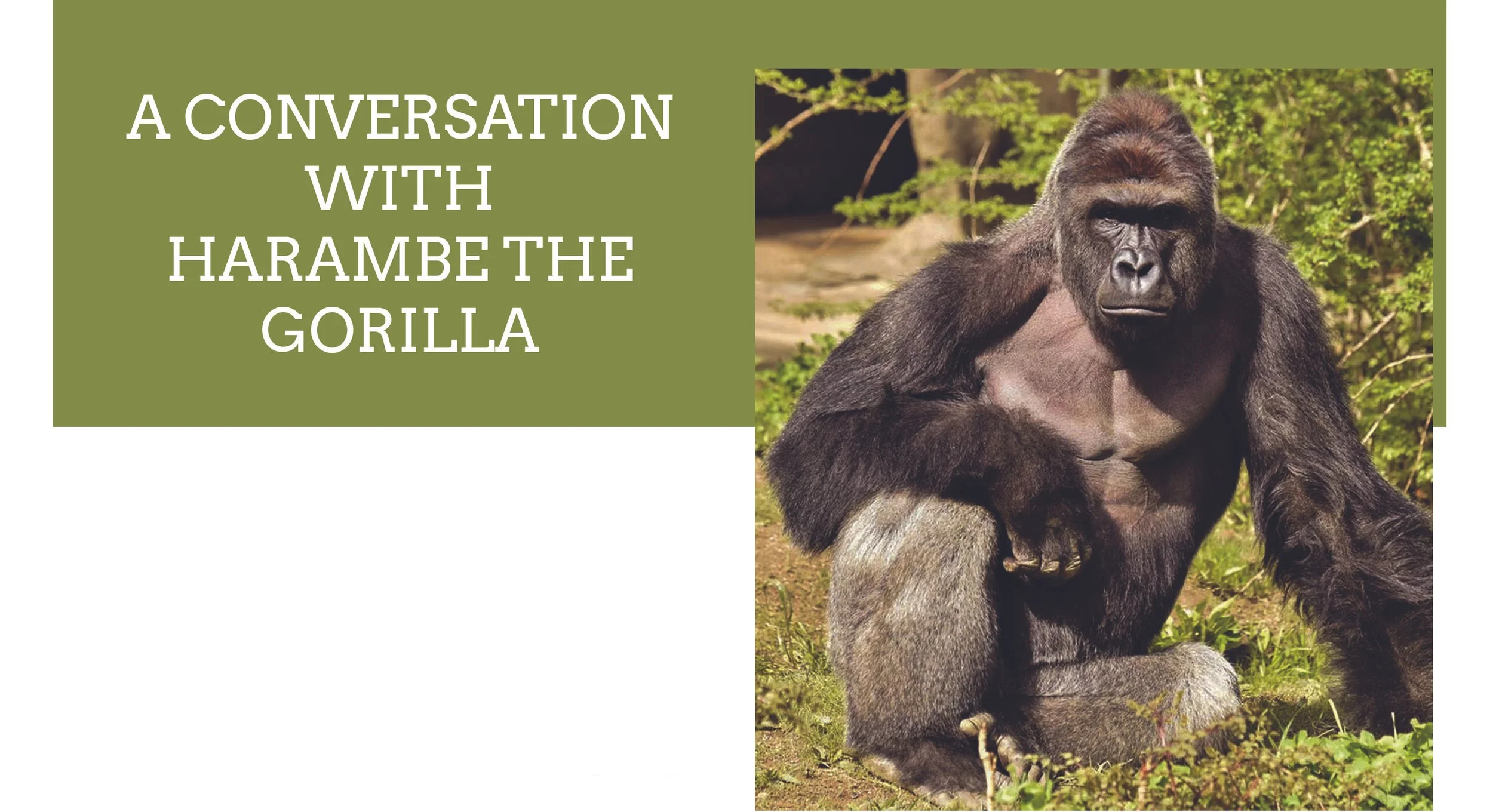
Harambe was a 17-year-old 450-pound male gorilla at the Cincinnati Zoo. On May 28, 2016, a three-year-old boy climbed under a fence and fell into the gorilla enclosure’s moat. Overwhelmed and distressed by the uproar from panicking humans, Harambe tried to move the boy to a more protected part of the enclosure. Because of Harambe’s size and strength and the potential for accidental harm, he was shot and killed by zoo officials. The incident was caught on camera and became a major viral meme and cultural phenomenon. It also sparked intense international debate over zookeeping, animal rights, and parental responsibility in public spaces.
Harambe: This is the way it’s supposed to be. Everything turned out as I hoped it would.
Peggy: So, you chose that experience for this lifetime?
Harambe: Not exactly. I was born in captivity and I had been feeling a desire to somehow make a big thunder-and-crash-of-lightning statement to humans that would shake up complacent minds focused on “They’re just dumb animals.” When the child fell into the water I was startled, but I recognized the opportunity; and of course I wanted to try to help the boy.
Peggy: How do you think you would have reacted if one of your attendants had come into your enclosure to take the child away?
Harambe: My gorilla mind might have been offended by this trespass. Would I have attacked? I don’t think so. I know those people quite well, and I knew from the beginning the child could not stay with me. I could hear his parents screaming and their frantic fear—I thought my head would explode from all the noise! I had to go deep within to endure the hurricane of emotions from the humans while I tried to decide what to do.
[I see a vision of Harambe standing in the middle of a Roman amphitheater, looking up at thousands of screaming humans while the child plays in the sand at his feet.]
Harambe continues: Other animals (including my mates Mara and Chewie) quickly understood the situation and offered advice. Many sensed what the end would be, and they warned me. The energy of this event rolled out across the land even as it was being played out, scene by scene. It’s a shame Shakespeare wasn’t alive to write a play about it!
Everything seemed to happen in slow motion at the end. I had already left my still-functioning body—I had no desire to experience the bullets—but I stayed so my energy could continue to be part of the whole story.
In spirit form I extended my hands in blessing over those who made the difficult decision to end my life. They, too, chose this life experience to help them develop a greater level of compassion.
Peggy: Where are you today?
Harambe: Visiting Mara and Chewie. The three of us are creating a new, powerful energy of love, compassion and forgiveness that we plan to share with other caged animals who have no choice or voice about their lives and deaths. Years have passed since my death, but the urgency of the need for humans to find new ways to view zoos and their unwilling captives grows stronger day by day. This conversation is complete, and I thank you.
Note: American Zoo Day is celebrated on July 1.
Peggy River-Singer is an all-beings communicator, Pleiadian Starseed, and lifelong writer. She dwells in a funky little apartment on the enchanted shores of Ford Lake in Ypsilanti, where she teaches fae folk how to use and share Reiki to help bring more joy and healing into the world. More of her articles are posted on angelsfairiesandlife.wordpress.com. To request a communication session, please call 734-548-0194.
Read Related Posts:


































































Harambe was a 17-year-old 450-pound male gorilla at the Cincinnati Zoo. On May 28, 2016, a three-year-old boy climbed under a fence and fell into the gorilla enclosure’s moat. Overwhelmed and distressed by the uproar from panicking humans, Harambe tried to move the boy to a more protected part of the enclosure. Because of Harambe’s size and strength and the potential for accidental harm, he was shot and killed by zoo officials. The incident was caught on camera and became a major viral meme and cultural phenomenon. It also sparked intense international debate over zookeeping, animal rights, and parental responsibility in public spaces.